

Picture a fish tank. Now picture a store sign glowing at night. Now picture the clear shield that sat on a checkout counter during the pandemic.
Different objects. Same material.
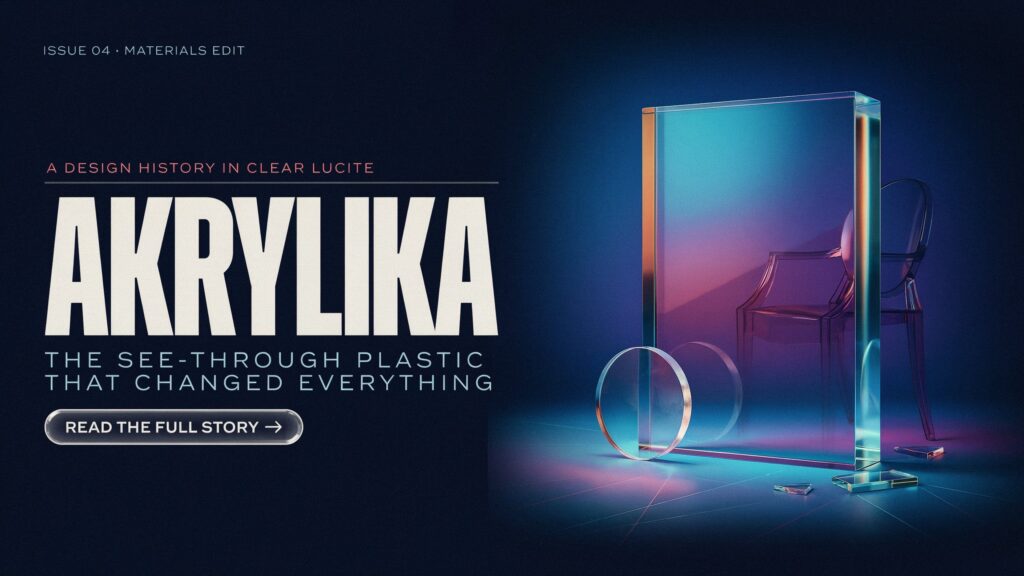
That material is acrylic. Some people call it plexiglass. Chemists call it PMMA. Whatever name you use, it’s quiet everywhere, and most people never stop to ask what it actually is or where it came from.
Let’s take our time and examine it thoroughly.
Quick Facts
| Fact | Detail |
| Common names | Acrylic, plexiglass, acrylic glass, PMMA |
| Scientific name | Polymethyl methacrylate |
| Made from | Methyl methacrylate (MMA) liquid |
| Invented | 1933, by Otto Röhm in Germany |
| Brand names | Plexiglas, Acrylite, Lucite, Perspex |
| Material type | Thermoplastic (softens with heat) |
| Light transmission | Around 92 percent |
| Weight vs glass | About half as heavy |
| Strength vs glass | Roughly 10 to 17 times harder to break |
| Melting point | Around 320°F (160°C) |
| Recyclable | Yes |
So What Is This Stuff, Really?
Acrylic starts life as a liquid called methyl methacrylate. It smells faintly sweet, almost fruity.
Chemists take that liquid and trigger a reaction. The tiny molecules link arms and form long chains. Those chains pack together and turn solid.
What comes out the other end is hard, clear, and tough. We call it PMMA. You and I just call it acrylic.
Here’s the wild part. Glass is made from melted sand. Acrylic is made from chemistry in a lab. Yet they end up looking nearly the same to your eyes.
See also “706-807-9729: The Complete Guide to This Georgia Number“
The Accident That Started It All
Every great invention has a story, and this one has a strange twist in it.
Back in the early 1900s, a German chemist named Otto Röhm got curious about a substance called acrylic acid. He wrote his doctoral paper on it in 1901. That curiosity never left him.
He teamed up with a businessman named Otto Haas. Together they started a company. At first, their work had nothing to do with plastic. They were making chemicals for tanning leather.
Years passed. Röhm kept thinking about his old research. Eventually he pulled together a team and pushed deeper into the chemistry of acrylic materials.
Then something unplanned happened. A bottle of methyl methacrylate liquid sat near a window in the lab. Sunlight hit it day after day. The light triggered a chemical reaction inside the bottle, all on its own.
The next morning, the bottle wasn’t holding liquid anymore. It held a solid block of clear plastic.
That accident became a method. Scientists learned to pour the liquid between two sheets of glass and let it harden in a controlled way. Peel the glass off, and you’re left with a thin, clear acrylic sheet.
Röhm named his creation Plexiglas. He registered the trademark on August 9, 1933. A British team and an American company developed their own versions around the same time, called Perspex and Lucite.
Why War Made It Famous
Acrylic might have stayed a small lab curiosity if not for what came next.
World War Two arrived just a few years after acrylic hit the market. Armies on every side needed clear materials for aircraft. Cockpit covers. Gun turrets. Periscopes.
Glass was the old choice, but glass shatters into sharp blades when it breaks. Soldiers were getting badly cut by flying shards during crashes and combat.
Acrylic changed that. When it cracks, it doesn’t explode into knives. It breaks into duller, safer pieces.
So factories on both sides of the war ramped up acrylic production fast. What started as one chemist’s curiosity turned into a wartime necessity almost overnight.
After the war ended, all that manufacturing capacity needed a new purpose. Companies started dreaming up peaceful uses instead. Lit-up signs. Roof windows. Storefronts shaped like nothing anyone had built before.
What Makes Acrylic Special
Let’s talk about why this material earned its spot in so many places.
It’s see-through, almost more than glass. Light passes through acrylic at about 92 percent clarity. Regular glass usually sits a little lower than that.
It barely weighs anything. Pick up a sheet of acrylic and a same-sized sheet of glass. The acrylic feels like half the weight, sometimes less.
It doesn’t shatter easily. Drop something on glass and you risk a dangerous mess. Acrylic can take far harder hits, somewhere around ten to seventeen times tougher than glass, before it gives way.
The sun doesn’t ruin it. Leave acrylic outside for years. It won’t turn yellow or cloudy the way some plastics do. This made it perfect for outdoor signs and skylights.
You can shape it. Heat it up and acrylic gets soft and bendable. Cool it down and it locks into the new shape. Cut it, drill it, polish it, melt it into curves. Few materials offer that much freedom.
Scratches can disappear. Got a scuff on your acrylic phone case or display? A bit of polish often buffs it right out. Try that with glass.
Of course, nothing is perfect. Acrylic can crack under a sudden, sharp impact, especially near drilled holes or tight corners. It’s not the toughest plastic in a true emergency. For that job, something else usually steps in.
Acrylic’s Tougher Cousin: Polycarbonate
You can’t really talk about acrylic without mentioning polycarbonate, because people mix them up constantly.
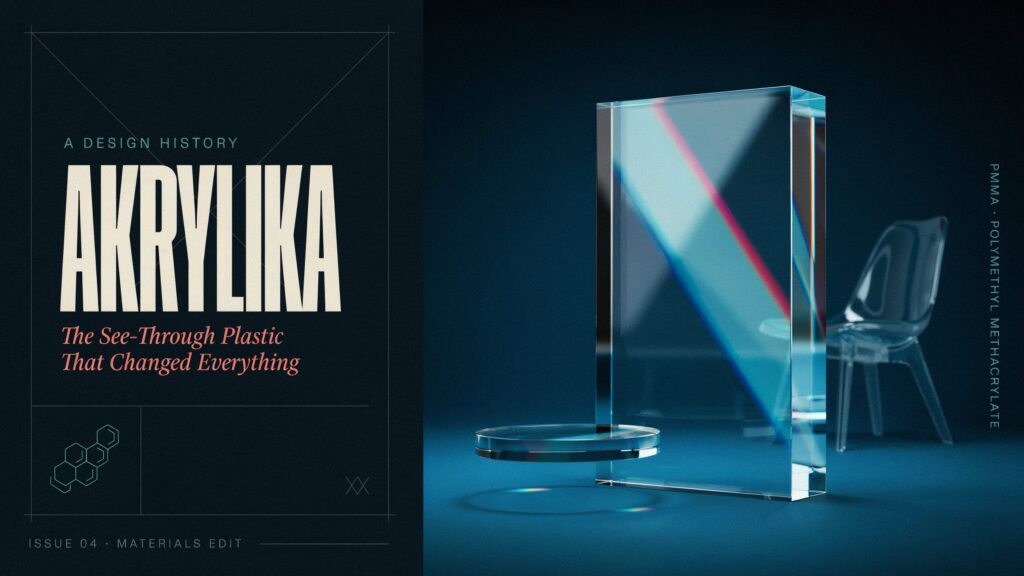
They look almost identical at first glance. Both are clear. Both replace glass. Both feel light in your hand.
But they’re built differently, and that difference matters.
Polycarbonate wins the toughness contest by a wide margin. While acrylic stops a hit around ten to seventeen times stronger than glass, polycarbonate can handle hits closer to two hundred times stronger. That’s why riot shields, bulletproof barriers, and safety goggles lean on polycarbonate instead.
Acrylic fights back in other ways, though. It lets in more light. It resists scratches better. It costs less. And when it does get scuffed, you can polish the shine right back.
So which one wins? Neither, really. It depends on the job. Need a display case that looks flawless and catches the light? Acrylic. Need a barrier that survives a hammer swing? Polycarbonate.
Where You’ll Find Acrylic Hiding
Once you know what to look for, acrylic shows up everywhere. It’s almost sneaky about it.
In art supplies. Acrylic paint sits in nearly every art classroom and craft store. Artists love it because it dries fast and the color stays bright for years afterward.
In your home. Picture frames. Trophies on a shelf. Maybe a clear phone stands on your desk. Aquariums holding fish behind walls of acrylic instead of heavy glass.
On the road and in the sky. Aircraft windows. Some car parts. Motorcycle windshields and helmet visors.
In stores and offices. Display cases. Protective sneeze guards, which became suddenly familiar a few years back. Signs that glow at night because light travels through the edges of the material.
In medicine. Believe it or not, dentists use acrylic for some false teeth. Doctors have even used it for certain eye implants, because the body tolerates it well.
In buildings. Skylights. Greenhouse panels. Curved storefront windows that wouldn’t bend the same way in real glass.
It even shows up in something as small as a manicure. Those “acrylic nails” people get at the salon share the same chemical family as the sheets used in skyscraper windows. Strange but true.
Cast Acrylic vs Extruded Acrylic
Not all acrylic sheets are made the same way, and this part trips a lot of people up.
Cast acrylic gets poured into a mold as a liquid and left to harden slowly. This slow process gives it richer optical clarity and a more even finish. It also machines more cleanly if you’re cutting it with tools.
Extruded acrylic gets pushed through a machine in a continuous sheet, similar to how dough gets pressed through a pasta roller. It’s faster and cheaper to produce. The trade-off is that it can be a little less uniform and more prone to melting under certain cutting tools.
If you’re buying acrylic for a serious project, ask which type you’re getting. The price difference usually tells the story before the salesperson even finishes the sentence.
Caring for Acrylic the Right Way
Acrylic rewards a little gentleness and punishes carelessness.
Use a soft cloth and mild soap mixed with water. That combination handles dust and grime without scratching the surface.
Skip anything containing ammonia. Window cleaners with ammonia can cloud and damage acrylic over time, even though they work fine on actual glass.
Got a small scratch? Acrylic-specific polish can buff it away. Microfiber cloths help too, applied with gentle pressure in small circles.
For deeper gouges, it’s often smarter to call in someone who restores acrylic professionally rather than risk making it worse yourself.
Is Acrylic Good for the Planet?
Here’s a question more people are asking lately, and it deserves an honest answer.
Acrylic can be recycled. Facilities exist that specialize in breaking it down and reusing the resin for new products.
That said, it’s still a plastic built from chemical processes, not something nature breaks down on its own if it ends up in a landfill or the ocean.
Manufacturers are working on this. Some are developing acrylic with a smaller carbon footprint during production. Others are improving how easily old acrylic gets collected and reused instead of thrown away.
It’s not a perfect green material yet. But it’s heading in a more responsible direction, and that’s worth something.
The Road Ahead for Acrylic
Nearly a hundred years after that fateful bottle sat in the sunlight, acrylic keeps finding new jobs.
Designers are experimenting with smart glass that can change from clear to frosted with the flip of a switch. Interactive displays in stores and museums lean on acrylic’s clarity to make screens and panels feel seamless.
3D printing has opened another door. Engineers are now printing custom acrylic shapes instead of cutting them from flat sheets, which means wilder designs than ever before.
Artists keep pushing it too. Acrylic pouring, where paint gets poured and tilted across a canvas in swirling patterns, has become its own popular art trend online.
A material invented by accident, sparked by sunlight through a window, somehow keeps reinventing itself nearly a century later. That’s a pretty remarkable run for something most people walk past every single day without a second thought.
FAQs
1. Is acrylic the same thing as plexiglass?
Yes. Plexiglas is actually a brand name, much like Kleenex is a brand name for tissues. Over time, people just started calling all acrylic sheets “plexiglass,” whether or not it came from that original brand.
2. Is acrylic stronger than glass?
In terms of impact, yes. Acrylic can usually take a hit roughly ten to seventeen times harder than glass before it cracks. Glass wins on stiffness and scratch resistance, though.
3. Can acrylic break?
It can, especially under a sharp or sudden impact, or near a drilled hole where stress builds up. It’s far tougher than glass, but it isn’t unbreakable.
4. Is acrylic toxic or unsafe?
No. Acrylic is considered non-toxic, and it’s used in things like food-safe cups and even medical implants. It doesn’t release harmful substances under normal use.
5. Can you use acrylic outside without it turning yellow?
Yes. One of acrylic’s best traits is its natural resistance to sun damage. It can sit outdoors for years and keep its clear, fresh look.
6. What’s the difference between acrylic and polycarbonate?
Acrylic offers better clarity and scratch resistance, plus a lower price. Polycarbonate is far more impact-resistant, making it the safer pick for high-risk or high-security uses.
7. Who actually invented acrylic?
A German chemist named Otto Röhm is credited with the breakthrough. After years of studying acrylic chemistry, he registered it under the brand name Plexiglas in 1933.
8. Can acrylic be recycled?
Yes, through specialized recycling facilities. It isn’t as commonly recycled as something like a plastic water bottle, but the option does exist and is growing.
9. Why did acrylic become popular during World War Two?
Militaries needed clear materials for aircraft windows and gun turrets that wouldn’t shatter into dangerous shards the way glass did during crashes or combat. Acrylic solved that problem.
10. Is acrylic paint the same material as acrylic sheets?
They come from the same chemical family, but they’re built for very different jobs. Acrylic paint suspends pigment in a polymer liquid for painting, while acrylic sheets are solid, rigid plastic used for things like windows and displays.
11. Can scratches on acrylic be fixed?
Often, yes. Light scratches can be polished out with acrylic-specific polish or a microfiber cloth. Deeper damage usually needs a professional.
12. What’s the difference between cast acrylic and extruded acrylic?
Cast acrylic is poured into molds and hardens slowly, giving it better clarity and easier machining. Extruded acrylic is pushed through equipment quickly, making it cheaper but slightly less uniform.
13. Does acrylic feel warm or cold compared to glass?
Acrylic tends to feel slightly warmer to the touch than glass, since it doesn’t conduct heat away from your skin as quickly.
14. Is acrylic used in anything medical?
Yes. Dentists use it for some dentures, and certain eye surgeries have used acrylic-based lens implants because the body tolerates the material well.
15. What everyday items are made from acrylic?
Picture frames, aquariums, phone stands, store signage, protective barriers, car parts, and even the acrylic nails you might get at a salon all use this same material.
Keep creating, innovating, and inspiring with Content Ideators every day.
