
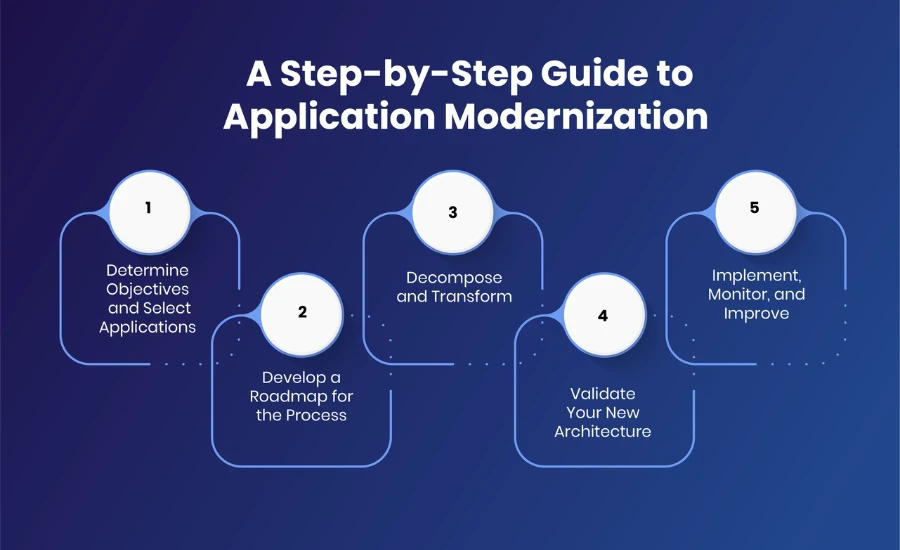
Enterprises today face increasing pressure to stay competitive in a rapidly evolving digital landscape. Partnering with a Custom software solutions provider can significantly streamline this transformation. Outdated systems often limit growth, efficiency, and innovation. Software modernisation provides a structured way to upgrade legacy systems and align technology with evolving business goals effectively.
Understanding the Need for Modernisation
Before embarking on the journey, businesses need to determine the reasons why modernisation is needed. Old systems might not be scalable, secure or integrated. Being aware of these shortcomings assists organisations in developing a clear vision of change and ensures investments are made according to long-term business strategies and operational enhancements.
Assessing Existing Systems
An action analysis of the existing systems should be done to comprehend technical gaps and dependencies. This involves checking architecture, performance, security, and integration capabilities. Businesses can then focus on what systems need urgent attention and which can be upgraded gradually, depending on the impact on the business and urgency.
Defining Clear Objectives
It is important to have clear and measurable goals to achieve successful modernisation. Businesses ought to specify what they want to accomplish, like better performance, improved user experience, or improved security. These goals direct the decision-making process along the way and assist in the determination of the success of the change over time.
Choosing the Right Modernisation Strategy
Businesses have to choose a strategy that fits their requirements. Various strategies have different degrees of complexity and advantages, based on business objectives and current infrastructure.
- Rehosting: Moving applications to a new infrastructure with minimal changes
- Refactoring: Improving code structure without altering core functionality
- Rebuilding: Redesigning applications from scratch for better performance
- Replacing: Implementing entirely new systems to meet modern requirements
Leveraging Modern Technologies
The use of modern technologies also makes sure that the updated systems will be relevant and future-ready. Tools like .NET provide the ability to develop applications in a scalable and secure manner, and cloud platforms like Microsoft Azure allow flexibility, remote access, and efficient use of resources across enterprise environments.
Planning Data Migration
One of the most valuable assets to any enterprise is data. In the era of modernisation, there should be arrangements for safe and correct data migration. To make sure that data is not lost or corrupted during the transition process, businesses must ensure data integrity, reduce downtime, and provide backup strategies to prevent loss or corruption of data during the transition process.
Ensuring Security and Compliance
The current systems should be able to fulfil the current security standards and regulatory requirements. Companies ought to deploy robust authentication, encryption and monitoring schemes. Not only is it beneficial in securing sensitive data, but it is also useful in ensuring that the businesses do not face any legal risks and to ensure that the businesses remain in control of their customers.
Implementing in Phases
Gradual introduction is less risky and is able to help the businesses handle the changes in an effective manner. Enterprises do not have to change everything at once, but instead they can modernise systems step by step. This will ensure there is minimal interference to operations and will allow testing, evaluation and refining solutions at every stage.
Role of Expert Technology Partners
A modernisation process is made easier by working with experienced partners. Many software companies in Sydney offer specialised expertise in enterprise transformation. Designpluz, for example, helps businesses plan and execute modernisation strategies efficiently, ensuring scalable outcomes. Likewise, Microknot, a reputable expert on the provision of Custom software solutions, assists in the development of custom software, as well as the smooth upgrading of the system.
Testing and Quality Assurance
Proper testing will be done to make sure that the modernised systems will be working properly and they will meet the business needs. Functional, performance, and security testing should be
done by enterprises. This will aid in the discovery of possible problems at an early stage, and the eventual solution will provide a stable and quality user experience.
Continuous Monitoring and Improvement
The deployment of modernisation does not terminate after deployment. Constant monitoring can assist businesses in monitoring system performance, areas requiring improvement, and adjustments to changing needs. Periodic updates and optimisation make sure that the applications are efficient, secure and in line with the changing business goals.
Conclusion
Enterprise software modernisation is a strategic process that helps businesses to be
future-ready and competitive. A systematic, step-by-step process can help organisations to minimise risks and maximise value. With the help of such experienced partners as Designpluz and Microknot, businesses can effectively convert their old systems into powerful and scalable solutions.
