
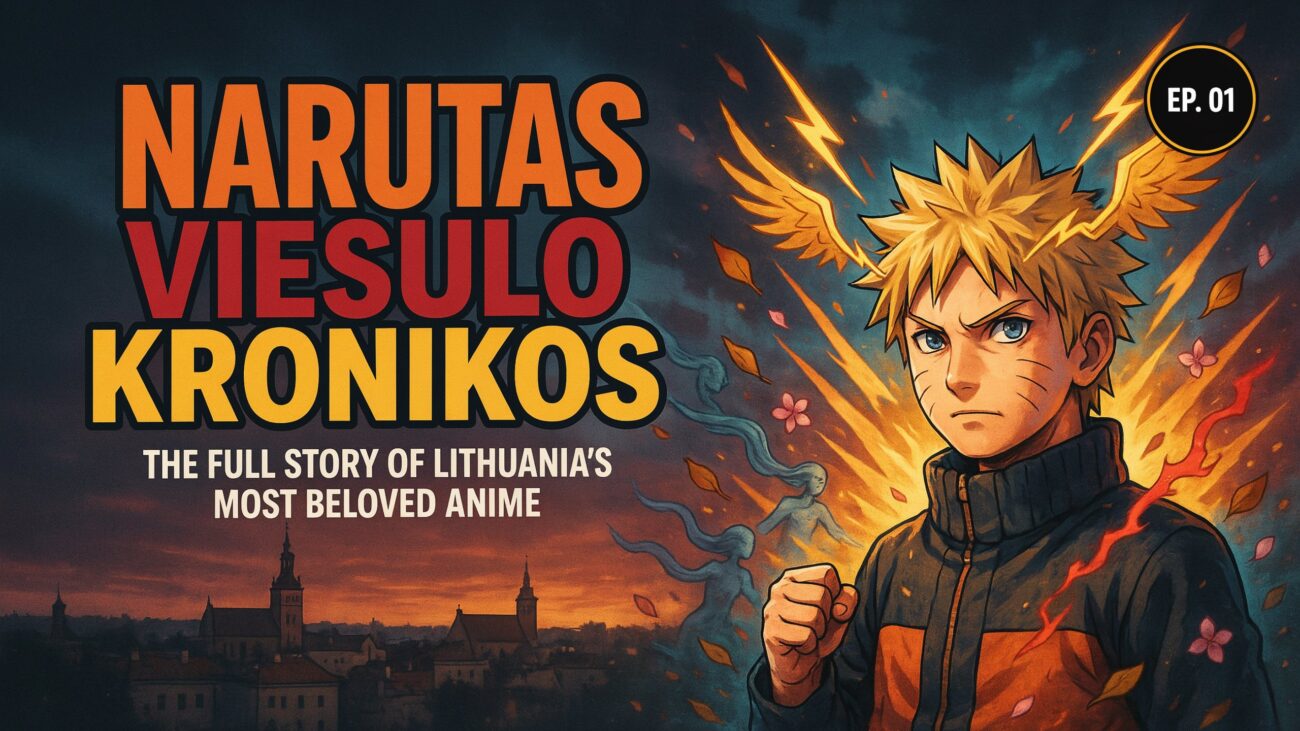
Quick Facts
| Detail | Information |
| Lithuanian Title | Narutas Viesulo Kronikos |
| English Translation | Naruto: Chronicles of the Hurricane |
| Original Series | Naruto: Shippuden (Japan, 2007–2017) |
| Original Manga Creator | Masashi Kishimoto |
| Lithuanian Channel | BTV (Baltijos televizija) |
| Earlier Series Aired On | LNK (as “Narutas”) |
| LNK Premiere | September 2008 |
| BTV Premiere | 2013 |
| Type of Adaptation | Full Lithuanian voice-over dub |
| Word Breakdown | Narutas = Naruto / Viesulo = of the hurricane / Kronikos = chronicles |
| Total Episodes (Original) | 500 |
| Main Character | Naruto Uzumaki |
| Genre | Action, Adventure, Martial Arts, Drama |
| Cultural Significance | Helped introduce anime to a generation of Lithuanian viewers |
| Where to Watch Now | Online streaming platforms; BTV archive content |
The Name That Made a Whole Generation Look Up
If you grew up in Lithuania somewhere between 2008 and the late 2010s, there is a very good chance you heard this title. Probably from a friend at school. Possibly from a sibling. Maybe you stumbled across it on television one afternoon and could not stop watching.
Narutas Viesulo Kronikos.
It sounds dramatic, even before you know what it means. There is something about those three words together that feels like the beginning of something big.
And it was. For hundreds of thousands of Lithuanian viewers, this was not just an animated show. It was the thing that made anime feel possible. Real. Close to home. Theirs.
See also “CDiPhone: The Complete, Honest Guide to What It Actually Is“
What Those Three Words Actually Mean
Before anything else, the title deserves a proper unpacking. Because understanding what these three Lithuanian words mean changes how you feel about the entire series.
Narutas is simply the Lithuanian phonetic version of the name Naruto. In Lithuanian, names and words are adapted to fit the language’s sound patterns. “Naruto” becomes “Narutas.” Simple. Clean. Still recognisable.
Viesulo is an interesting one. In Lithuanian, viesulas means a hurricane — a whirlwind, a storm. Viesulo is the possessive form, meaning “of the hurricane.” So this word is not just describing weather. It is describing energy. Character. The unstoppable, chaotic, passionate force that defines the main character’s entire personality.
Kronikos means chronicles. Records. A documented journey through time. It gives the title a sense of weight — like what you are watching matters. Like it will be remembered.
Put all three together and you get: Naruto: Chronicles of the Hurricane. Not a bad title for a story about a boy who refuses to stop, no matter what the world throws at him.
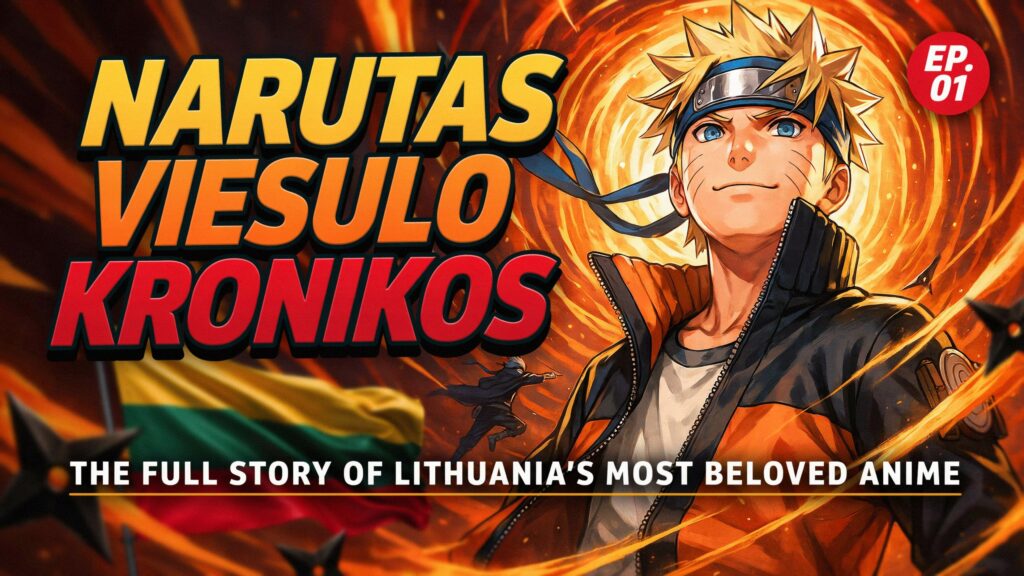
Before the Storm — The Original Narutas on LNK
The Lithuanian relationship with Naruto did not begin with Viesulo Kronikos. It started earlier.
In September 2008, Lithuanian channel LNK began airing the original Naruto series under the localised title “Narutas.” This was the first Naruto series — the one that begins with a young, twelve-year-old Naruto Uzumaki who has never been taken seriously by anyone in his village.
Lithuanian children and teenagers tuned in week after week. They watched Naruto fail, try again, fail harder, and push through in a way that felt genuinely inspiring. The voice acting was localised. The names felt familiar. The show was theirs.
By the time the original series ended and LNK moved on, there was already a whole generation of Lithuanian fans who had grown deeply attached to these characters.
They did not have to wait too long for the next chapter.
2013 — The BTV Premiere That Changed Things
In 2013, Baltijos televizija — BTV — launched Narutas Viesulo Kronikos. This was the Lithuanian dub of Naruto: Shippuden, the sequel to the original series.
The original Japanese version of Shippuden had been airing since 2007. So by the time Lithuanian audiences received it, there was already a mountain of episodes waiting. The stories were richer. The battles were more intense. The characters had grown up.
And so had the Lithuanian audience.
The children who had watched Narutas on LNK in 2008 were now teenagers in 2013. They were ready for the heavier themes that Shippuden brought — loss, war, betrayal, forgiveness. They had grown up with Naruto. And now Naruto has grown up with them.
That timing was not accidental. It was one of the reasons Narutas Viesulo Kronikos hit so hard.
The Story — What Naruto: Shippuden Is Actually About
If you have never watched the series and want to understand why it matters so much, here is the story in plain human terms.
Naruto Uzumaki is a young ninja who carries a burden he did not ask for. Inside him lives a powerful, destructive creature called the Nine-Tailed Fox — sealed there before he was even old enough to understand what it meant. His village feared that creature. And for a long time, they feared him too.
He grew up with no parents, no real home life, and no respect. He was the kid everyone ignored. The one everyone expected to fail.
He refused.
When Shippuden begins, Naruto has been away training for nearly three years. He comes back older, stronger, and still carrying that same impossible fire. But the world he returns to is far more dangerous. A group of powerful criminals called the Akatsuki is hunting down people like him. Friends have made dark choices. Enemies have complicated histories. And the path toward becoming Hokage — the leader of his village, the title he has dreamed about since he was small — is longer and harder than ever.
What makes the story beautiful is not the fights, though the fights are spectacular. It is the relationships. Naruto and Sasuke — two boys who became rivals, then friends, then something harder to name. Naruto and Sakura. Naruto and Kakashi, his teacher. Every relationship in this story carries weight. And the Lithuanian dub preserved all of that weight in a language that felt like home.
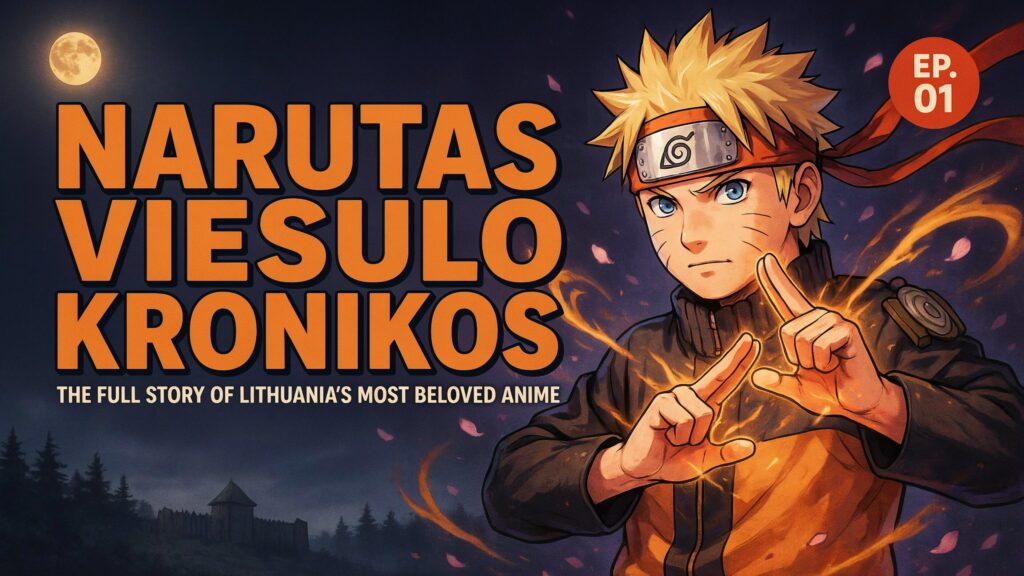
The Characters Lithuanian Audiences Fell in Love With
You cannot talk about this series without talking about the people inside it.
Naruto Uzumaki is the heart of everything. He is loud, reckless, determined, and kind to a degree that borders on stubbornness. He never gives up on people — even people who have given up on themselves. Lithuanian audiences saw something real in him. The boy who was laughed at and kept going.
Sasuke Uchiha is Naruto’s greatest rival and closest emotional connection. He is cold where Naruto is warm. He chooses power over people, and that choice costs him everything. His arc across Shippuden is one of the most compelling character journeys in all of anime.
Sakura Haruno grows from a girl who defined herself by others’ expectations into someone who fights with genuine strength and purpose. Her growth takes patience to appreciate — but when it arrives, it is worth it.
Kakashi Hatake is the teacher who has seen too much. He is brilliant, emotionally guarded, and deeply loyal. He trained the main trio and carries the weight of every loss they share.
Itachi Uchiha deserves special mention because his story carries the most devastating twist in the entire series. Nothing about him is what it first appears to be. Fans who thought they understood him in the original series had to completely rebuild that understanding in Shippuden.
Pain (Nagato) is the series’ most philosophically compelling villain. He does not want power for its own sake. He has a theory about suffering and peace that is genuinely unsettling — partly because it is not entirely wrong.
These characters were all voiced in Lithuanian, which gave their words a natural sense. That is the work of localisation done right.
What Makes the Lithuanian Dub Special
A dub is not just a translation. That is the thing most people outside the voice acting world do not fully appreciate.
When a show is dubbed into another language, the team has to do several things at once. They must translate the meaning of every line. They must also match the rhythm of each sentence to the movement of the character’s mouth on screen. And they must preserve the emotional tone of every scene — the anger, the grief, the joy, the humour.
If any of those are incorrect, the entire system collapses.
The Lithuanian team behind Narutas Viesulo Kronikos took that work seriously. The voice actors brought real character to their roles. Viewers who grew up watching this dub have described specific performances — the voice of Naruto, the voice of Kakashi, the voice of Sasuke — has the same sentimental affinity to the original cast that Japanese fans have.
That does not happen by accident. It happens when the people doing the work genuinely care about the material.
The Themes That Made It Hit So Hard
Why does this story hold onto people for years, even decades?
The honest answer is that Naruto: Shippuden — and by extension Narutas Viesulo Kronikos — deals with things that feel real even inside a world of ninja battles and supernatural power.
Being underestimated. Almost every major character in this story has been written off by someone. Naruto, obviously. But also Sakura, Hinata, Gaara, Rock Lee. The series returns again and again to the gap between how people see you and what you are actually capable of.
The pain of growing up. Shippuden does not shy away from loss. Characters die. Friendships break. Choices have consequences that cannot be undone. For the Lithuanian teenagers who watched this alongside their own growing pains, that honesty meant something.
Forgiveness. Some of the most powerful moments in the series involve choosing to extend compassion to people who have done terrible things. Not excusing the actions. Just refusing to let hatred be the final word.
Belonging. Naruto’s deepest desire — the thing that sits underneath every fight and every moment of determination — is to be seen and accepted. That hunger is universal. It crosses every language.
When you hear those themes spoken in Lithuanian, by Lithuanian voices, they do not feel imported. They feel like they were always supposed to be heard this way.
The Cultural Impact in Lithuania
For a small country of under three million people, having a series like this properly dubbed and aired on national television was significant.
Before Narutas aired on LNK in 2008, anime was a niche interest in Lithuania. It existed. There were fans. But it had not broken through to general audiences.
By the time Narutas Viesulo Kronikos finished its run on BTV, anime was a mainstream part of Lithuanian youth culture. Young people who had never watched animation beyond cartoons had sat through hundreds of episodes of a Japanese story told in their own language.
Forums appeared. Fan communities formed. Debates about characters and story arcs happened in Lithuanian. Fan art appeared online. Cosplay events started including Naruto characters. Entire friendship groups formed around shared love of this series.
That is the cultural footprint of one well-executed localisation. It built something.
Naruto: Shippuden — The Full Scope of the Story
The original Japanese series ran from 2007 to 2017. Five hundred episodes. Across that span, the story moved through several major arcs.
The Kazekage arc opened the series with an immediate crisis — a kidnapping, a race against time, and proof that the world had become more dangerous during Naruto’s absence.
The Hidan and Kakuzu arc introduced two villains who challenged the fundamental rules of the series — one who could not die, one who stole hearts. These episodes pushed the side characters into the spotlight in powerful ways.
The Pain arc is widely considered one of the greatest sequences in the entire series. The village of Konoha is destroyed. Naruto faces an enemy whose ideology is difficult to simply dismiss. The confrontation between them is not just a battle. It is a philosophical argument about what pain does to a person and what love can survive.
The Fourth Shinobi World War arc dominated the final portion of the series. Every character, every allegiance, every long-standing conflict came together in a conclusion that took years to build and weeks to resolve.
Lithuanian viewers who watched from the beginning experienced all of this through the lens of their own language. That is not a small thing.
Where Things Stand Now
The original BTV broadcast has ended. But the legacy of Narutas Viesulo Kronikos lives in the memories of everyone who grew up with it.
Online streaming has expanded access. Lithuanian fans can now revisit the series through various platforms, and new viewers can discover it without waiting for a television schedule.
The LTMedia Wiki community — a Lithuanian fan archive project — has preserved broadcast records, episode credits, and audio files from the series. This kind of dedicated fan preservation work shows exactly how much this adaptation meant to the people who watched it.
The Naruto franchise itself continues in the form of Boruto — the story of Naruto’s own son. Whether that series will receive the same Lithuanian treatment remains an open question. But the door opened by Narutas Viesulo Kronikos is still wide.
Final Words
Narutas Viesulo Kronikos is three words from Lithuanian that point toward something much larger.
They point toward a Japanese manga that became a global story. Toward a voice-over team that took that story and made it feel local. Toward a generation of Lithuanian viewers who heard their own language speak the words of a boy who refused to give up — and felt something shift inside them.
Chronicles of the Hurricane. That title could describe so many things. The battles in the story. Naruto’s personality. The emotional storms every major character survives. The whirlwind of growing up.
But it also describes what happens when a piece of storytelling crosses a language barrier and still lands exactly where it was meant to. Full force. Right at the heart.
That is what Narutas Viesulo Kronikos did for Lithuania. And it is why, years after the broadcast ended, people are still searching for it.
FAQs
1. What is Narutas Viesulo Kronikos?
It is the Lithuanian voice-over version of Naruto: Shippuden, the sequel to the original Naruto anime. It aired on BTV (Baltijos televizija) starting in 2013 and was fully dubbed in Lithuanian.
2. What does Narutas Viesulo Kronikos mean in English?
The title translates roughly to “Naruto: Chronicles of the Hurricane.” Narutas is the Lithuanian form of Naruto, viesulo means “of the hurricane” or “of the storm,” and kronikos means “chronicles.”
3. Where did it first air in Lithuania?
The Lithuanian dub of Naruto: Shippuden aired on BTV, but the original Naruto series had already been broadcast on LNK under the title “Narutas” starting in September 2008.
4. When did Narutas Viesulo Kronikos premiere?
The BTV premiere was in 2013, several years after the original Japanese version began airing in 2007.
5. Is Narutas Viesulo Kronikos merely a dubbed version or is it a distinct anime?
It is a Lithuanian dub — not a separate series. The story, animation, music, and characters are all from the original Japanese Naruto: Shippuden. Only the spoken language was changed to Lithuanian.
6. Who created the original Naruto: Shippuden?
The story was created by Masashi Kishimoto, first as a manga that began serialisation in 1999. The anime adaptation of Naruto: Shippuden ran from 2007 to 2017.
7. What is the story of Naruto: Shippuden about?
It follows Naruto Uzumaki, a ninja who carries a powerful beast inside him, as he grows into a mature fighter and leader. The series deals with themes of belonging, perseverance, friendship, loss, forgiveness, and the true meaning of peace.
8. How many episodes does the original Naruto: Shippuden have?
The original Japanese series ran for 500 episodes across ten years, from 2007 to 2017.
9. Why was a Lithuanian dub made?
Lithuanian broadcasters recognised growing demand for anime content among local audiences. Dubbing the series into Lithuanian made it accessible to younger viewers and families without language barriers, helping anime become part of mainstream Lithuanian television culture.
10. What was the cultural impact of Narutas Viesulo Kronikos in Lithuania?
The series helped bring anime from a niche interest to mainstream youth culture. It created fan communities, online debates, cosplay events, and lasting emotional connections for an entire generation of Lithuanian viewers.
11. Who are the main characters in the series?
The central characters are Naruto Uzumaki, Sasuke Uchiha, Sakura Haruno, and Kakashi Hatake. The story also features an enormous supporting cast including Itachi, Gaara, Hinata, and many memorable antagonists including Pain and Madara Uchiha.
12. Can I watch Narutas Viesulo Kronikos today?
The original BTV broadcast has ended, but the series can be accessed through various online streaming platforms. Lithuanian fan communities have also preserved broadcast recordings and episode records through archives like the LTMedia Wiki.
13. Is the Lithuanian dub considered good quality?
Fans who grew up with the dub describe strong emotional attachment to the voice performances, which is typically a sign of quality localisation work. The voices became part of how these characters were understood by an entire generation.
14. Will the sequel series Boruto get a Lithuanian dub too?
There is no confirmed information about a full Lithuanian dub of Boruto — the series following Naruto’s son. Given the lasting legacy of Narutas Viesulo Kronikos, there is fan interest, but no official announcement has been made as of June 2026.
Keep creating, innovating, and inspiring with Content Ideators every day.
