
Rushing through the school pickup line, you notice a mole on your shoulder looks different. You consider mentioning it at your next GP visit, six months away.
Stop. Queensland has the world’s highest skin cancer rate. Most skin cancers are curable if caught early. But early detection requires action, not delay. A QIMR Berghofer study tracking over 40,000 Queenslanders found that 71% had accessed at least one skin cancer service, with more than a third having non-melanoma skin cancers removed
It’s crucial to get a skin cancer check in Brisbane promptly. Here’s what you need to know about the five signs that mean you shouldn’t wait for your next appointment.
Sign 1: Your Mole Just Looks Off
You’ve had a mole for years, but now it may show changes: uneven halves, jagged edges, mixed colors (brown, black, red, white), or a size larger than a pencil eraser.
The Cancer Council recommends using the ABCDE rule to assess any mole. These are the ABCDE signs to watch for.
If you see any of them, that mole needs to be looked at now, so consider a skin cancer check in Brisbane.
A neighbor in Carindale noticed a changing mole but waited three months for her annual check. It turned out to be melanoma, requiring surgery that could have been avoided with earlier intervention. She is fine now.
Don’t make that mistake. A skin check Brisbane clinic can assess that mole properly and give you peace of mind.
Sign 2: You’ve Got a Sore That Won’t Heal
This one catches people off guard.
You’ve got a little sore on your arm. It bleeds a bit when you dry yourself after a shower. It scabs over, then opens up again. Weeks go by. Still there.
That sore could be a basal cell carcinoma or squamous cell carcinoma. Both are common in Queensland. Both need treatment.
A skin cancer doctor Brisbane service can examine that sore and biopsy it if needed. Most non-melanoma skin cancers are easily treated when caught early. But leave them too long, and they can grow deeper and cause more damage.
If you’ve had a sore for more than four weeks that isn’t healing, get it checked.
Sign 3: The Spot That Stands Out
You’ve got moles all over. But there’s one that just looks… wrong.
It’s darker than the others. Or lighter. Or bigger. Or just plain weird compared to everything else on your skin.
Doctors call this the “ugly duckling” sign. And it’s surprisingly effective at catching melanoma early.
A skin cancer clinic Brisbane service will do a full-body check. They use a dermatoscope, which lets them see below the surface of your skin. They can spot things you’d never notice in a mirror.
New moles after age 30 are another thing to watch. Kids get new moles all the time. Adults shouldn’t. If you’re over 30 and a new spot appears, don’t shrug it off.
Sign 4: Something’s Changing Fast
This is the one that scares doctors most.
You notice a mole today. You look at it again in two weeks, and it’s clearly bigger. Or darker. Or it’s started bleeding.
Rapid change means rapid growth. Melanoma grows fast. It can spread to other parts of your body within months.
A skin cancer screening Brisbane appointment can look at that lesion straight away. If it’s concerning, they can biopsy it and have results back within days.
Not weeks. Days.
Sign 5: You Genuinely Can’t Remember
Think back. When was your last full skin check?
If you’re struggling to remember, you’re overdue.
Most people need a yearly check. Some people need more. If you’ve got fair skin, a history of sunburn, a family history of melanoma, or more than fifty moles, you’re in that higher risk category.
Between checks, examine your own skin every few months. Use a mirror. Get your partner to check your back. Look for anything new or changed.
If you can’t recall your last melanoma check Brisbane appointment, that’s your sign to book one.
Why This Matters for Carina Families
Your kids have fair skin, freckles, and blonde hair. They spent the weekend at the park without sunscreen.
Two in three Australians will get skin cancer, with 80% of cancers here being skin-related. We live in a sunny place, and while we love the outdoors, it comes with real risks.
A skin cancer check in Brisbane takes fifteen minutes. Fifteen minutes to check your whole body. Fifteen minutes to get answers. Fifteen minutes that could save your life.
Clinics near Carina and Carindale offer extended hours. Saturday appointments. Evening bookings. You don’t need to take time off work or rearrange your whole week.
What Actually Happens During a Check
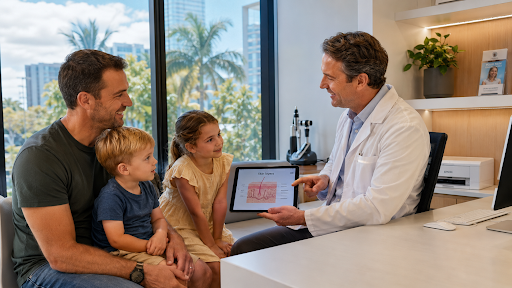
You’ll undress to your underwear. Your doctor examines your skin from head to toe. They use a dermatoscope to look at each mole up close. Suspicious spots get photographed and documented.
If they find something concerning, they’ll discuss options. Monitoring. Biopsy. Removal.
Most checks come back clear. But the peace of mind alone is worth the visit.
Don’t Wait
That mole on your shoulder? That sore that won’t heal? That new spot you noticed last week?
Don’t wait for your next GP visit. Book a skin cancer check in Brisbane this week. Your family needs you around.
