
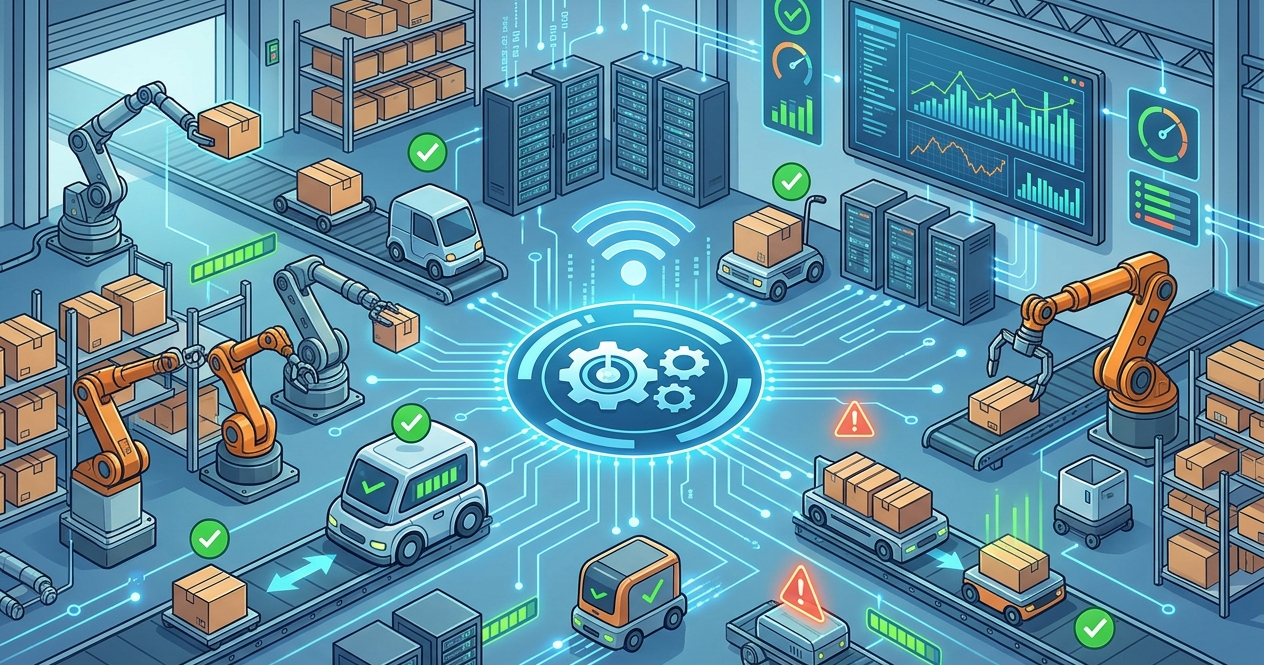
The once-futuristic vision of robots working alongside humans is rapidly becoming a reality across diverse industries. From the bustling floors of fulfillment centers and the intricate operations of manufacturing sites to the challenging environments of construction sites and offshore oil platforms, autonomous systems are no longer experimental novelties but critical operational assets. Companies like Boston Dynamics, with its agile Spot robots, and emerging players developing sophisticated humanoid platforms, are pushing the boundaries of what’s possible. These advancements are largely fueled by sophisticated machine learning, powerful AI models, and the transformative potential of Foundation Models. As businesses transition from pilot projects to large-scale deployments, they are increasingly realizing that the complex web of robot hardware, robot movement, and AI algorithms requires a robust oversight strategy. This is where comprehensive robot monitoring services transition from a “nice-to-have” feature to an absolute imperative for sustained success, operational continuity, and future-proofing.
The Rise of Scalable Robotics Systems
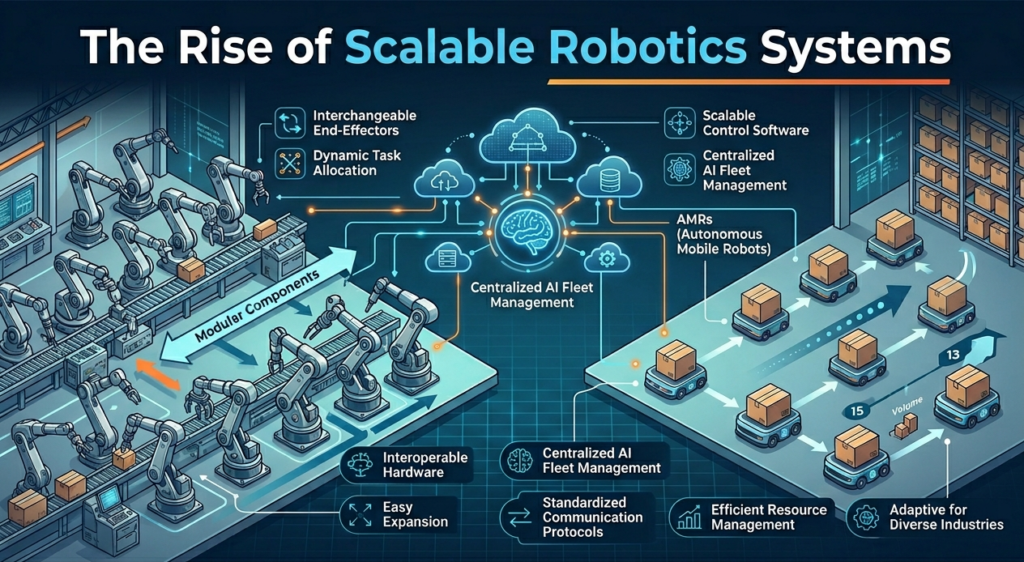
The operationalization of robotics has moved beyond simple task automation, often referred to as robotic process automation (RPA), into the realm of truly autonomous systems. This evolution is characterized by a significant increase in the number and complexity of deployed robots. Organizations are no longer procuring individual units for niche tasks but are orchestrating entire fleets, impacting everything from robot manufacturing site operations to the efficiency of fulfillment centres. Companies like FANUC America and Corvus Robotics are at the forefront, enabling businesses to deploy numerous robots simultaneously. This scaling introduces inherent challenges: how can an organization effectively track dozens, hundreds, or even thousands of robots operating in dynamic environments? What happens when a single robot encounters an unforeseen obstacle, or when its ML model begins to degrade? Ensuring continuous uptime and optimal performance across a vast network of hardware platforms requires more than just advanced machines; it necessitates a sophisticated and integrated monitoring infrastructure. The success of these large-scale deployments hinges not just on the quality of the robot hardware itself, but on the systems in place to manage, maintain, and optimize their collective performance.
What Are Robot Monitoring Services?
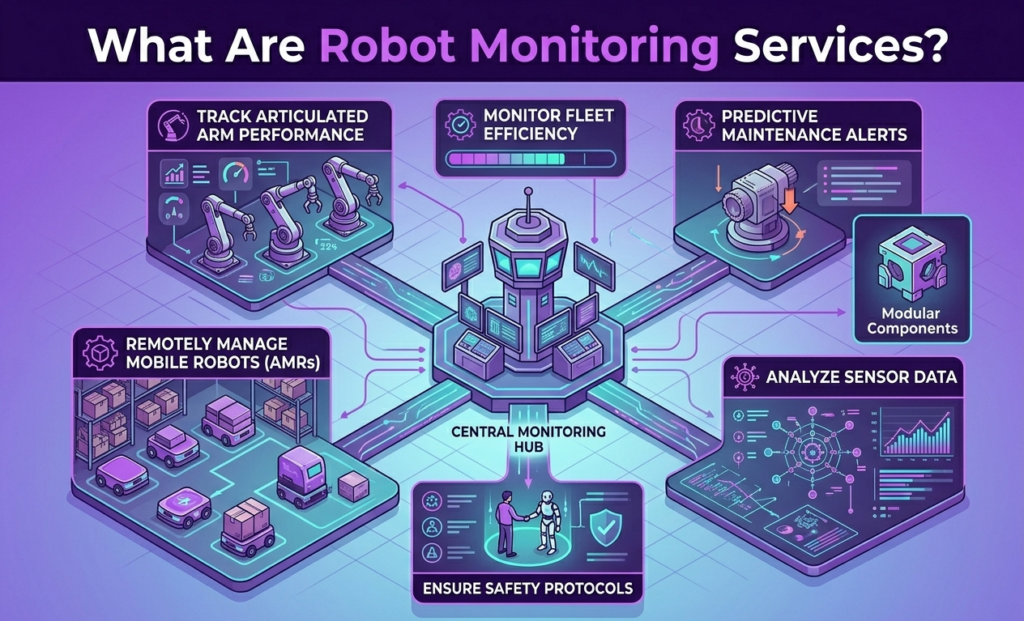
Robot monitoring services centralize data from diverse robot fleets to provide a unified view of operational health and performance.
Robot monitoring services encompass the continuous observation, real-time tracking, and in-depth analysis of robotic systems and their associated environments. These services act as the eyes and ears of a scaled robotic operation, providing critical insights into a multitude of factors. At their core, they offer real-time visibility into system performance and uptime, ensuring that robots are operational when and where they are needed. They track navigation and task execution, verifying that robots are completing their assigned duties efficiently and accurately. Crucially, these services are designed for error detection and alerts, flagging anomalies the moment they occur. Beyond immediate issue identification, robot monitoring services also provide comprehensive data reporting and analytics, which are invaluable for long-term optimization. By leveraging these continuous streams of information, businesses can proactively identify potential issues before they impact operations, minimize costly downtime, and continuously refine the efficiency and effectiveness of their entire robotic fleet. This holistic approach is fundamental to realizing the full potential of any scaled robotics initiative.
1. Ensuring Operational Continuity
When you have a lot of robots working, it’s super important to keep them running all the time. If one robot has a small issue, it can cause a lot of problems and mess things up at work, whether it’s in factories, on construction sites, or at fulfillment centers. Spot robots made by Boston Dynamics are used to check important places where stopping work can cause big problems. Robot monitoring services help keep an eye out for problems by quickly spotting anything unusual. If a robot moves differently, uses more energy, or an AI model works a bit worse, monitoring systems will send alerts right away. The quick alert lets the team fix the problem, make changes, or send tasks to other robots, so everything keeps running smoothly without hurting business goals. This proactive stance is a cornerstone of reliable, scaled robotic operations.
2. Enabling Remote Intervention
Robots often work in places that are hard for people to get to or are unpredictable. This is especially true for work on offshore oil platforms, dangerous industrial areas, or large construction sites. In such scenarios, remote monitoring becomes indispensable. When a robot faces something it didn’t expect, like a new block in the way, a sensor not working, or a tough choice its AI finds tricky, humans can help by using live data and control it from afar. A skilled technician can control the robot, correct its mistakes, or make needed changes, even from far away. Robots can keep working well in new situations, which saves money by reducing the need for expensive site visits or having to get the robots back.
3. Improving Data-Driven Decision Making
The sheer volume of data generated by a fleet of scaled robots is immense. When you gather and look at this data in the right way, it helps you make smart choices. Robot monitoring services are designed to transform raw operational data into actionable intelligence. You can spot hidden patterns and trends by looking at performance metrics, checking data reports, and keeping an eye on things after release. Looking at how robots move in a fulfillment center can show us where routes are not efficient, and we can make them better. Similarly, monitoring the performance of ML models used for object recognition or navigation can reveal areas where model training needs to be revisited or where concept drift is occurring. This data helps make important business decisions about buying robots, changing how we operate, and improving AI models so that robots keep getting better and can adapt.
4. Reducing Maintenance Costs
One of the most significant benefits of sophisticated robot monitoring services is their ability to drastically reduce maintenance costs through predictive maintenance and preventive maintenance. Monitoring systems keep an eye on robot parts all the time, so they’re always in good shape, and we don’t do maintenance unless it’s really needed. These services can spot early signs of trouble in things like motor strain, battery health, sensor readings, and how they run, long before anything actually breaks down. Maintenance teams can fix things during scheduled breaks, get parts ahead of time, and spot problems before they happen. By avoiding emergency repairs and reducing downtime, this method helps your robots last longer and saves you money in the long run.
The Role of Human Support in Robotics
Robots and humans usually need to work together to make large-scale robot deployments successful, even though fully autonomous systems sound appealing. It’s important to have skilled people watching and helping out, especially in tricky or dangerous situations. More companies see the benefit of mixing advanced robots with skilled remote support teams. These teams are important because they help out when an AI model faces something new, a robot moves unpredictably, or when human approval is needed for safety. If businesses want to make their work processes easier and more efficient with automation, using organized support systems similar to those in strong data-driven services can greatly boost productivity and growth. This mixed method helps robots work really well while keeping the important problem-solving skills and adaptability of human intelligence. It also helps workers improve their skills as they learn to handle and work with these advanced systems.
Challenges Without Proper Monitoring
Trying to grow robotics without good monitoring is like driving through a maze with your eyes closed. Organizations that forgo comprehensive oversight often encounter a litany of significant challenges. Foremost among these is frequent and unpredictable system downtime. Without real-time alerts and diagnostics, small issues can become big problems that stop operations. Not being able to see how the robot fleet is doing each day leads to solving problems only after they’ve already caused big disruptions. Automation projects don’t deliver as much value because robots are offline more than they’re working. Without detailed data, it’s hard to see what needs fixing, make workflows better, or follow safety rules, which makes it tough for the business to grow like it wants to. Without good supervision, advanced AI systems can become problematic instead of being helpful.
Future of Robotics: Monitoring as a Core Component
Robotics technology is heading towards a future where monitoring services are a key part of every deployment plan. As AI models get more advanced, handling complex tasks like self-driving cars and smart robots, there will be a growing need for careful and smart supervision. New technologies like smart AI tools, online dashboards, and digital copies are always changing how robots are managed. You can track how things are going right now and even predict problems before they happen. AI safety institutes and the new focus on rules like the EU Digital Services Act show how important it is to use AI responsibly and follow the rules. If businesses start using advanced monitoring tools now, they’ll have a much easier time growing and adapting to changes in the job market and society in the future.
Conclusion
Deploying more robots is a big step forward for all businesses, as it can improve efficiency, productivity, and innovation. To support this big growth plan, we really need good monitoring services. Going from a few robots to a big fleet brings challenges that old management methods can’t handle. For robots to be most effective, make sure they function correctly, solve problems from afar, use data to guide decisions, and do maintenance early to avoid issues. As machine learning and AI technology keep getting smarter, it’s really important to keep an eye on them to make sure they’re working well, staying safe, and not going off track. By using strong monitoring tools, organizations can reduce risks, improve performance, and create durable robotic operations that ensure ongoing success in a more automated world.
