
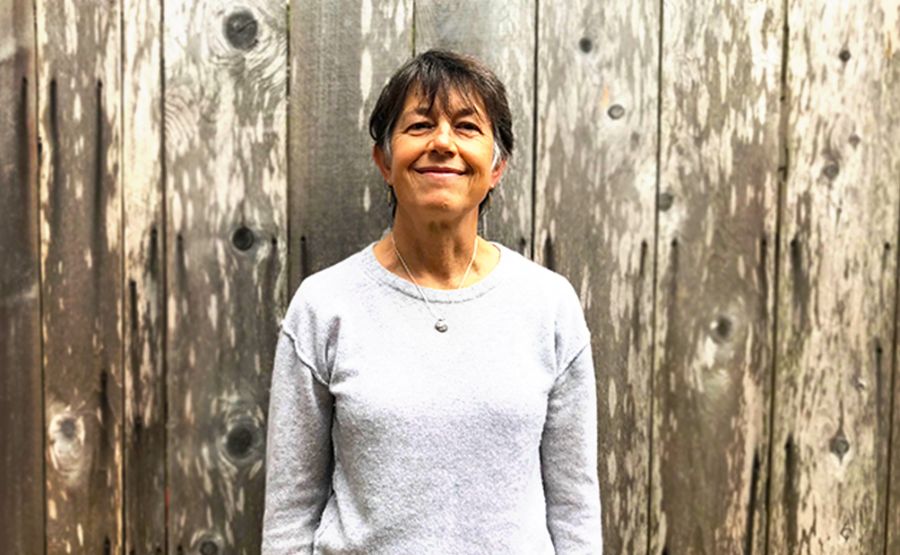
Cindy Paulson matters today because she did something most seventeen-year-olds could not have done — she escaped a serial killer’s grasp, memorized every detail of his house, his car, and his basement, and then gave testimony precise enough to bring down a man the police had already decided to ignore.
That combination of survival instinct and extraordinary observational clarity saved an unknowable number of lives.
Quick Bio
| Detail | Information |
| Full Name | Cindy Paulson |
| Born | 1966, Anchorage, Alaska, USA |
| Age at escape | 17 years old |
| Date of abduction | June 13, 1983 |
| Location of escape | Merrill Field airfield, Anchorage, Alaska |
| Escaped from | Robert Hansen (“The Butcher Baker”), serial killer |
| Key law enforcement figure | Sgt. Glenn Flothe, Alaska State Troopers |
| FBI profiler involved | Special Agent John Douglas |
| Court role | Primary witness; her testimony enabled the search warrant |
| Portrayed in film by | Vanessa Hudgens, The Frozen Ground (2013) |
| Post-case life | Married; three children; relocated outside Alaska |
| Current status | Private; location undisclosed |
Anchorage, 1983: A City That Looked the Other Way
Anchorage in the early 1980s was a city running on oil-pipeline money and wilful blindness.
Women — primarily dancers and sex workers — had been disappearing since the early 1970s. Bodies turned up in remote wilderness that only a bush plane could reach. Families asked questions. Police offered little.
The women who went missing shared one characteristic that made their disappearances easy to minimize: they occupied the bottom rungs of Anchorage’s social hierarchy. Authorities treated their disappearances as inevitable rather than criminal. That willful dismissal allowed one man to hunt for more than a decade without serious investigation.
That man was Robert Hansen. He ran a respected bakery. He had a wife and two sons. He was soft-spoken, stuttering, and publicly unremarkable. Privately, he had constructed a system for abduction and murder that had, by the summer of 1983, claimed at least seventeen lives.
Cindy Paulson was supposed to be one more.
See also “Ed and Lorraine Warren: True Believers, Master Storytellers, or Both?“
June 13, 1983: What Happened on Fourth and Denali
Cindy Paulson was seventeen years old and living with her mother in Anchorage. She was involved in sex work — a fact the police would later use to dismiss her entirely. The circumstances that led her there are not fully documented publicly, and she has chosen not to elaborate in the few interviews she has given over the decades.
On the evening of June 13, 1983, Hansen pulled up to Cindy near Fourth and Denali Street in downtown Anchorage. For oral sex, he offered her $200. After agreeing, she entered his vehicle.
What followed was methodical and premeditated.
Hansen pulled out a .357 Magnum and handcuffed her to the door before she had time to react. He drove her to his house in the Muldoon neighborhood of Anchorage — a blue house on Old Harbor Road, dead-end street, antler horns on the roof, automatic garage door.
Cindy was in survival mode from the first second. She noted every detail her eyes could collect.
Inside the house, Hansen dragged her to the basement. She later described it to investigators with the precision of a crime scene photographer: the fish, the wolf skins, the stuffed animal heads mounted on walls — caribou, goats, birds. A pool table. A chain. He wrapped that chain around her neck four times, secured her to a post, and went to sleep on a couch nearby.
He slept. She catalogued.
The Mind That Stayed Sharp Under Terror
What distinguished Cindy Paulson from many victims was not only that she survived. It was that she survived while paying attention.
She noticed the dead-end sign she’d passed on the approach to the house.The internal door was four steps up, the carpet was on the right, and the basement entry was on the left, according to her mental image of the garage’s layout. She registered the cream-colored Datsun station wagon parked outside. She noted the blue exterior, the picture window facing a specific direction, and the absence of trees in the front yard.
Investigators who later heard this account weren’t just impressed. They were stunned.
Sgt. Glenn Flothe, the Alaska State Trooper who would eventually anchor the Hansen prosecution, asked Cindy to draw a floor plan of Hansen’s house from memory during her formal interview on September 27, 1983. She drew it. When investigators searched the house weeks later, every detail checked out.
That precision wasn’t luck. It was a teenage girl’s mind weaponizing observation against the man holding a gun.
The Escape at Merrill Field
After Hansen woke, he drove Cindy to Merrill Field airfield in Anchorage. His plan was to load her into his Piper PA-18 Super Cub bush plane and transport her to his remote cabin near the Knik River — a location accessible only by air or boat. What happened to women Hansen brought there was already known to investigators, though they couldn’t yet prove it.
Cindy was crouched in the rear seat of Hansen’s car, wrists cuffed in front of her body. When Hansen turned away to load the plane’s cockpit, she moved.
She crawled into the front seat. She opened the driver’s door. She ran barefoot toward Sixth Avenue.
Before leaving the car, in a detail that would later be significant, she deliberately left her sneakers on the passenger floorboard. They were physical proof she had been inside that vehicle. She thought of it in the seconds before she ran.
A truck driver, Robert Yount, spotted her running — barefoot, handcuffed, partially clothed. He stopped. She told him she needed to get to a motel. He drove her to a place called the Mush Inn and then proceeded directly to the police.
Meanwhile, a security guard at Merrill Field had noticed Hansen’s erratic behavior. He didn’t approach. But he wrote down the license plate of Hansen’s car. That note would matter.
Cindy made it to Room 110 at the Big Timber Motel — still handcuffed, alone, shaking.
When the Police Chose Not to Believe Her
Anchorage Police Department officers arrived at the motel. They found a seventeen-year-old girl still wearing handcuffs, traumatized and asking for help.
They didn’t fully believe her.
This is the part of Cindy Paulson’s story that doesn’t appear prominently in the film version — and it is the most consequential failure in the entire case.
Hansen was brought in for questioning. He produced an alibi from a friend named John Henning. He suggested, calmly, that Cindy was attempting extortion.She had previously worked as a prostitute. He had a bakery.
APD accepted the alibi. The case went cold.
It was, at the time, a predictable outcome. Women in Cindy’s position were not afforded credibility by the system that was supposed to protect them. The phrase that circulated — unattributed, damning — was “You can’t rape a prostitute.” That attitude wasn’t unusual in 1983 law enforcement. It was the rule.
Cindy’s account was documented, filed, and set aside.
Glenn Flothe and the Investigation That Wouldn’t Stop
Sgt. Glenn Flothe of the Alaska State Troopers had been building a separate file. Bodies had been found in areas around Anchorage and the Matanuska-Susitna Valley. Ballistics tests connected at least two victims by the same rifle. A separate officer, Baker, noticed patterns and wrote up a report linking several disappearances — and delivered it to Flothe.
Flothe recognized that Cindy Paulson’s account aligned precisely with what the evidence from those murder scenes suggested about the killer.
He went to the FBI. Special Agent John Douglas — a pioneering figure in criminal profiling — constructed a profile from the evidence available. The profile described a man who appeared mild and integrated in the community, who worked independently and managed his own schedule, who had a speech impediment, and who had cripplingly low self-esteem rooted in rejection.
The profile described Robert Hansen in detail that went beyond coincidence.
But a psychological profile alone could not obtain a search warrant. For that, Flothe needed a human witness. He needed Cindy Paulson.
Finding her proved difficult. She had left Alaska shortly after the attack. She was not on any employment rolls. Flothe’s team searched for months. They eventually located her, and she agreed to meet with the investigator who had been the only person in law enforcement to take her seriously.
She set up a tape recorder and Flothe on September 27, 1983.
The Interview That Broke the Case Open
The recorded interview between Cindy Paulson and Sgt. Glenn Flothe lasted hours. It was meticulous, painful, and extraordinary in its detail.
She described Hansen’s stutter. The exact model and color of his car. The specific gun — a .357 Magnum. The house layout drawn from memory. The basement. The chain around her neck. The route to the airfield. The plane.
She provided the detail that cracked the evidentiary wall: she could describe Hansen’s private aircraft. That airplane was the key tool in his methodology — it was how he transported victims to the wilderness where the murders occurred. Without a plane, there were no remote murder sites. Without the plane, no bodies.
Cindy had described that plane in the immediate aftermath of her escape — details that matched the security guard’s observation at Merrill Field.
Flothe secured a search warrant for Hansen’s residence, cars, and airplane, mostly based on Cindy’s official testimony.
On October 23, 1983, investigators searched the house on Old Harbor Road. Inside, they found jewelry belonging to missing and murdered women, hidden firearms in the attic, and — most damning of all — an aviation map with small X marks scattered across remote Alaskan wilderness. Each mark was a grave.
Confronted with that map and the cascading evidence, Hansen eventually confessed.
The Conviction and Its Aftermath
On December 11, 1983, Robert Hansen was sentenced to 461 years plus life in prison without possibility of parole. He was formally charged with the murders of four women — Sherry Morrow, Paula Goulding, Joanna Messina, and the unidentified victim known as “Eklutna Annie” — and with the kidnapping and rape of Cindy Paulson.
He confessed to killing seventeen women in total. He admitted to abducting and assaulting at least thirty more. The full count of his victims remains uncertain because he refused to disclose information about all the marks on his map.
The night Hansen was convicted, Sgt. Flothe and his wife Cheryl took Cindy and a friend to dinner at the Corsair Restaurant in Anchorage. It was a quiet acknowledgment of what she had endured and what she had accomplished.
The next morning, Cindy boarded a plane and left Alaska.
Flothe later recalled that moment with characteristic directness: she departed with an airplane ticket in hand and returned to sex work. He lost contact with her completely. He described her whereabouts in the period that followed as simply “the streets.”
The Long Road She Walked Alone
What Cindy Paulson did after 1983 required a different kind of courage than the escape at Merrill Field.
She carried what had happened without any professional support for roughly twenty-five years. According to filmmaker Scott Walker, who tracked her down in the late 2000s while researching the case, she had never spoken to a therapist. She had never told her family what she had survived. She rebuilt her life in quiet, carrying the weight of that June night entirely alone.
By the time Walker found her, she had married. She had three children. She had relocated to somewhere outside Alaska — the lower 48 states, per the film’s epilogue, though her specific location has never been published.
Her husband knew almost nothing about her past. During Walker’s interview with her — a process that stretched across five days and approximately fifty hours of conversation — she would return home each night and tell her husband everything she had told Walker that day. She required that if any of it became a film, her husband would know about it in advance. Walker agreed.
After the final interview, Cindy wrote Walker a letter. She described the experience as feeling like a weight had been lifted.
Twenty-five years of silence, carried alone. And a single week of speaking the truth aloud changed something fundamental.
The Frozen Ground (2013): Her Story, Partially Told
Writer-director Scott Walker spent years developing the Robert Hansen case into The Frozen Ground, released August 23, 2013, through Lionsgate. Nicolas Cage played the Flothe-inspired trooper, John Cusack played Hansen, and Vanessa Hudgens portrayed Cindy Paulson.
The film took significant creative liberties. A subplot involving a hit on Cindy’s life ordered by Hansen was described by the real Glenn Flothe as a dramatization of a far less dramatic reality — an alleged attempt by associates to bribe Cindy into leaving Alaska before trial. Cindy did not live with Flothe’s family, as the film implied in one sequence. The tone of her relationship with the investigating officer was more formal and professional than the film depicted.
What the film captured accurately was something harder to quantify: the indifference of the system she reported to, and the burden she carried as the only witness anyone in law enforcement actually had.
Hudgens prepared for the role by spending time with Cindy directly. Walker later said Cindy shared things with Hudgens she had never told anyone else. What Hudgens took away, she described simply: Cindy still had a childlike wonder about the world. She still looked at things with openness and curiosity, despite everything. That quality — its persistence after such devastation — struck Hudgens as more remarkable than any act of physical survival.
Publicly, the film received mixed critical reviews. Hudgens’s performance, however, was widely praised as the emotional center of a film that otherwise struggled to transcend the true-crime genre.
Why She Still Matters in 2026
The failures in Cindy Paulson’s case were not random. They were systematic.
A seventeen-year-old sex worker reported a violent assault by a named suspect. She provided her attacker’s address from memory. She had left forensic evidence in his vehicle. A security guard had recorded his license plate at the scene of her escape.
Police accepted the suspect’s alibi from a friend and dropped the case.
The lesson encoded in that sequence is not specific to 1983 or to Alaska. It is a lesson about whose testimony a justice system trusts, and whose it discards. In Cindy’s case, the system failed — and kept failing — until a single state trooper decided that the evidence mattered more than the victim’s occupation.
Seventeen women did not survive Robert Hansen. Cindy Paulson did. And every conversation about institutional bias against vulnerable witnesses, about the credibility gap that separates a baker from a sex worker in a courtroom — every one of those conversations has her experience as evidence.
She carries that legacy privately, deliberately, on her own terms.
FAQs
1. Who is Cindy Paulson?
Cindy Paulson is the Anchorage, Alaska survivor who escaped serial killer Robert Hansen on June 13, 1983, at age seventeen. Her escape, her evidence-preserving instincts, and her formal testimony three months later provided the evidentiary foundation for Hansen’s arrest, search warrant, and eventual conviction. He had killed at least seventeen women over twelve years before her escape ended his freedom.
2. How did Cindy Paulson escape Robert Hansen?
While handcuffed in the back seat of Hansen’s car at Merrill Field airfield, she watched for a moment when his back was turned as he loaded his bush plane. She crawled to the front seat, opened the driver’s door, and ran barefoot toward Sixth Avenue. A passing truck driver named Robert Yount stopped and helped her reach safety. Before running, she deliberately left her sneakers in the car as physical evidence of her presence there.
3. Why did the police initially not act on her report?
When Cindy reported the assault, Hansen produced an alibi from a friend and suggested she was attempting extortion. Anchorage Police Department accepted his account and considered him cleared. The systemic bias against women in sex work meant her detailed, consistent account was set against the word of a respectable local businessman — and the businessman won.
4. How did Cindy Paulson’s testimony help convict Hansen?
Her formal September 27, 1983 interview with Sgt. Glenn Flothe of the Alaska State Troopers was precise enough — describing Hansen’s house, car, basement, and aircraft — to provide the evidentiary basis for a search warrant. That warrant led investigators to Hansen’s home, where they found victims’ jewelry, hidden weapons, and an aviation map marking his murder sites.
5. What happened to Cindy after Hansen’s conviction?
On the day after Hansen’s conviction, she left Anchorage by plane. Glenn Flothe later documented that she returned to sex work following the trial. She eventually rebuilt her life over subsequent years, though the path was neither linear nor easy.
6. Did Cindy ever receive therapy or professional support?
Not for approximately twenty-five years, by her own account to filmmaker Scott Walker. She carried the experience privately, without professional support or family disclosure, until Walker tracked her down in the late 2000s while researching The Frozen Ground.
7. What is The Frozen Ground and how accurately does it portray her story?
The Frozen Ground (2013) is a thriller based on the Hansen case, directed by Scott Walker, with Vanessa Hudgens portraying Cindy Paulson. Several elements were dramatized or invented for narrative purposes — including a subplot involving a contract on Cindy’s life and her relationship with the investigating trooper. The core facts of her escape, testimony, and its role in the prosecution are substantially accurate.
8. Did Cindy Paulson meet Vanessa Hudgens before filming?
Yes. At Walker’s request, Cindy spent time with Hudgens and shared detailed personal history she had previously told no one — including earliest childhood memories through to the present day. Hudgens has described it as one of the most significant research experiences of her acting career.
9. How did Glenn Flothe describe Cindy Paulson?
Flothe, in documented statements, took pains to acknowledge her as central to the entire case. Director Walker reported that Flothe told him directly: “I’m not the hero, Cindy Paulson is the hero and you need to find her.” After their reunion twenty-five years later, Flothe reportedly said that simply knowing she was alive and well was worth the effort of finding her.
10. Is Cindy Paulson still alive?
As of available public records through 2026, yes. She is believed to be alive and living privately with her husband and children, location undisclosed.
11. Did Hansen face justice specifically for what he did to Cindy Paulson?
Yes. Among the charges in his formal conviction was the kidnapping and rape of Cindy Paulson. He was sentenced on December 11, 1983, to 461 years plus life without parole. He died of natural causes at Alaska Regional Hospital in Anchorage on August 21, 2014, at age 75.
12. What is Cindy Paulson’s significance beyond the Hansen case?
Her case is regularly cited in discussions about how the credibility of crime victims is assessed based on their occupation or social status — and about how that assessment can fail catastrophically. The institutional dismissal of her initial report, combined with her subsequent role in delivering an airtight conviction, makes the case one of the clearest documented examples of survivor testimony being undervalued and then vindicated.
Keep creating, innovating, and inspiring with Content Ideators every day.
