
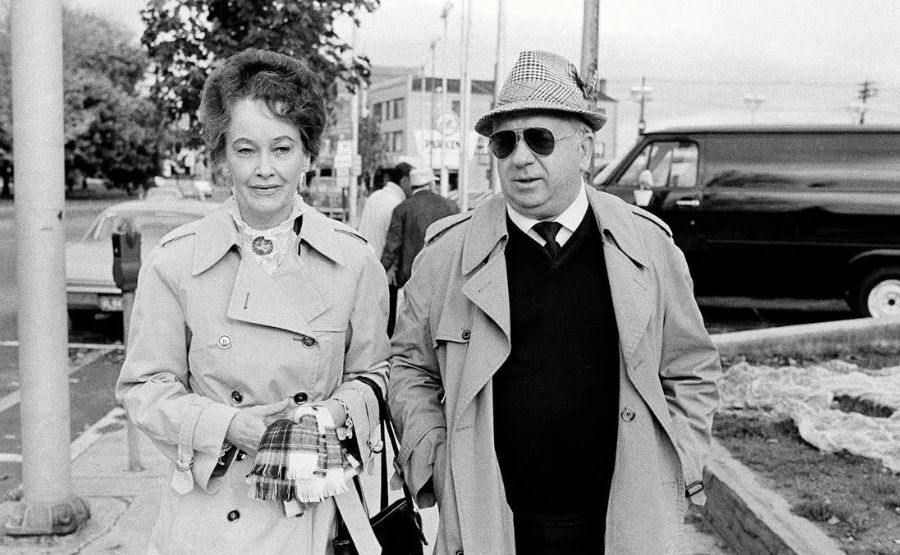
Ed and Lorraine Warren matter in 2026 because the stories they told have generated over one billion dollars in cinema revenue, inspired a universe of horror films still actively expanding, and shaped how an entire generation understands demonic possession, haunted houses, and the business of fear.
The Conjuring franchise — built directly on their case files — remains one of the most commercially successful horror properties in film history. Their names appear in the credits. Annabelle sits in a locked case somewhere in Monroe, Connecticut. And both of them have been dead for years.
The question their legacy demands is not whether you believe in ghosts. It is whether you believe them.
Quick Bio
| Category | Detail |
| Ed’s Full Name | Edward Warren Miney |
| Ed’s Birth | September 7, 1926, Bridgeport, Connecticut, USA |
| Ed’s Death | August 23, 2006, Monroe, Connecticut, USA |
| Lorraine’s Full Name | Lorraine Rita Moran (married: Lorraine Warren) |
| Lorraine’s Birth | January 31, 1927, Bridgeport, Connecticut, USA |
| Lorraine’s Death | April 18, 2019, Monroe, Connecticut, USA |
| Both Buried At | Stepney Cemetery, Monroe, Connecticut |
| Married | 1945, during Ed’s 30-day survivor’s leave from the Navy |
| How They Met | Ed was a theater usher; they met at 16 in 1944 when Lorraine came to see a film |
| Children | One daughter: Judy Warren (b. January 11, 1946) |
| Son-in-law | Tony Spera (runs NESPR today) |
| Ed’s Religion | Roman Catholic |
| Lorraine’s Religion | Roman Catholic |
| Ed’s Self-Described Role | Self-taught demonologist, author, artist, lecturer |
| Lorraine’s Self-Described Role | Clairvoyant, light trance medium |
| Organization Founded | NESPR, the New England Society for Psychic Research, 1952 |
| Claims Investigated | Over 10,000 cases (unverified) |
| Museum | Warren Occult Museum, Monroe, Connecticut (closed 2019; purchased 2025 by Matt Rife and Elton Castee) |
| Books Written | Multiple, including The Demonologist (1980), Ghost Hunters (1989) |
| Ed’s Education | Perry Art School (Yale subsidiary), two years post-WWII |
| Major Cases | Annabelle (1970), Perron Family/Harrisville (1971), Amityville (1975–76), Enfield Poltergeist (1977), Arne Johnson (1981), Snedeker Family (1986), Smurl Haunting (1986) |
| Combined Net Worth Estimate | $8–12 million (estate value; various sources give conflicting figures) |
| Conjuring Universe Box Office | Over $1 billion globally |
Two Children From the Same Street
The origin story of Ed and Lorraine Warren begins in Bridgeport, Connecticut, with two children who lived three blocks apart and who, by all available accounts, were always going to find each other.
On September 7, 1926, Edward Warren Miney was born. He claimed his family moved into a haunted house on Bridgeport’s east side when he was young, and that his first supernatural encounter occurred at age five. His father, a state police officer, dismissed those experiences. Ed internalized them instead.
On January 31, 1927, Lorraine Rita Moran was born. She later described discovering her ability to see auras around people when she was seven or eight years old. She was afraid her parents — devout Catholics — would think something was wrong with her. She kept that ability private.
Neither claim has contemporary corroboration. What the record does confirm is the meeting: in 1944, Ed was working as an usher at a movie theater and 16-year-old Lorraine came to watch a film. He recognized something different about her. She later said she knew immediately that their futures were linked.They were both sixteen years old.
One year later, Ed enlisted in the Navy during World War II.
See also “lizabeth Huberdeau: The Woman Who Built a Life on Her Own Terms“
1945: A Marriage Built on Survival and Shared Conviction
Ed Warren’s ship was sunk in the North Atlantic during the war. He received a thirty-day survivor’s leave when he returned to American soil. He used those thirty days to marry Lorraine Moran in 1945.
Their daughter Judy was born on January 11, 1946, before Ed returned to complete his service.
After the war, Ed enrolled at the Perry Art School — a subsidiary of Yale University — where he studied painting for approximately two years. His subjects leaned consistently toward one theme: the haunted houses and cemeteries of Connecticut. His canvases were not abstractions. They were atmospheric records of places he believed held something dark.
He and Lorraine sold his paintings door-to-door in the early 1950s — setting up stands in Rhode Island and Massachusetts, using the art as a conversation starter, talking their way into the homes of people who wondered whether their houses held something beyond the visible. The transition from painting haunted houses to investigating them was not abrupt. It was a natural extension of the story they were already telling.
In 1952, they formalized that work. The New England Society for Psychic Research — NESPR — was founded, making it, by their account, the oldest continuously operating ghost-hunting organization in New England.
What Each of Them Brought to the Work
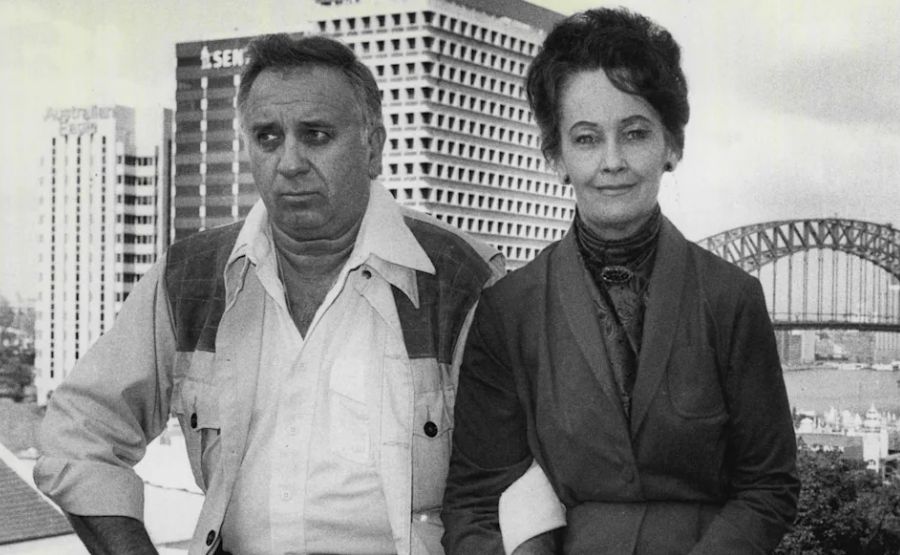
Understanding the Warrens as a partnership requires separating their specific roles.
Ed positioned himself as a demonologist — a title with no formal academic credential anywhere in the world. He was, by his own frank admission, self-taught. His framework was Catholic theology. He divided supernatural entities into categories: human spirits, which he considered relatively benign, and inhuman demonic presences, which he treated as requiring urgent spiritual intervention. He claimed over time to have encountered both categories in significant numbers.
Lorraine’s role was different and, in many ways, more performative. She described herself as a light trance medium and clairvoyant. During investigations, she claimed to receive impressions from the environment — to sense the nature of a presence, its history, its intent. She said she could see the spiritual energy of living people as visible auras and could perceive things invisible to others.
Together, they created a methodology that mixed genuine sincerity with showmanship in proportions that nobody outside the partnership ever fully measured. Ed did the theological framework. Lorraine did the sensing. Both of them did the talking afterward — in lectures, in books, in documentary appearances that stretched across fifty years.
Publicly, they presented a unified front of devout Catholic conviction combined with fearless supernatural investigation. Whether private doubts existed between them is something neither of them ever put on the record.
The Cases That Made Them Famous
Over their career, the Warrens investigated or inserted themselves into a roster of cases that eventually became the source material for one of Hollywood’s most profitable horror franchises.
Annabelle, 1970
Two nursing students in Connecticut reported that a Raggedy Ann doll was moving on its own, leaving handwritten notes reading “help me,” and behaving in ways they couldn’t explain. The Warrens were called in. They concluded the doll housed not a human spirit but an inhuman demonic presence — one that had been manipulating the women by posing as a dead child named Annabelle Higgins.
They took the doll. They placed it in a wooden and glass case in their home. They labeled it with a warning sign reading “Positively Do Not Open.” It became the centerpiece of their Occult Museum and the inspiration for three dedicated films within the Conjuring universe.
The Warrens also told the story of a young man who visited the museum, taunted Annabelle, and died in a motorcycle accident on the drive home. No independent verification of that story has ever been produced.
The Perron Family / Harrisville, Rhode Island, 1971
The Warrens were called to the rural Rhode Island farmhouse where Roger and Carolyn Perron lived with their five daughters. The Warrens attributed the alleged haunting to a 19th-century figure named Bathsheba Sherman, claiming she had made a pact with the devil and cursed the property. The Perrons’ oldest daughter, Andrea, has maintained her account of supernatural events at the farm. The 2013 film The Conjuring, directed by James Wan and starring Patrick Wilson and Vera Farmiga, is based on this case.
Amityville, 1975–1976
The Lutz family moved into a house in Amityville, New York, where six family members had been murdered by Ronald DeFeo Jr. in 1974. They lasted 28 days before leaving. The Warrens were among the first investigators brought in. Lorraine claimed to have seen the spirits of the murdered DeFeo family. Ed described the house as holding a demonic presence of unusual intensity.
In 1979, attorney William Weber admitted publicly that he, author Jay Anson, and the Lutz family had constructed the haunting story collaboratively over multiple bottles of wine. The claim was deemed incongruous with forensic and eyewitness evidence by skeptical investigators Benjamin Radford and Joe Nickell. The Warrens continued to maintain the haunting was genuine for the rest of their lives.
The Enfield Poltergeist, 1977
The Warrens traveled to North London in 1977 to investigate the Hodgson family’s claims of poltergeist activity. The case centered on 11-year-old Janet Hodgson. Multiple British investigators dismissed it as performed by children seeking attention. The Warrens declared it a case of demonic possession. Their account appears in The Conjuring 2 (2016).
Arne Cheyenne Johnson, 1981
This case moved the Warrens from paranormal investigation into a criminal courtroom. They had been called to deal with the alleged demonic possession of David Glatzel, the younger brother of Arne Johnson’s fiancée. The Warrens claimed Johnson himself subsequently became possessed. When Johnson stabbed and killed his landlord, Alan Bono, in 1981, his defense attempted to enter a plea of Not Guilty by Reason of Demonic Possession — the first such plea in American legal history. The judge dismissed the demonic defense. Johnson was convicted of first-degree manslaughter and served five years.
The Warrens’ account was published as The Devil in Connecticut in 1983. Carl Glatzel, David’s brother, later accused the Warrens of exploiting his family’s trauma and misrepresenting the case for profit. He stated the family had expected financial benefit from the book and received $2,000 from the publisher.
The Snedeker / Haunting in Connecticut Case, 1986
The Warrens declared a former funeral home in Southington, Connecticut, to be infested with demons. They commissioned author Ray Garton to write a book based on the case. Garton later told the paranormal investigator Benjamin Radford that the family members couldn’t maintain consistent accounts of events. He reported that when he brought this inconsistency to Ed, Ed’s response was to take whatever existed and fabricate the rest. Garton went on record about this exchange multiple times. The case became the 2009 film The Haunting in Connecticut.
The Occult Museum: A Cabinet of Contested Objects
In the back of the Warrens’ Monroe, Connecticut home sat what they called their Occult Museum — a collection of objects gathered from their investigations across five decades.
The museum held Annabelle. It held a human skull. A satanic idol reportedly found in Sandy Hook in 1991.A “shadow doll” with human teeth and bird feathers. A piano that allegedly played by itself. A necklace called the “Pearls of Death,” said to strangle wearers. A coffin claimed to have belonged to a vampire. A copy of the Necronomicon.
Visitors paid $13 for the tour. Ed and Lorraine told the stories behind each object. Tony Spera, their son-in-law, later managed the museum alongside Lorraine after Ed’s death.
The museum closed in 2019 following Lorraine’s death, partly due to zoning complications — the residential property was generating traffic volumes incompatible with its neighborhood designation.
In August 2025, comedian Matt Rife and YouTuber Elton Castee purchased the property, announcing plans to reopen it with overnight stays available to visitors. Annabelle, along with other artifacts, came with the house.
Whether those objects carry actual danger is a question each visitor must answer for themselves. What is documentable is that the museum generated consistent revenue for decades and served as a physical anchor for the Warren brand — part evidence room, part tourist attraction, part business asset.
The Skeptics and the Investigators Who Examined the Evidence
The Warrens were not without critics during their lifetime, and those critics deserve serious coverage in any honest account.
In 1997, Steve Novella and Perry DeAngelis of the New England Skeptical Society paid $13 and took the standard museum tour. They reviewed the videos. They examined the objects. They watched the best evidence the Warrens had assembled for the existence of supernatural entities.
Their conclusion was that the Warrens were genuinely nice people with genuinely sincere beliefs and genuinely no compelling evidence. Novella described their claims as “scientifically testable” but found that the evidence simply did not survive examination. He noted that the flash photography anomalies the Warrens presented as spirit photographs were consistent with known photographic artifacts. Both investigators expressed no belief that the Warrens intended deliberate harm — but stated clearly that their claims reinforced dangerous delusions about the nature of reality.
Joe Nickell and Benjamin Radford, two of America’s most published paranormal investigators, concluded that the Amityville haunting and the Snedeker family case had been fabricated. Radford noted that the Amityville case was “refuted by eyewitnesses, investigations and forensic evidence.”
Ray Garton’s firsthand account of being instructed to fabricate the Snedeker book remains the most damaging single piece of testimony against the Warrens. Garton was not a skeptic with an agenda. He was a horror author hired by the Warrens themselves who later felt obligated to describe what he had witnessed.
Against this, the Warrens’ defenders — including Tony Spera and longtime supporters within the paranormal community — maintained consistently that their investigations were genuine, that the film adaptations introduced inaccuracies, and that the critics had not encountered what the Warrens had.
The Judith Penney Allegation and the Contractual Clause
No honest account of Ed and Lorraine Warren can omit the 2017 allegation from Judith Penney.
Penney claimed a forty-year sexual relationship with Ed Warren beginning when she was fifteen years old and he was twenty-seven. She claimed that when she became pregnant, Lorraine persuaded her to end the pregnancy on the grounds that discovery would destroy the Warrens’ public standing and business. She also described witnessing physical abuse.
These are serious allegations. They have not been proven in any legal proceeding. The Warrens’ daughter Judy and son-in-law Tony Spera stated they had spent decades in close proximity to the couple and never witnessed any of the described conduct.
What exists in documented form is a contractual fact: Lorraine Warren negotiated specific terms into her agreements for The Conjuring film series. Those terms prohibited the portrayal of herself or Ed in extramarital affairs or in sexual conduct with a minor. Contracts protect against things that people consider possible. The existence of that clause invites reasonable questions that no court has formally resolved.
Net Worth: What the Warren Legacy Is Actually Worth
The financial picture of the Warrens is complicated by the gap between what they personally accumulated and what their intellectual property has generated.
The Conjuring cinematic universe has produced over one billion dollars in global box office revenue since 2013. The Warrens themselves received a share of that through licensing and consulting arrangements — Lorraine served as a paid consultant and appeared in a cameo in the 2013 film. But the producers and studios captured the overwhelming majority of that revenue.
During their active careers, the Warrens earned income through: client fees for investigations; admission to the Occult Museum ($13 per tour); proceeds from lecture tours at universities and events; royalties from their authored and co-authored books; payments for television appearances on A Haunting, Paranormal State, Scariest Places on Earth, and other programs; and fees for expert witness roles in specific cases.
Most financial estimates place the Warren estate somewhere between $1 million and $12 million depending on how assets are valued — with the most careful analysis suggesting a figure in the $8–12 million range when real property, intellectual property, and estimated royalties are combined. The $1–2 million figure cited by some sources appears to undervalue their intellectual property significantly.
What is certain: the Warrens were not poor, and the story they built has made enormous wealth for others.
After They Were Gone: What the Warrens Left Behind
Ed Warren died on August 23, 2006, in Monroe, Connecticut. He was seventy-nine years old.
Lorraine outlived him by nearly thirteen years, continuing to appear at events, consult on film productions, and maintain the museum until her health prevented it. She died on April 18, 2019. She was ninety-two years old.
Both were buried at Stepney Cemetery in Monroe, Connecticut.
Their daughter Judy and son-in-law Tony Spera have operated NESPR since then. Spera has been a consistent and vocal defender of the Warren legacy against skeptical criticism. The organization continues to log cases and maintain the estate’s public presence.
The Conjuring films continued to release after both Warrens’ deaths. The Conjuring: The Devil Made Me Do It appeared in 2021. A fifth mainline Conjuring film was in production as of 2025. Netflix released The Devil on Trial in 2023, which examined the Johnson case and raised specific questions about whether the Warrens had misrepresented evidence in court.
The museum’s sale to Matt Rife and Elton Castee in 2025 represents the latest chapter in a story that refuses to close. Annabelle moved with the property. The tours will presumably begin again.
The Honest Assessment of a Complicated Legacy
Ed and Lorraine Warren occupy a position in American cultural history that resists easy summary.
They were devout Catholics who genuinely believed in what they were doing. Multiple people who knew them personally, including their daughter and son-in-law, described them as sincere and caring. They gave lectures to thousands of people. They helped families who were frightened and had nowhere else to turn. They built NESPR into a functioning institution that outlasted them.
They were also storytellers who operated in a space where the claims could not be independently verified, whose most famous cases were subsequently discredited by multiple investigators, who were accused in firsthand accounts of instructing authors to fabricate details, and who maintained contractual protections that raised questions their public image could not answer.
The Amityville case was declared a hoax by its own participants. The Snedeker case author said he was told to invent material. The Johnson possession defense failed in court. The 10,000 cases figure has no corroborating documentation. And yet the films keep coming, and the seats keep filling, and somewhere in Monroe, Connecticut, a Raggedy Ann doll sits in a locked case with a warning sign on it.
Final Words
Edward Warren Miney and Lorraine Rita Warren grew up three blocks apart in Bridgeport, Connecticut, met when they were sixteen, married during wartime on a thirty-day leave, and spent the next half-century building the most famous paranormal brand in American history.
They investigated, they lectured, they wrote, they collected, they appeared on television, and they told stories in books, museums, and courtrooms that the culture could not stop consuming. They died in the same Connecticut town where they built their lives. Their graves are thirty minutes from the house where Annabelle was kept.
The skeptics concluded there was nothing real in their evidence. Their supporters concluded the skeptics missed what was actually there. The gap between those two positions is exactly where the Warren legacy lives — and where it will remain as long as people are willing to pay to be frightened.
Whether that gap represents genuine mystery, skillful storytelling, exploitation of vulnerable people, sincere religious conviction, or some combination of all four is a question their story has never definitively answered.
It probably never will.
FAQs
1. Who were Ed and Lorraine Warren?
Edward Warren Miney (September 7, 1926 – August 23, 2006) and Lorraine Rita Warren (January 31, 1927 – April 18, 2019) were American paranormal investigators, authors, and lecturers based in Monroe, Connecticut. They founded the New England Society for Psychic Research (NESPR) in 1952 and claimed to have investigated over 10,000 cases of alleged haunting and demonic activity during their career.
2. What is the Warrens’ estimated net worth?
Financial estimates vary significantly. Conservative estimates place the Warren estate at $1–2 million. More comprehensive analyses that account for real property, intellectual property, and ongoing royalty streams estimate $8–12 million. The Conjuring cinematic universe generated over $1 billion globally — a revenue stream built on their cases, though the studios captured the majority of that income.
3. What is the NESPR?
The New England Society for Psychic Research, founded in 1952, is the organization the Warrens built to formalize their paranormal investigations. They described it as the oldest ghost-hunting group in New England. It continues to operate under the direction of their daughter Judy Warren and son-in-law Tony Spera.
4. How did Ed and Lorraine Warren meet?
They grew up three blocks apart in Bridgeport, Connecticut. In 1944, when both were sixteen, Ed was working as a theater usher and Lorraine came to watch a film. They began dating, Ed enlisted in the Navy in 1945, and married Lorraine during his thirty-day survivor’s leave after his ship was sunk in the North Atlantic.
5. What was the Warrens’ most famous case?
Annabelle and the Amityville Horror are both strong candidates. The Perron family haunting in Harrisville, Rhode Island, provided the source material for the original Conjuring film in 2013 and is likely the case that drove the most sustained commercial revenue. Amityville is more culturally recognizable but was declared a fabrication by attorney William Weber in 1979.
6. Was the Amityville haunting real?
In 1979, attorney William Weber, who had represented the murderer Ronald DeFeo Jr., publicly stated that he and the Lutz family invented the haunting story together. Skeptical investigators including Benjamin Radford and Joe Nickell found it inconsistent with forensic and eyewitness evidence. The Warrens maintained its authenticity throughout their lives.
7. What happened in the Arne Cheyenne Johnson case?
In 1981, Johnson killed his landlord, Alan Bono, in Connecticut. His defense argued demonic possession — the first such plea in American legal history. The judge rejected the defenseJohnson received a five-year sentence after being found guilty of manslaughter. The case inspired The Conjuring: The Devil Made Me Do It (2021) and the 1983 book The Devil in Connecticut. A Netflix documentary in 2023 questioned whether the Warrens had misrepresented evidence in connection with the case.
8. Who is Annabelle, and where is she now?
Annabelle is a Raggedy Ann doll that two Connecticut nursing students reported behaving strangely in 1970. The Warrens took possession of it and placed it in a locked glass case in their Occult Museum with a “Positively Do Not Open” warning. After the museum closed in 2019, the property and its contents were purchased in 2025 by comedian Matt Rife and YouTuber Elton Castee, who plan to reopen the museum.
9. What did skeptics find when they investigated the Warrens?
In 1997, Steve Novella and Perry DeAngelis of the New England Skeptical Society paid $13 for the Occult Museum tour, reviewed all available evidence, and concluded the Warrens were pleasant, sincere people with no compelling evidence to support their claims. They identified standard flash photography artifacts in supposed spirit photographs and described the overall evidentiary record as worthless. Joe Nickell and Benjamin Radford reached similar conclusions about the Warrens’ most famous cases.
10. Who was Ray Garton and what did he say about the Warrens?
Ray Garton was a horror author commissioned by the Warrens to write In a Dark Place about the Snedeker family haunting. He later stated publicly that when he raised inconsistencies in the family’s accounts with Ed Warren, Ed told him to take what existed and make up the rest. Garton described this exchange in multiple interviews across multiple publications and stated that Ed had told him, “Everybody who comes to us is crazy. Otherwise why would they come to us?”
11. What is the Judith Penney allegation?
In 2017, Judith Penney claimed she had a forty-year sexual relationship with Ed Warren beginning when she was fifteen and he was twenty-seven. She also alleged that Lorraine persuaded her to terminate a pregnancy to protect the Warrens’ reputation, and described witnessing physical abuse. These allegations have not been adjudicated in any legal proceeding. The Warrens’ daughter and son-in-law denied having witnessed any of the described conduct.
12. What did Lorraine put in her Conjuring contracts?
Lorraine Warren negotiated terms into her consulting agreements for the Conjuring film series that prohibited depicting herself or Ed in extramarital affairs or in sexual conduct with a minor. The specific nature of those contractual protections became notable after the Judith Penney allegation became public in 2017.
13. How many books did the Warrens write?
They co-authored and contributed to multiple books, including The Demonologist: The Extraordinary Career of Ed and Lorraine Warren (1980, with Gerald Brittle), Ghost Hunters: True Stories from the World’s Most Famous Demonologists (1989), Graveyard: True Hauntings from an Old New England Cemetery (1992), Ghost Tracks (2004), and several others.
14. Where are Ed and Lorraine Warren buried?
Both are buried at Stepney Cemetery in Monroe, Connecticut — the town where they lived, built their museum, and ran their investigation practice for decades.
15. What is the Warrens’ enduring cultural impact?
They transformed paranormal investigation from a fringe pursuit into a commercially viable cultural industry. They popularized the concept of demonology for mainstream audiences, established the template that subsequent ghost-hunting television shows and documentary series would follow, and provided the case material for the Conjuring franchise — one of the highest-grossing horror properties in film history. Whether their specific claims were genuine or fabricated, the architecture they built continues to generate cultural and financial returns long after their deaths.
Keep creating, innovating, and inspiring with Content Ideators every day.
