
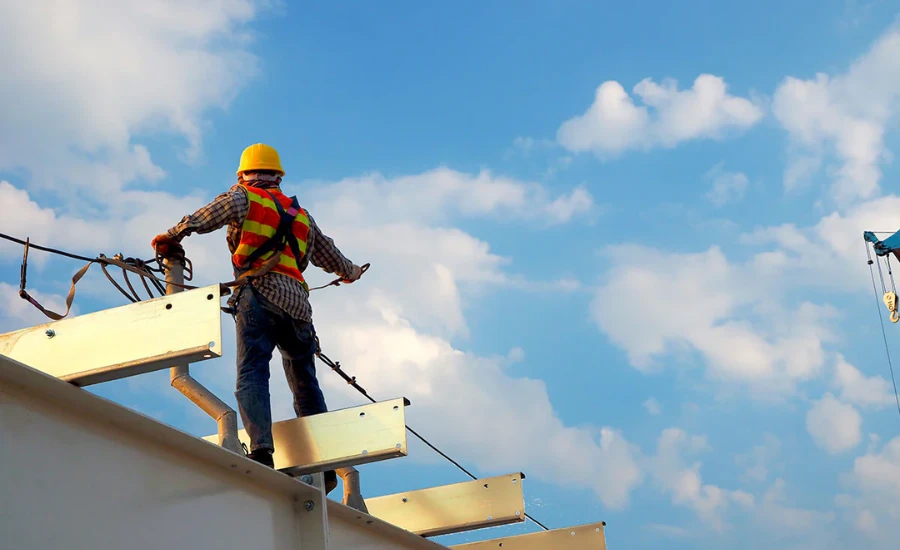
Falls from height are one of the leading causes of serious injury and death in Australian workplaces. Despite this, there is genuine confusion among workers and employers about who is actually required to hold a working at heights certificate, what the course involves, and whether it applies to a particular role or industry. If you work in construction, maintenance, roofing, or any number of other industries in Sydney, this qualification is likely not optional. Here is what you need to know.
What Is a Working at Heights Course?
A working at heights course is formal safety training that equips workers with the knowledge and practical skills to identify fall hazards, select and implement appropriate control measures, and work safely in situations where a fall from height is a risk. The course is based on the national unit of competency RIIWHS204E, Work Safely at Heights, and leads to a nationally recognised statement of attainment upon successful completion.
The course exists because of the legal obligation under the Work Health and Safety Act 2011 for employers and workers to manage the risk of falls in the workplace. It is not simply a recommended best practice. It is a training requirement for anyone performing work where a fall from height is reasonably foreseeable. It is worth noting that the working at heights course is distinct from other height-related qualifications such as rope access training or elevated work platform licensing. Those qualifications cover specialised equipment and techniques, while the working at heights course addresses the foundational safety knowledge and skills that underpin all work at height.
Who Needs a Working at Heights Course in Sydney?
The legal position in New South Wales is clear. Anyone whose work involves the risk of a fall from height must be trained and competent to perform that work safely. As a general rule, any work carried out above two metres is considered to require fall protection measures and appropriate training under the Work Health and Safety Regulation 2017.
The industries where working at heights training is most commonly required in Sydney include construction, roofing, telecommunications, painting, window cleaning, warehousing, facilities management, and event production. Specific roles that typically require the qualification include builders, roofers, concreters, scaffolders, painters, electricians, riggers, maintenance workers, and anyone involved in installing or servicing equipment at height. Site supervisors and managers who oversee height work also have a training obligation, as their duty of care extends to ensuring that the workers they supervise are competent and that appropriate controls are in place. Employers have a legal responsibility to ensure that no worker performs height work without appropriate training and competency, and the consequences of failing to meet this obligation are serious.
What Does the Working at Heights Course Cover?
The content of the RIIWHS204E unit is practical and directly relevant to the hazards workers encounter on site. The course begins with the legislative framework, covering the Work Health and Safety Act 2011, the Work Health and Safety Regulation 2017, and the relevant Codes of Practice for managing the risk of falls in general construction.
A central component of the course is the hierarchy of fall hazard controls, which guides workers and employers through the process of eliminating fall risks where possible and selecting the most effective controls when elimination is not practicable. This includes edge protection, guardrails, safety nets, and personal fall arrest systems. Learners are trained in how to inspect, fit, and correctly use personal fall arrest equipment including harnesses, lanyards, connectors, and anchor points. Pre-use inspection of height safety equipment is covered in detail, including how to identify damaged, worn, or non-compliant equipment that should be taken out of service. Safe work method statements for working at heights are introduced, giving workers a practical understanding of how to plan and document height work before it begins. Rescue procedures, including what to do in the event of a fall or a suspended worker situation, are also addressed as a critical part of the course content.
How Is the Working at Heights Course Delivered in Sydney?
Working at heights training cannot be completed through an online-only format because the practical assessment component is a genuine requirement of the qualification. The hands-on element of the course requires learners to physically demonstrate their ability to fit and inspect a harness, attach correctly to an anchor point, and use fall protection equipment safely. This is not a skill that can be meaningfully assessed through a screen. For workers in Sydney looking at options for completing their qualification, reviewing what a well-structured working at heights course Sydney program includes helps set realistic expectations about what the training day involves and what assessors are looking for.
The course is typically structured across a half day to a full day depending on the provider and the size of the group. The first part of the session covers the theory component, including relevant legislation, hazard identification, the hierarchy of controls, and emergency procedures. The second part moves into the practical assessment, where each learner demonstrates correct harness fitting, equipment inspection, and anchor attachment under the supervision of a qualified assessor. Learners should wear comfortable clothing that allows full range of movement, closed-toe footwear, and should bring any required identification to the session. Some providers offer pre-reading or online theory modules that can be completed before the face-to-face day, which allows more time to be spent on the practical component during the session itself.
How to Choose a Working at Heights Training Provider in Sydney
Not all working at heights courses are created equal, and choosing the right provider matters both for the quality of your training and the validity of your certificate. The most important check is that the provider is listed as a registered training organisation on the national register at training.gov.au and that the course specifically delivers the RIIWHS204E unit of competency.
Beyond registration, look for a provider whose assessors have genuine industry experience in height safety, who use proper training equipment including full harness systems and anchor setups, and who conduct a structured and meaningful practical assessment rather than a superficial walkthrough. The difference between a thorough practical assessment and a tick-and-flick course is significant, and employers and site managers are increasingly aware of the difference when reviewing worker competency. Many Sydney providers offer both fixed-venue training sessions and on-site training for employers who need to train multiple workers at once, which can be a more efficient and cost-effective option for larger teams.
What Happens After You Complete the Course?
Upon successful completion of the course, you receive a nationally recognised statement of attainment for RIIWHS204E. This document is your evidence of competency and should be kept safely and presented when required by an employer, principal contractor, or site manager before height work begins.
In New South Wales, refresher training for working at heights is generally recommended every two years, though there is no single universal renewal requirement that applies across all industries and employers. Some principal contractors and large construction firms set their own renewal periods as part of their safety management systems, so it is worth checking the requirements of the specific sites or employers you work with. A working at heights certificate obtained in another Australian state is generally recognised for work in New South Wales, as the qualification is based on a national unit of competency. The working at heights certificate complements other safety qualifications well, and many workers hold it alongside a white card and an elevated work platform licence as part of a broader construction safety credential set.
Closing Thoughts
Falls from height continue to cause preventable deaths and serious injuries on Australian worksites every year. The working at heights course exists to change that by ensuring every worker who performs height work has the knowledge and practical skills to do so safely. For workers in Sydney, the course is accessible, practically focused, and completed in a single day. For employers, ensuring your workers are trained and competent before height work begins is not just a legal obligation but a fundamental duty of care to the people on your site. Get the qualification right, choose a quality provider, and treat the training as the genuine safety investment it is.
