
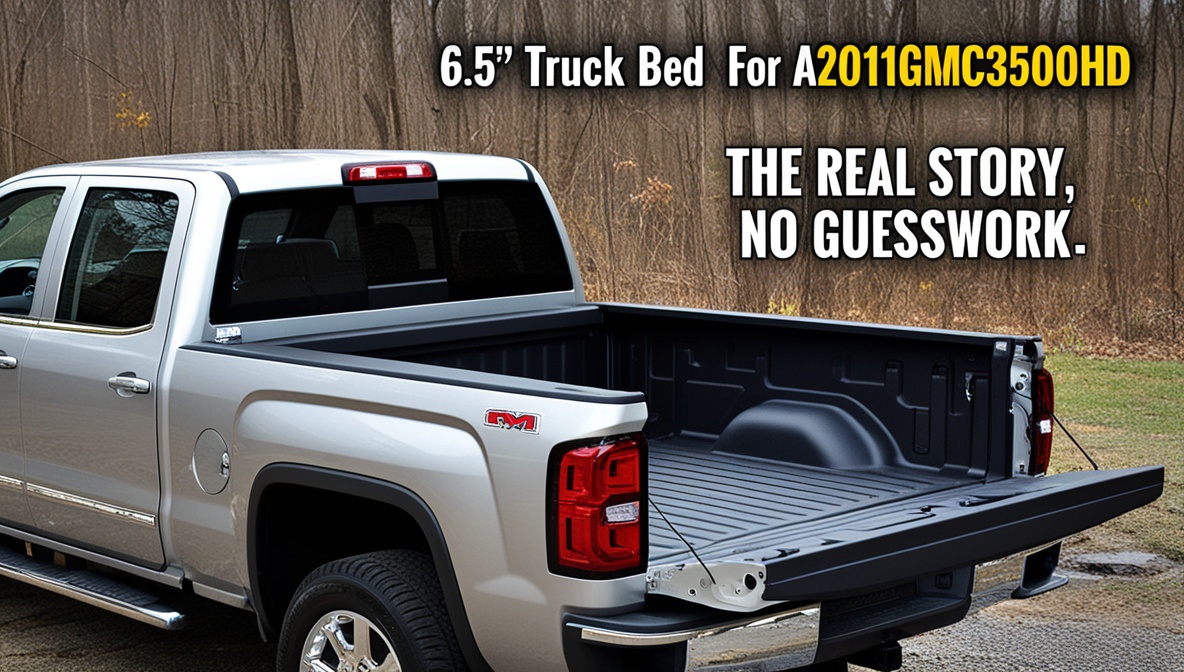
So you’ve got a 2011 GMC Sierra 3500HD, and somebody mentioned a “6.5-foot bed.” Maybe you’re buying a used truck and the listing says it. Maybe you’re shopping for a replacement bed and trying to figure out what actually fits. Either way, you typed it into Google and got a pile of confusing, contradicting answers.
I get it. I went digging through a stack of sources to sort fact from guesswork, and honestly, a lot of what’s floating around online doesn’t add up. Let’s clear the fog together, plain and simple, the way a buddy at the parts counter would explain it to you.
Quick Facts
| Spec | Detail |
| Common nickname | “6.5-foot bed” |
| Official GM term | 6.6 ft standard box |
| Cab it comes with | Crew cab only (2011 Sierra 3500HD) |
| Wheelbase with this box | 153.7 inches |
| Cargo box height | 21.0 inches |
| Tailgate width | 61.6 inches |
| Cargo volume | 75.5 cubic feet |
| Other bed option that year | 8 ft long box (reg/extended/crew cab) |
| Standard engine | 6.0L V8 gas, 360 hp / 380 lb-ft |
| Available engine | 6.6L Duramax LML diesel, 397 hp / 765 lb-ft |
| Max payload (3500HD) | Up to 6,635 lbs depending on configuration |
| Max towing (5th wheel) | Up to 21,700 lbs |
Let’s Clear Up the Name First
Here’s something nobody tells you straight. GMC never actually called this box a “6.5-foot bed” in their own paperwork. GMC’s own trim sheets for the 2011 Sierra 3500HD list it as a 6.6 ft box, paired specifically with crew cab models.
So where did “6.5 feet” come from? Easy. People round numbers when they talk. Six-point-six feet is close enough to six-and-a-half that the rounded version just stuck around in everyday conversation, at the dealership, on Craigslist, in salvage yard listings, everywhere.
It’s a small thing, but it matters if you’re trying to order parts or match measurements exactly. When you ask at a parts counter for a “6.5-foot bed,” most people will understand what you mean.However, “6.6 ft box” will appear if you compare the precise specifications with GM’s own paperwork. Same bed, different label.
See also “Oronsuuts Meaning Explained: The Full Story Behind This Mongolian Word“
What Cab Comes With This Bed
This part trips up a lot of people, and I saw several websites get it flat-out wrong. So let’s nail it down clearly.
In 2011, the GMC Sierra 3500HD crew cab came paired with this shorter 6.6 ft box, while regular cab and extended cab versions came with the longer 8 ft box instead. There wasn’t a version where you could get a regular cab with the short box, at least not as a factory-built configuration that year.
That makes sense if you think about it. Crew cab trucks have a longer cabin to fit four full doors and rear seating. GM balanced that out with a shorter bed, keeping the whole vehicle from turning into an unmanageable land yacht. Regular and extended cabs, with their shorter cabins, got paired with the longer box instead, keeping the total truck length reasonable either way.
So if your 3500HD is a crew cab, this bed is exactly what came on it from the factory. IThe 6.6-foot, sometimes-called 6.5-foot box wasn’t a factory fit for your vehicle that model year if you have a conventional cab or an extended cab.
The Real Dimensions, Cross-Checked
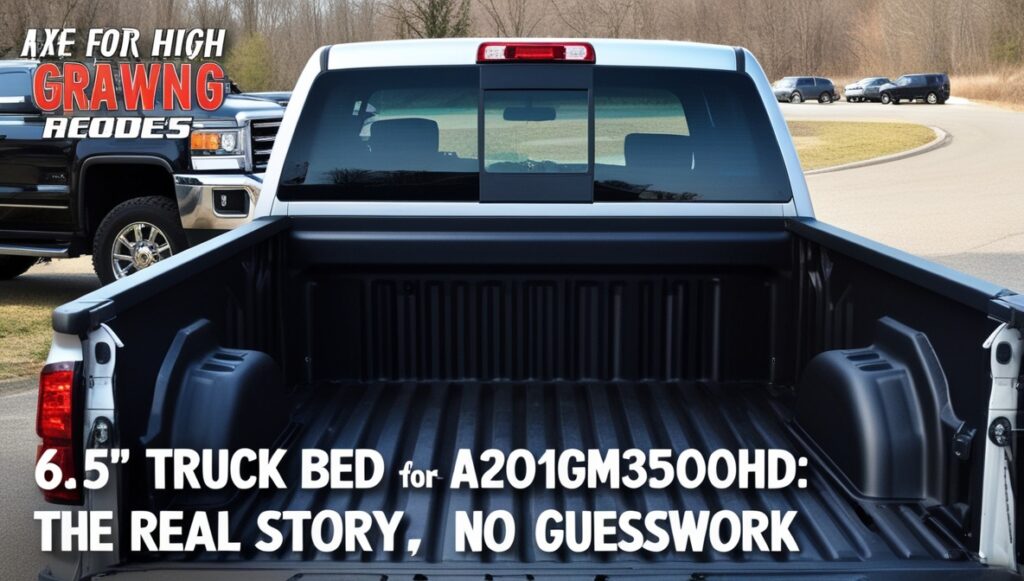
Numbers matter here, especially if you’re shopping for a replacement bed or a bed cover. I checked this against actual GM trim data rather than guesswork blog posts, and here’s what holds up.
The cargo box height comes in at 21.0 inches, with a tailgate width of 61.6 inches and total cargo volume around 75.5 cubic feet. The wheelbase on the crew cab with this shorter box measures 153.7 inches.
You’ll notice I’m not throwing out a bunch of conflicting inside-length numbers here. Several websites claim wildly different lengths, anywhere from 69 inches to 82 inches, often within the same article. Rather than repeat numbers that contradict themselves, I’m sticking with what GM’s own published trim specifications actually confirm.
If you need an exact bed-floor-to-tailgate measurement for something like a bed liner or tonneau cover, your safest move is measuring your actual truck bed yourself, or pulling the number straight from a part-specific listing that references your exact VIN. Generic blog numbers aren’t reliable enough for a precise fit.
Why People Actually Want This Bed Size
Let’s talk about why this bed size exists in the first place, beyond just specs on paper. There’s a real, human reason this configuration is popular.
Picture hauling lumber, fencing, or landscaping supplies through a busy job site. An 8-foot bed is great for capacity, but it’s a beast to maneuver in tight spots. This shorter box keeps things easier to handle without giving up too much usable space.
It also matters for everyday parking. Garages, city streets, and crowded lots don’t always have room for a full-size long-bed truck. The shorter box, paired with the crew cab’s family-friendly back seat, gives you a truck that works for hauling gear on a Saturday and picking up the kids on a Tuesday.
That combination is exactly why so many contractors and small business owners gravitated toward crew cab, short-box heavy-duty trucks during this era. You get real capability without sacrificing daily usability.
Engine Options Under the Hood
Your bed size is one piece of the puzzle, but what’s powering the truck matters just as much if you’re hauling heavy loads regularly. The 2011 3500HD gave buyers two solid choices.
The standard engine was a 6.0-liter gas-powered V8 making 360 horsepower and 380 pound-feet of torque. That’s the base setup, and it handles plenty of everyday tasks just fine.
Step up to the optional engine, and things get serious. The 6.6-liter Duramax turbodiesel was rated at 397 horsepower and 765 pound-feet of torque, a genuinely massive number for a pickup truck engine at that time.
That diesel option arrived freshly re-engineered for 2011, with about 60 percent new parts compared to the prior version. If you’re shopping for a used 3500HD today, checking which engine sits under the hood tells you a lot about what the truck can realistically do.
Towing and Payload Numbers That Actually Matter
Numbers like horsepower sound impressive, but towing and payload capacity are what actually decide whether your truck can do the job you need. Here’s where things get genuinely strong for this model.
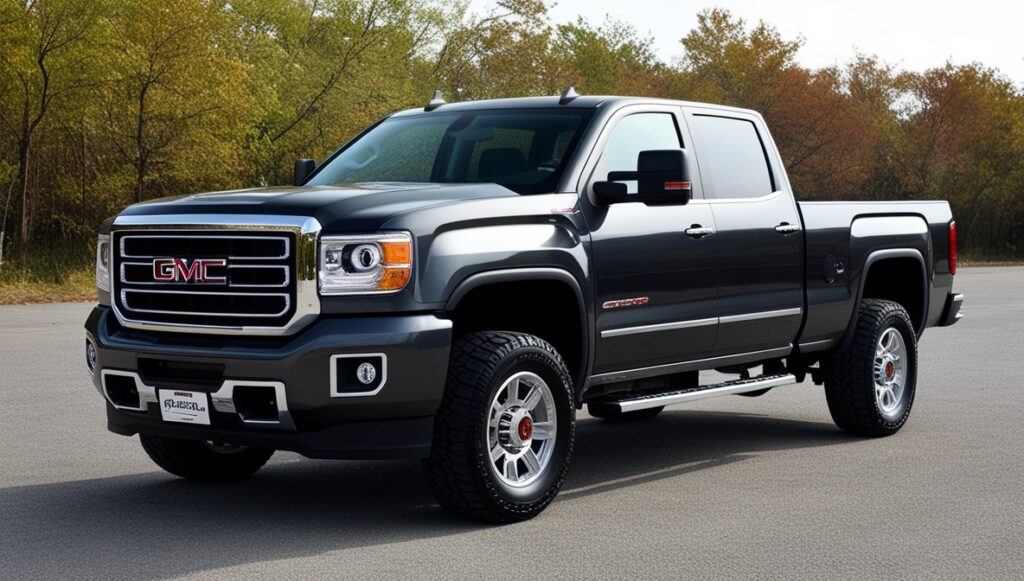
Properly equipped, the 2011 3500HD could haul up to 6,635 pounds of payload, tow up to 17,000 pounds using a standard ball hitch, and pull as much as 21,700 pounds with a fifth-wheel connection. Those are serious, work-truck-grade numbers.
Keep in mind those are maximum figures, achieved with specific configurations, not necessarily what every single 3500HD on the lot can do. A crew cab model that isn’t the maxed-out dual-rear-wheel setup might be rated closer to 4,165 pounds of payload and 13,000 pounds of ball-hitch towing instead, still strong, just not the absolute ceiling.
If towing capacity matters a lot to you, always check the door-jamb sticker or the specific build sheet for your exact truck. Two 3500HDs from the same model year can have meaningfully different capacities depending on axle ratio, cab style, and drivetrain.
Single Rear Wheel vs Dual Rear Wheel
You’ll also run into the terms SRW and DRW while shopping for a 3500HD. These matter just as much as bed length when it comes to real-world capability.
SRW means single rear wheel, basically one tire on each side of the rear axle, like a typical pickup. DRW, or dual rear wheel, adds an extra tire on each side, giving you that wider stance and higher load capacity you’ll recognize as the classic “dually” look.
The regular cab dual-rear-wheel 3500HD topped out around 6,635 pounds of maximum payload, the highest rating in the lineup. Single rear wheel models carry less weight but offer easier handling and a narrower stance for daily driving.
If your work involves heavy trailers or constant max-capacity hauling, a DRW model paired with the standard box gives you serious capability without the unwieldy length of an 8-foot bed.
Buying a Replacement Bed: What To Watch For
If your current bed is rusted out, wrecked, or just not what you want, shopping for a replacement brings its own headaches. A few things genuinely matter here.
First, match your cab style.Certain mounting locations and a front-corner shape tailored to that particular body type are features of a bed made to go with a crew cab. Pulling a bed from a regular cab truck and trying to force it onto a crew cab frame usually leads to gaps and alignment headaches at the cab line.
Second, stick within the same generation if possible. The 2011 3500HD sits within GM’s GMT900 platform, which generally ran from the mid-2000s into the early 2010s. Beds from trucks built on that same platform tend to bolt up with far fewer surprises than beds pulled from outside that window.
Third, check rear wheel configuration. A bed built for a dual-rear-wheel truck has different wheel well cutouts than a single-rear-wheel bed. Mixing these up creates serious fitment problems that aren’t worth the headache to fix after the fact.
Salvage Yards vs Aftermarket vs OEM
You’ve got real choices here, and each comes with trade-offs worth knowing before you buy.
Salvage yard beds, pulled from another wrecked or retired 3500HD, are often the cheapest option. The tradeoff is condition. Rust, dents, and mismatched paint are common, so inspect carefully before handing over cash.
Aftermarket replacement beds, built fresh rather than pulled from another vehicle, tend to cost more but arrive in clean, unused condition.Read reviews and find out from other 3500HD owners which brands have endured over time because quality differs throughout manufacturers.
OEM beds, sourced directly through a GM dealer’s parts department, cost the most by a wide margin. You’re paying for guaranteed exact fitment and factory-correct material quality, which matters a lot if you’re restoring a truck to original spec.
Accessories Worth Considering For This Bed Size
Once you’ve got the right bed sorted, plenty of accessories can make it more useful day to day. A few stand out as genuinely worth the money for most owners.
- A tonneau cover keeps tools and cargo dry and out of sight, while also slightly helping fuel economy on the highway
- A crossover toolbox mounted behind the cab adds locked, weatherproof storage without eating into your main cargo floor
- Bed liners, whether spray-in or drop-in, protect the floor from scratches, rust, and dents from heavy gear
- Tie-down points or a cargo rail system help secure loose loads so nothing shifts during a drive
- Side rail caps or bed extenders can add a bit of extra protection or usable space depending on what you haul
Match any cover or accessory specifically to the 6.6 ft box length rather than assuming a universal fit. Covers and liners built for the 8-foot bed simply won’t sit right on this shorter box.
A Word About Online “Guides” for This Exact Topic
I want to be straight with you here, because trust matters more than sounding like an expert. While researching this, I came across several near-identical articles online repeating the same vague claims about this bed size, often with numbers that contradicted themselves from one paragraph to the next.
Some claimed wildly different bed lengths in the very same article. Others claimed the crew cab got the shortest bed available that year, which isn’t accurate based on GM’s actual published trim data. A few tossed out oddly specific stats, like exact percentages of forum users preferring one bed size, without citing any real source behind those numbers.
That’s worth knowing if you’re researching this topic elsewhere. Stick to numbers that trace back to GM’s own documentation, established review outlets, or your truck’s actual VIN-specific build sheet, rather than repeated, unsourced blog claims.
Final Words
At the end of the day, this bed size earns its popularity honestly. It’s not flashy, it’s not the biggest number on the spec sheet, but it hits a sweet spot a lot of real truck owners actually need.It’s short enough to park like a regular car while still having enough space to carry heavy equipment.
Whether you’re shopping for a used 3500HD with this configuration already on it, or hunting for a replacement bed to match your truck, knowing the real specs saves you time, money, and a few headaches at the parts counter. Now you’ve got the straight answer, pulled from actual GM data instead of recycled guesswork.
FAQs
1. Is the “6.5-foot bed” on a 2011 GMC 3500HD an official GM term?
Not exactly. GM’s own documentation lists it as a 6.6 ft box; “6.5 feet” is just a common rounded nickname.
2. Which cab style comes with this bed on a 2011 3500HD?
Only the crew cab paired with this shorter box that model year; regular and extended cabs came with the 8 ft long box instead.
3. How wide is the tailgate on this bed?
The tailgate width measures 61.6 inches.
4. What’s the cargo box height?
21.0 inches.
5. How much cargo volume does this bed hold?
Around 75.5 cubic feet.
6. What’s the wheelbase on a crew cab with this bed?
153.7 inches.
7. Can I swap an 8-foot bed onto a crew cab truck instead?
Mechanically, fitment depends on matching mounting points and frame length correctly; it’s not a simple bolt-on swap without checking compatibility carefully.
8. What engines were available on the 2011 3500HD?
A 6.0-liter gas V8 standard, and an optional 6.6-liter Duramax turbodiesel.
9. What is the Duramax diesel’s horsepower output?
397 horsepower and 765 pound-feet of torque.
10. What’s the max towing capacity for this truck?
21,700 pounds with a fifth-wheel arrangement or up to 17,000 pounds with a normal hitch.
11. What’s the difference between SRW and DRW models?
SRW has one tire per side on the rear axle; DRW adds a second tire per side for higher payload capacity.
12. Will an aftermarket bed cover fit this box size?
Only if it’s specifically made for the 6.6 ft (or labeled 6.5-foot) box; covers built for the 8-foot bed won’t fit correctly.
13. Are salvage yard beds a safe option?
They can be, but inspect carefully for rust, damage, and matching rear-wheel configuration before buying.
14. Does cab configuration affect which replacement bed will fit?
Yes, beds are shaped differently at the cab-to-bed junction depending on cab style, so matching cab type matters for proper fitment.
15. Why do online sources disagree so much about this bed’s exact measurements?
Many lower-quality websites repeat unverified or self-contradicting numbers; sticking to GM’s own trim data and your VIN-specific build sheet gives the most reliable answer.
Keep creating, innovating, and inspiring with Content Ideators every day.
