
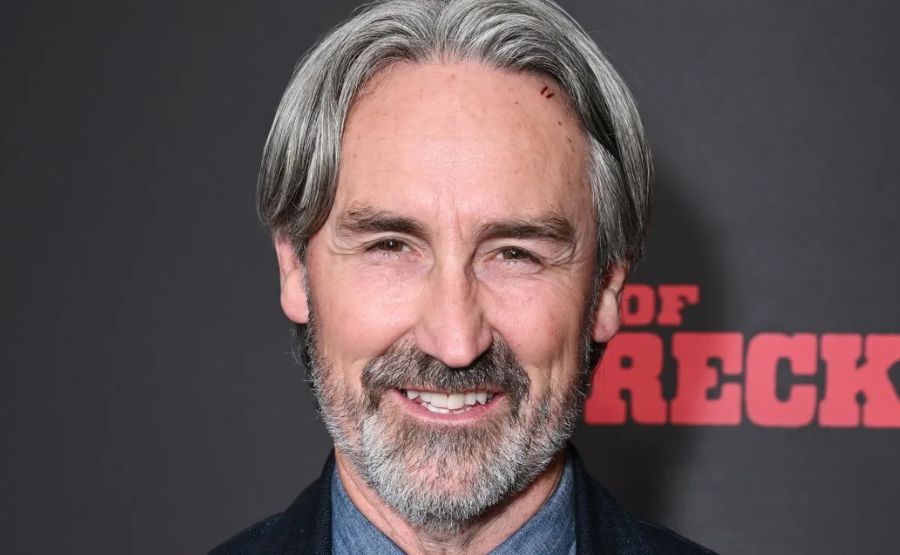
In 2025, Mike Wolfe matters not because of what he collects, but because of what he refuses to let disappear.
Millions already know him as the energetic creator and star of American Pickers, a History Channel show that pulled in 3.1 million viewers on its very first night in January 2010 — making it the network’s strongest non-fiction debut since Ice Road Truckers in 2007. But the man behind that van and that camera has been running a quieter, deeper operation for decades. It is called his “passion project,” and it has nothing to do with ratings.
It has everything to do with old gas stations, crumbling storefronts, and towns that forgot they were worth saving.
Quick Bio
| Detail | Information |
| Full Name | Mike Wolfe |
| Born | November 6, 1964, Joliet, Illinois |
| Raised | Bettendorf, Iowa |
| Occupation | TV personality, preservationist, entrepreneur |
| Known For | Creator and star of American Pickers (History Channel) |
| Business | Antique Archaeology (LeClaire, Iowa) |
| Show Debut | January 18, 2010 |
| Daughter | Charlie Reece Wolfe (born 2012) |
| Relationship | Leticia Cline (since 2021) |
| Estimated Net Worth | ~$7–8 million (2025) |
| Key Projects | Two Lanes Guesthouse, Columbia Motor Alley, Revival (Columbia, TN), Esso Station restoration |
| Platform | Two Lanes (lifestyle brand and blog) |
A Boy Who Saw Gold in the Garbage
Mike Wolfe’s father left when he was two years old. He has said so plainly, without dramatizing it. His mother, Rita, raised him and his two siblings — Robbie and Beth — alone in what he once called a working-class neighborhood in Bettendorf, Iowa, where the family had moved from Joliet when he was in the fourth grade.
There was no money for luxuries. There was, however, a junkyard down by the river.
One morning on his way to school, young Mike spotted a girl’s bicycle sitting in someone’s trash. He could not understand why anyone would throw away something that still had life left in it. He picked it up. Then he went looking for more. By age four — some accounts say six — he was already rummaging through alleys, turning discarded things into objects of interest or small profit. That instinct never left him.
He attended Bettendorf High School, where he crossed paths with a classmate named Frank Fritz. The two would not become business partners for many years, but the shared geography — and the shared working-class curiosity — planted something early.
After school, Wolfe poured himself into bicycles as both a passion and a trade. He ran competitive cycling races through his twenties, competing at the Cat 4 and Cat 3 levels from 1989 to 1998. He owned two separate bike shops in Iowa — The Village Bike Shop in East Davenport and a second store in Eldridge — financing the latter partly by selling a 1934 Harley-Davidson to a collector in Bangkok, Thailand. This young man already knew that it was worthwhile to travel the world for the right thing in the right hands.
See also “Big Cat Wife: The Woman Known Only as “Lady Cat” and Why She Stays Hidden“
The Decision That Changed Everything
By the late 1990s, the internet was quietly demolishing the antique industry as Wolfe knew it. eBay gave every small-town collector a worldwide buyer overnight. Shops that had anchored LeClaire, Iowa for decades closed one after another. Wolfe looked at his thriving bike business — selling roughly 400 bikes a year — and made a counterintuitive call.
He shut it down.
He sold everything, loaded a cargo van, bought a cell phone, built a website, and started something he called Antique Archaeology in 2000. His pitch was simple: he would drive the backroads of rural America, knock on doors, find objects that nobody else had spotted, and sell them to people who understood their worth. For five years, almost nobody outside his circle knew his name.
He was, in his own words, living simply and in obscurity — driving from one small town to the next, “knocking on doors of places that looked forgotten.” That quiet period shaped him more than the fame ever would.
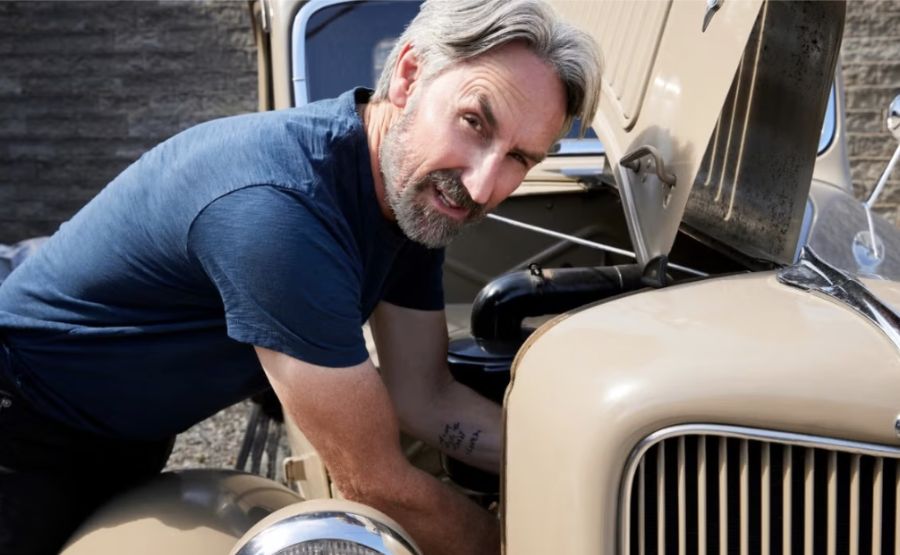
How American Pickers Was Born — and Why It Almost Wasn’t
Wolfe had the idea for a television show almost from the beginning of his picking career. He pitched it for five full years before anyone said yes.
Network after network passed. The concept was too niche, too slow, too dependent on the personality of one man in a van. Finally, a History Channel executive named Mary Donohue saw something others had missed. She said later that what stood out was the travel — the fact that Wolfe was going into parts of America that felt “really fresh” on screen. The pick itself was almost secondary. The story was the thing.
American Pickers premiered on January 18, 2010. That first season averaged 5.4 million viewers per week. The show made Wolfe a household name almost overnight, and it ran for more than 300 episodes across 27 seasons before Danielle Colby announced publicly in late 2025 that it had concluded.
The show was never just entertainment, at least not for Wolfe. Every episode was an argument. It argued that an old motorcycle mattered. That a rusted advertising sign deserved attention. That the person who hoarded things in a barn for fifty years was not eccentric — they were, in their own way, a curator.
Publicly, Pickers was TV. In practice, it was Wolfe building a platform for something bigger.
What the Passion Project Actually Is
The phrase “passion project” can sound vague. In Wolfe’s case, it is precise.
It is a multi-year, multi-million-dollar commitment to physically restoring historic properties in small American towns, converting them into functional community spaces, and drawing tourism dollars back to places that the modern economy forgot. It is also a philosophy — the belief that when a building vanishes, a community loses a piece of its own memory.
Wolfe has invested over $1.5 million in Columbia, Tennessee alone. That figure includes property purchases and documented renovation costs, not simply television budgets.
The project has three physical anchors in Columbia: the Two Lanes Guesthouse, Columbia Motor Alley, and Revival — the revived Esso station community space. Each reflects a different dimension of his thinking.
Two Lanes Guesthouse: Sleeping Inside a Pick
The Two Lanes Guesthouse sits on the second floor of a two-story brick building in downtown Columbia, Tennessee, dating to 1857. It is a 1,100-square-foot one-bedroom loft located directly above a bicycle shop, with 13-foot windows facing the 1905 courthouse across the street.
Wolfe designed it himself, using thirty years of experience selling to interior designers and decorators. A mint-green 1951 Vespa parked inside the living space serves as a photo opportunity for guests. Vintage signs delineate rooms. A hand-painted wooden sign above the bedroom reads “Rooms for Tourists.” The kitchen displays a turquoise double-sided “City Cafe” sign that Wolfe picked in Alabama years earlier.
Every object has a provenance. Every corner tells a story.
The mission was never just commercial. Wolfe wanted to demonstrate that staying in a small town’s downtown — rather than a chain hotel on a highway — could feel like something. He has said he travels nearly six months of every year, checking in and out of generic rooms, and wanted to offer the opposite of that experience.
The guesthouse is typically booked. That is partly because it is unique and partly because it works as an argument: if you sleep in Columbia, you eat in Columbia, you walk its streets, and you spend money in a local economy that needs it.
Columbia Motor Alley: Preserving the Grease and the Grit
One block from the guesthouse, Wolfe took on a 1947 Chevrolet dealership and an adjacent Texaco station. He is converting the showroom into retail space and plans for the complex — which he calls Columbia Motor Alley — to host exhibitions, events, and educational programs centered on the history of American automobiles.
Wolfe has always been a gear-head. His personal motorcycle collection reportedly exceeds 100 bikes, including a 1948 Indian and a 1913 twin with pedal cranks. His interest in vehicles is not casual. Columbia Motor Alley is the physical expression of that lifelong fixation, translated into something a community can share.
He has described walking into the old dealership as receiving a kind of message — a sense that the building had been waiting for someone to take it seriously again.
Revival: The Esso Station That Became a Gathering Place
In May 2025, Wolfe revealed the completed transformation of an old Esso service station in downtown Columbia, Tennessee. He had purchased the property and partnered with a design firm called Living Exo to execute the vision.
The result is an open community space — a place, in Wolfe’s words, “where generations of people can enjoy it for years to come.” He was explicit that the goal was not aesthetic. It was civic. He wanted to give people a reason to stand in the same place and feel something together.
The restoration preserves the original architectural bones of the station while integrating fresh design. The exterior retains its vintage identity. The interior invites gathering rather than transaction.
One comment from a local Instagram follower captured the reaction simply: “We keep driving by. It looks incredible.”
The Two Lanes Brand: Selling a Philosophy
Parallel to his physical projects, Wolfe built a lifestyle brand called Two Lanes. It operates as both a blog and an online retail platform. The shop sells American-made goods — leather tool rolls, enamel mugs, apparel — produced by small-batch artisans. The blog documents craftspeople, musicians, and communities that Wolfe believes deserve wider audiences.
The brand is not a side project. It funds a philosophy. Every purchase, Wolfe argues, is a vote for the kind of economy and culture he is trying to preserve. He views it as an alternative to mass production and mass retail — a counter-argument delivered one handmade product at a time.
He also co-produces music through this platform, having assembled a record called Music to Pick By with legendary Nashville producer Brian Ahern, featuring three original songs recorded with country artist Dale Watson.
Nashville’s Big Back Yard: The Regional Corridor Vision
Wolfe’s ambition does not stop at one town. He has partnered with the founders of the Americana Music Triangle — a preservation coalition connecting Nashville, Memphis, and New Orleans — to promote a regional corridor he calls “Nashville’s Big Back Yard.”
The initiative spotlights thirteen small communities along the Natchez Trace Parkway between Leiper’s Fork, Tennessee (where Wolfe lives) and the Shoals region of Alabama. Every community has a population under 5,000. Every one of them, Wolfe argues, offers something authentic that larger cities have already spent or paved over.
He has described this initiative not as tourism marketing but as an emergency response. “Visit small-town America and do it now,” he told an audience bluntly, “because it is fading fast.”
The Personal Life That Rarely Makes the Show
On television, Wolfe is relentlessly cheerful — the man who finds the bright side of every dusty barn. Off it, his life has been considerably more complicated.
He married Jodi Faeth in Franklin, Tennessee, on September 7, 2012. They had one daughter together, Charlie Reece Wolfe. In 2013, Jodi was diagnosed with stage 2 Non-Hodgkin’s Lymphoma. She went into remission, and by 2019 Wolfe was publicly celebrating six years of her being cancer-free.
The marriage still ended. Jodi filed for divorce in July 2021, listing their separation date as June 2020. Court documents from the Williamson County Chancery Court noted that “all hopes of reconciliation are exhausted.” Wolfe said almost nothing publicly. He has remained close to his daughter, describing her in interviews as a central priority.
Since 2021, he has been in a relationship with Leticia Cline — a former model, motorcycle racer, and self-described “forever tourist.” The two share a love of vintage vehicles, road travel, and animals. On his 60th birthday in November 2024, Cline wrote on Instagram that he has “a beautiful life that overflows.”
Then, on September 12, 2025, that life came close to a very different headline. Wolfe and Cline were hit by another car near Columbia while driving in a vintage Porsche 356. Wolfe suffered a broken nose, knee and wrist injuries, and facial lacerations. Cline’s injuries were far more serious: a broken jaw, broken ribs, a fractured sternum, and a partially collapsed lung. She required multiple surgeries. Both survived.It is anticipated that both will fully recover.
The accident made national news partly because it was conflated in some outlets with the October 2024 death of Frank Fritz — Wolfe’s original co-host and one-time friend, whose relationship with Wolfe had grown estranged in the years before his passing. Wolfe has publicly committed to honoring Fritz’s legacy through the continuing show.
The Frank Fritz Question
The Frank Fritz situation cannot be minimized or skipped over in any honest account of who Mike Wolfe is.
Fritz left American Pickers in 2021 after undergoing back surgery. He later gave interviews suggesting that he and Wolfe had drifted apart — that they were “no longer in contact.” The nature of the split was never fully litigated publicly, but Fritz’s departure coincided with a period of strain that Wolfe did not address on camera.
Fritz passed away in late 2024. Wolfe issued a tribute and described a “new beginning” for the show in his absence. Whether the two men reconciled before Fritz’s death has not been confirmed.
It is the one chapter in Wolfe’s story where his characteristic warmth goes quiet.
What It Costs — and What It’s Worth
The passion project is not free. Wolfe has spent over $1.5 million in Columbia, Tennessee alone. The 1873 Italianate house he acquired cost $700,000 to purchase and more than $200,000 in renovations. Revival required $600,000 to acquire plus documented upgrade costs. Columbia Motor Alley represents another substantial outlay.
His income sustains this. American Pickers reportedly pays approximately $25,000 per episode. Antique Archaeology in LeClaire generates consistent retail revenue and attracts up to 1,000 visitors daily during peak months. The Two Lanes brand adds merchandise and licensing income. The Two Lanes Guesthouse — typically booked out — provides short-term rental returns. Speaking engagements, book sales, and a film debut in 2025’s Day of Reckoning round out the portfolio.
His estimated net worth in 2025 sits between $7 and $8 million. He reinvests heavily. That is not corporate virtue signaling — it is simply what the projects require.
Not all of Columbia welcomed him immediately. Some residents raised concerns about gentrification. Others doubted whether a television personality would stay committed after the cameras moved on. Those questions are not unreasonable. Wolfe has chosen to answer them with time and money, not words.
His Philosophy, Stated Simply
Mike Wolfe ran for city council in LeClaire, Iowa, before he was famous. He walked those streets at night with his dog and thought about what the town could become. He lost. He kept restoring buildings anyway.
That sequence tells you something accurate about the man.
He does not see old buildings as aesthetic puzzles. He sees them as civic infrastructure — the kind of infrastructure that holds a community’s sense of itself together. When he walks into a building with historic presence, he has said, it gives him physical chills. He treats that reaction as information, not sentiment.
His concept of “Rustoration” — a term he coined to describe his approach — deliberately resists the impulse to over-polish. Natural wear is not a flaw to him. It is evidence of use, of life, of time honestly spent. The goal is not to make something look new. The goal is to make something look true.
What 2025 and Beyond Look Like
In April 2025, Wolfe announced the closure of his Nashville Antique Archaeology location after fifteen years. He described the decision as a choice to simplify and refocus — to do fewer things more deeply rather than more things across a wider map.
The 27th season of American Pickers debuted on July 2, 2025. Danielle Colby has since said the show is “done” after 27 seasons, though Wolfe has not confirmed a permanent end. A new History Channel project has been announced. His first film appearance — in Day of Reckoning — marks an entry into a different kind of storytelling.
He has said his next chapter is about going deeper, not wider. Fewer locations. More meaning.
At 60 years old, having survived a serious car accident, having lost his co-host and an era of his professional life, having rebuilt himself after a quiet divorce, Mike Wolfe is still buying old buildings nobody else wants.
He is still betting that people will come.
FAQs
1. Describe Mike Wolfe’s passion project.
It is a long-term commitment to restoring historic properties in small American towns, converting them into community spaces, and driving cultural tourism to towns that have been economically marginalized. The most active work is in Columbia, Tennessee.
2. Where is the passion project based?
The primary physical work is concentrated in Columbia, Tennessee, and LeClaire, Iowa. Wolfe also promotes a regional corridor of thirteen communities between Leiper’s Fork, Tennessee and the Shoals region of Alabama.
3. What is the Two Lanes Guesthouse?
A 1,100-square-foot one-bedroom vacation rental on the second floor of an 1857 brick building in downtown Columbia, Tennessee. It is decorated entirely with antiques and picks from Wolfe’s decades of collecting, and doubles as a living gallery of American material culture.
4. What is Columbia Motor Alley?
A preservation and conversion project centered on a 1947 Chevrolet dealership and adjacent Texaco station in Columbia. Wolfe plans to use it for retail, exhibitions, and educational programming around American automotive history.
5. What is Revival?
The publicly revealed name for the restored Esso gas station in downtown Columbia, Tennessee. Wolfe completed the restoration in May 2025 and opened it as a community gathering space.
6. What is “Rustoration”?
Wolfe’s term for his preservation philosophy. It emphasizes retaining the natural patina, wear, and evidence of history in a restored space rather than modernizing or over-polishing it. The goal is authenticity over newness.
7. How does Wolfe fund these projects?
Through a combination of American Pickers episode fees (reported at approximately $25,000 per episode), Antique Archaeology retail revenue, Two Lanes brand sales, short-term rental income from the guesthouse, book sales, speaking engagements, and real estate returns on restored properties.
8. What happened between Mike Wolfe and Frank Fritz?
Fritz departed American Pickers in 2021 following back surgery. He later stated publicly that he and Wolfe were no longer in contact. The exact nature of their falling-out was never fully disclosed. Fritz passed away in late 2024.
9. What happened in the September 2025 car accident?
On September 12, 2025, Wolfe and girlfriend Leticia Cline were involved in a serious collision in Columbia while driving a vintage Porsche 356. Wolfe suffered a broken nose and other injuries. Cline’s injuries were significantly more severe and required multiple surgeries. Both are expected to fully recover.
10. Did Mike Wolfe close his Nashville store?
Yes. In April 2025, he closed the Nashville location of Antique Archaeology after fifteen years of operation. He framed it as a decision to simplify and refocus his energy.
11. What is “Nashville’s Big Back Yard”?
A regional preservation and tourism initiative co-led by Wolfe, spotlighting thirteen communities along 100 miles of the Natchez Trace Parkway between Leiper’s Fork, Tennessee and the Shoals of Alabama. Each community has a population under 5,000.
12. Does Mike Wolfe have children?
One daughter, Charlie Reece Wolfe, born in 2012 during his marriage to Jodi Faeth.
13. Who is Leticia Cline?
Wolfe’s partner since 2021. She is a former model, professional motorcycle racer, and travel writer who describes herself as a “forever tourist.” She shares Wolfe’s love of vintage vehicles and road travel.
14. How much has Wolfe invested in Columbia, Tennessee?
Over $1.5 million in documented property purchases and restoration costs, including a $700,000 historic home, the Revival Esso station acquisition ($600,000 plus upgrades), and Columbia Motor Alley.
15. Is American Pickers ending?
As of late 2025, Danielle Colby has said the show is “done” after 27 seasons. A new History Channel project involving Wolfe has been announced, but no official series-ending statement from Wolfe himself has been confirmed at time of writing.
Keep creating, innovating, and inspiring with Content Ideators every day.
