
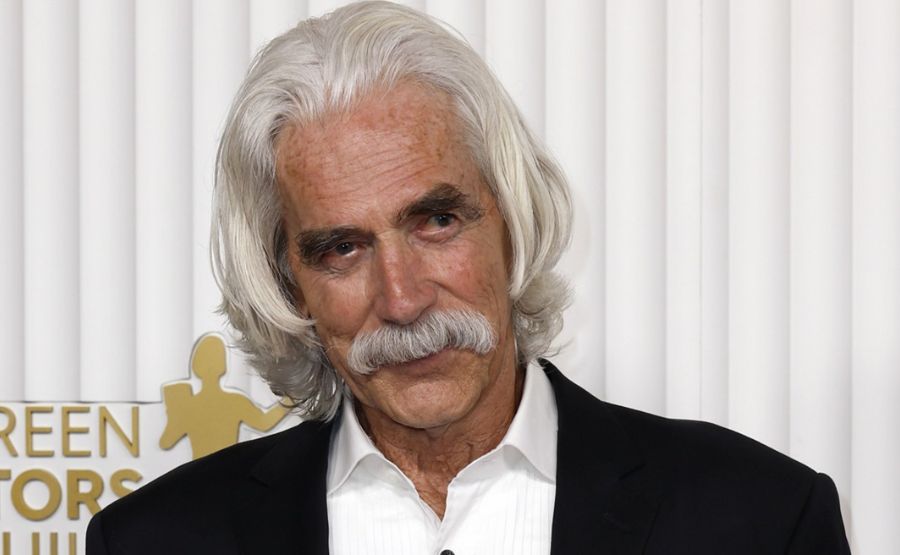
Sam Elliott is 81 years old, actively working in two separate television productions, and has no publicly confirmed serious illness of any kind.
That is the honest answer to a question that has circulated on the internet with increasing intensity since roughly 2022. It is a question born partly from genuine fan concern, partly from internet misinformation, and partly from the blurring of a career’s worth of convincing performances with the man behind them.
This article addresses everything that has been said, speculated, and confirmed about Sam Elliott’s health — and draws a firm line between what is real and what is not.
Quick Bio
| Detail | Information |
| Full Name | Samuel Pack Elliott |
| Born | August 9, 1944, Sacramento, California |
| Raised | Portland, Oregon |
| Height | 6 feet 2 inches (188 cm) |
| Wife | Katharine Ross (married 1984) |
| Daughter | Cleo Rose Elliott (born September 17, 1984) |
| Career Span | 1966 – present (nearly six decades) |
| Notable Roles | Road House, Tombstone, The Big Lebowski, A Star Is Born, 1883, Landman |
| Oscar Nomination | Best Supporting Actor, A Star Is Born (2019 ceremony) |
| Screen Actors Guild Award | Won for 1883 |
| Estimated Net Worth | ~$20 million (2025) |
| Confirmed Health Issues | Foot fracture (2015), torn hip tendons and hearing damage from 1883 (2021) |
| Confirmed Serious Disease | None |
The Straightforward Truth First
Millions of people have searched the phrase “What disease does Sam Elliott have.” Many found alarming headlines, speculative articles, and outright false claims. Some sites suggested cancer. Others said Parkinson’s disease. Still others offered peripheral neuropathy, COPD, and neurological disorders — all without a single verified source.
Here is what the record actually shows. In a 2023 Associated Press interview, Elliott acknowledged undergoing “health issues and surgeries” before the production of 1883 began. He did not name those conditions. In a 2025 Deadline interview, he disclosed that filming 1883 caused him a fall, two torn hip tendons that “aren’t going to heal up,” and significant hearing damage from the constant use of real gunfire loads on set.
That is the complete public record. No disease. No diagnosis. No terminal prognosis.
See also “Mike Wolfe Passion Project: The Man Who Picks Towns Back to Life“
Who Sam Elliott Is — Before Anything Else
Understanding why these rumors exist requires understanding who this man is and what he represents to people.
Samuel Pack Elliott was born on August 9, 1944, in Sacramento, California. His parents had deep Texas roots — his great-great-grandfather reportedly served as a surgeon at the Battle of San Jacinto, and another ancestor was a Texas Ranger who died violently in Giddings, Texas in 1903. That lineage shaped a family culture of the American West, even as they relocated to California and later Oregon.
His father, Henry Nelson Elliott, worked for the U.S. Department of the Interior in predator control. His mother, Glynn Mamie, was a high school teacher who later became a physical training instructor. His father died at 54, before Elliott’s career took hold — reportedly convinced his son had no realistic future in acting.
Elliott attended David Douglas High School in Portland, graduating in 1962. He enrolled at the University of Oregon, studied English and psychology, and dropped out. He enrolled again, dropped out again. He eventually drove to Los Angeles, took acting classes, and supported himself through construction work. The path was slow, grinding, and frequently discouraging.
His first screen credit of note was a wordless bit role as Card Player No. 2 in Butch Cassidy and the Sundance Kid in 1969. He shared the film, technically, with Katharine Ross. They did not meet during production.
A Career Built on Refusal to Rush
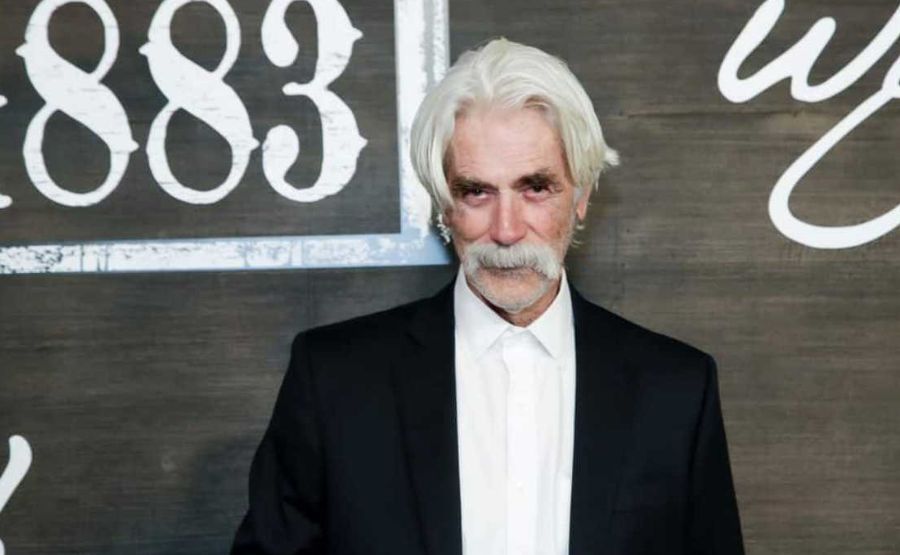
Elliott’s ascent did not follow a conventional Hollywood trajectory. He spent the late 1960s and early 1970s in small television roles — Gunsmoke, Mission: Impossible, various western procedurals. He was learning in public, playing the edges of productions, and waiting.
His first genuine leading role came with Lifeguard in 1976. The role broke him out of the Western box briefly, but he returned to it. By the late 1970s, he was starring in Louis L’Amour adaptations like The Sacketts alongside Tom Selleck.
In 1978, he was cast in The Legacy opposite Katharine Ross. The two had been in the same 1969 film without ever speaking. A decade later, they fell in love. They married in September 1984 — the same year their daughter Cleo Rose was born.
The marriage has lasted over 40 years. This is, in Hollywood, unusual. The two have co-starred on screen multiple times, including in the 1991 Louis L’Amour adaptation Conagher and in The Hero in 2017. They live on a ranch property in Malibu and maintain a second property in Oregon’s Willamette Valley.
The Defining Roles — and Why One of Them Started Everything
The 1989 action film Road House, in which Elliott played Wade Garrett, Patrick Swayze’s mentor, gave him a wider mainstream audience. Tombstone in 1993, where he played Virgil Earp with quiet authority, became one of the defining Western ensemble pieces of its decade. The Big Lebowski in 1998 gave him an entirely different kind of cultural footprint — the narrating Stranger, a figure of calm absurdity in a chaotic world.
These roles built an image: the man you trust when everything is uncertain. The gravelly voice, the long mustache, the unhurried gaze. Americans attached something to Sam Elliott that went beyond characters. He became a kind of archetype.
Then, in 2017, he starred in The Hero as Lee Hayden — an aging Western actor who had outlived his own relevance and was now quietly dying of pancreatic cancer.
The performance was so precise, so inhabited, that critics openly predicted an Oscar nomination. The nomination went to A Star Is Born instead — but The Hero planted a seed in the public’s imagination. The character’s diagnosis blurred with the actor delivering it. This, more than anything else, is where the health rumors began.
A Star Is Born, an Oscar at 74, and What That Means
Bradley Cooper cast Elliott as Bobby Maine — the elder half-brother and protector of Cooper’s self-destructing musician character — in the 2018 remake of A Star Is Born. The role required stillness, warmth, and a specific kind of sorrow that never tips into sentimentality.
Elliott delivered all of it. He won the National Board of Review Award for Best Supporting Actor. He received nominations from the Screen Actors Guild, the Critics’ Choice Awards, and the Academy of Motion Picture Arts and Sciences.
His first Oscar nomination arrived at age 74. His publicly stated reaction contained no diplomacy about the long wait.
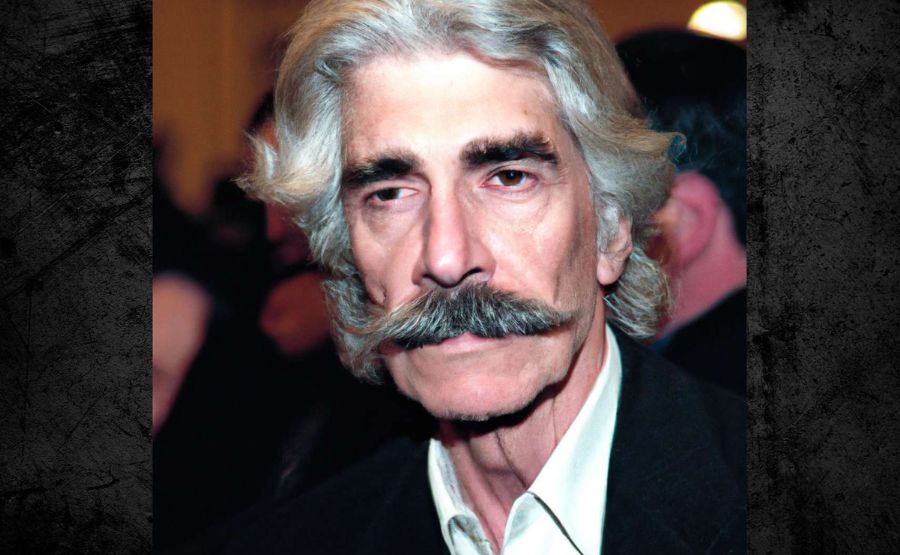
The recognition mattered. But it also raised his profile to a level where every public appearance became subject to scrutiny. Fans watched how he moved at ceremonies. They analyzed how he held himself in interviews. And some of what they saw — a slight limp, a subtle head tilt — fed into the speculation that was already quietly building from The Hero.
The Real Injuries: What Elliott Has Actually Confirmed
There are two distinct categories of physical difficulty in Elliott’s life. Both are real. Neither constitutes a disease.
The foot injury. Sometime around 2015, Elliott suffered a buckle fracture in his right foot along with a broken pinkie toe. The cause was prosaic: he tripped over a toy dog and struck his foot against a bed frame. He wore a surgical boot during recovery and continued working. The subtle change in how he walked — the limp observers noted at awards shows and public appearances — traces back directly to this incident. At his age, fractures of this kind do not always resolve completely.
The injuries from 1883. The production was genuinely brutal. Elliott spent months on horseback filming outdoor western sequences in Texas heat. In a 2025 Deadline interview, he described the experience without softening it. He said the show extracted a physical toll beyond what the production schedule formally required. He disclosed a fall during filming that left him with two torn hip tendons. He stated plainly that those tendons will not fully recover. He also disclosed significant hearing loss — attributing it to the use of real gunfire loads, full charges, throughout the entire production. A career spent around firearms had already accumulated damage. 1883 made it permanent.
He also mentioned, in a 2023 Associated Press interview, that he had undergone “health issues and surgeries” before filming even began — preexisting matters that the demands of production then aggravated. He never specified what those issues were.
These are the confirmed physical realities. Hip tendons. Hearing loss. A foot that healed imperfectly. The word “disease” does not apply to any of them.
The Rumors, Each One Examined
Cancer. The cancer speculation traces almost entirely to The Hero (2017) and to Thank You for Smoking (2005), in which Elliott played a former Marlboro Man dying of lung cancer. He has never announced a cancer diagnosis. No credible outlet has reported one. His continued active career — including returning to demanding physical production for Landman in 2025 — is inconsistent with an untreated or serious malignancy.
Parkinson’s Disease. Parkinson’s is a progressive neurological condition that causes tremors, muscle stiffness, balance problems, and slowdown of movement. Elliott’s observed physical changes — a limp from a foot fracture, a characteristic head tilt that may simply be posture — do not match the clinical profile of Parkinson’s. His speech is fully articulate, his on-screen presence sharp, and his movement reflects the changes consistent with a physically active 81-year-old, not neurological decline.
COPD. In November 2025, a scam operation circulated fraudulent advertisements on Facebook depicting Elliott supposedly promoting a COPD medication. A Chicago woman named Fran Wons was among those defrauded — she spent $299 after seeing what appeared to be an NBC News segment featuring Elliott discussing a lung treatment. The advertisements were fraudulent. Meta disabled the accounts responsible after NBC News flagged them. Elliott has no confirmed COPD diagnosis and has no affiliation with any such product.
Dysphonia / Voice Disorder. Some outlets have suggested that Elliott’s distinctive gravelly voice indicates a vocal cord condition called dysphonia. Elliott himself has offered a simpler explanation: in choir as a young man, he started as a tenor, moved to baritone, and settled as a bass. His voice is the product of genetics and decades of performance. He has smoked, which may have deepened it further. But he has never attributed his voice to any medical condition.
Peripheral Neuropathy. This claim, which circulates in some corners of the internet, has no confirmed source, no quote from Elliott or his representatives, and no medical documentation. It appears to be speculation triggered by observations about his gait.
Stroke. A stroke produces dramatic, sudden symptoms: facial drooping, speech impairment, one-sided motor loss. Elliott displays none of these. His physical changes developed gradually and have documented mechanical causes.
The Machine Behind the Rumors
The persistence of these rumors is not entirely accidental. It reflects specific structural forces online.
Elliott does not use social media. He has no Twitter or X account, no Instagram, no public Facebook. When a celebrity avoids platforms entirely, the information vacuum fills itself. Speculation rushes into the silence.
His physical appearance also invites projection. He is 81 years old. He moves more deliberately than he once did. He plays characters who confront mortality on screen. When audiences watch enough of that, the fiction starts to feel biographical.
Additionally, scammers have weaponized his name. The COPD advertisement scam was sophisticated enough to spoof a major news channel logo and convince ordinary people to hand over credit card information. These operations deliberately generate search traffic around his name and health. They profit from the confusion they create.
Landman and the Evidence of a Working Life
The clearest argument against serious illness is the simplest one. Sam Elliott, as of early 2026, is starring in the second season of Landman on Paramount+, playing T.L. opposite Billy Bob Thornton. He returned to the Taylor Sheridan universe not because his health allowed him a limited role, but because Thornton personally attracted him back.
He has also continued voice work, most recently lending his voice to a project titled The Gettysburg Address. This is not the schedule of someone managing a serious disease.
He was candid with the Deadline journalist who interviewed him in late 2025. He admitted the years since 1883 were physically difficult. He said Billy Bob Thornton’s involvement in Landman was a primary motivation for returning. He described calling Taylor Sheridan and admitting he had been doing “nothing” — an unusual admission for a man whose instinct is typically to understate rather than confess.
That candor is itself informative. A man managing cancer or Parkinson’s in private would not invite questions about the gap in his career and then answer them openly with physical explanations.
The Man Beyond the Legend
Elliott is not particularly knowable in the celebrity sense. He gives interviews when work requires it. He speaks in complete, considered sentences. He does not perform warmth on cue.
He and Katharine Ross have maintained a functional, working relationship — literally. They reportedly share a daily chore routine on their Malibu ranch property that includes shoveling manure. This is not a metaphor anyone is elaborating for effect. It is apparently just true.
His daughter Cleo Rose Elliott, now 41, is a musician based in Malibu. His mother lived to 96, passing in 2012 — which also says something about the family’s constitution.
His father’s early death at 54, before Elliott’s career reached any real altitude, is a detail he has mentioned with an absence of self-pity. He has described it as motivating rather than devastating.
Elliott’s family history on his mother’s side reaches back to the 1880s in Texas — Texas Rangers, Civil War surgeons, men who lived physically demanding, shortened lives. He carries that lineage with some awareness of what the body absorbs over decades.
What Aging Actually Looks Like at 81
One of the distortions in how celebrity health rumors operate is the failure to account for what normal aging looks like in a man who has spent decades on horseback, in physical productions, absorbing the occupational damage of a career built on roughness.
Torn hip tendons are not cancer. Hearing loss from gunfire is not Parkinson’s. A foot that fractured from a domestic accident and never fully resolved is not peripheral neuropathy. These are the accumulated costs of a physical life, and they are not unusual.
Elliott has never claimed invulnerability. He described 1883 as having “beaten” him. He acknowledged his hip will not fully recover. He admitted the gap between 1883 and Landman was partly about managing those realities. This is honest, adult acknowledgment of what a body at 81 carries.
It is not a disease disclosure. It is a man describing his physical reality without dramatizing it.
Final Words
Sam Elliott spent decades in the margins of Hollywood before the center finally acknowledged him. He received his first Oscar nomination at 74. He won his first Screen Actors Guild Award in his late 70s. He is, as of 2026, more visible than he has been in years.
The question “What disease does Sam Elliott have?” has a clear, documented answer: none that he or any credible source has confirmed. What he has are the honest physical consequences of a working life — injuries, permanent hearing damage, and the ordinary imperfections of being a very active 81-year-old man.
The internet’s appetite for a darker story says something about how people relate to icons. When someone embodies a cultural archetype as fully as Elliott has, their mortality feels like a public matter. It is not. And until he chooses to make it so, the respectful thing is to trust the evidence in front of us.
He is still working. He is still that voice. He is still, by all available evidence, Sam Elliott.
FAQs
1. What disease does Sam Elliott actually have?
No disease has been publicly confirmed. Elliott has disclosed physical injuries — torn hip tendons and significant hearing loss from 1883, and a previous foot fracture — but has not announced any named illness or chronic condition.
2. Why do so many people think he has cancer?
Primarily because of his 2017 film The Hero, in which he played an aging Western actor dying of pancreatic cancer. The performance was extraordinarily convincing. Many viewers carried the character’s diagnosis into their perception of the actor.
3. Does Sam Elliott have Parkinson’s disease?
No. No medical source, representative, or statement from Elliott has confirmed a Parkinson’s diagnosis. His physical observations — limp, head tilt, slower movement — have documented mechanical explanations and are consistent with normal aging.
4. Why does Sam Elliott walk with a limp?
His limp traces to a foot injury sustained around 2015, when he tripped over a toy dog and suffered a buckle fracture and broken pinkie toe on his right foot. He wore a surgical boot during recovery. The gait change that remained afterward is a residual effect of that injury.
5. Does Sam Elliott have COPD?
No. COPD has never been confirmed by Elliott or any credible source. In late 2025, scammers ran fraudulent Facebook advertisements falsely depicting Elliott promoting a COPD medication. Meta disabled those accounts. The ads were a criminal operation, not a health disclosure.
6. Why does Sam Elliott have such a deep, gravelly voice?
Elliott has explained that his voice dropped naturally over time — from tenor to baritone to bass — beginning in choir as a young man. It reflects his genetics, decades of performance work, and a history of smoking. He has not attributed it to any vocal cord disease.
7. What health problems did Sam Elliott confirm from filming 1883?
In a November 2025 interview with Deadline, Elliott confirmed two torn hip tendons from a fall during production, and significant hearing loss from the continuous use of real gunfire loads on set. He stated the hip tendons will not fully recover.
8. Did Sam Elliott have surgery before 1883?
He told an Associated Press journalist in 2023 that he had “gone through some health issues and surgeries” before production began on 1883. He did not specify the nature of those procedures.
9. Is Sam Elliott still alive in 2026?
Yes. He is actively filming the second season of Landman on Paramount+ and continuing voice work. Death hoaxes about him have circulated periodically online but have no factual basis.
10. Does Sam Elliott have peripheral neuropathy?
No confirmed source supports this claim. It appears in speculative online content without any medical documentation or statement from Elliott or his team.
11. Why does Sam Elliott tilt his head?
No medical explanation has been provided for his characteristic head tilt. It appears to be a natural posture or long-established physical habit. There is no evidence it indicates any neurological or structural disorder.
12. Is Sam Elliott in good health for his age?
By the available evidence, yes. He returned to physically and emotionally demanding production work at 81. His disclosed issues — hip tendons and hearing — are genuine but do not constitute a disabling chronic condition. He remains professionally active and publicly engaged.
13. Where does Sam Elliott live and what is his lifestyle?
He and wife Katharine Ross live primarily on a ranch property in Malibu, California, and maintain a second property in Oregon’s Willamette Valley. His lifestyle is reportedly grounded, physical, and private — consistent with someone who has spent a career playing characters deeply connected to the land.
Keep creating, innovating, and inspiring with Content Ideators every day.
