
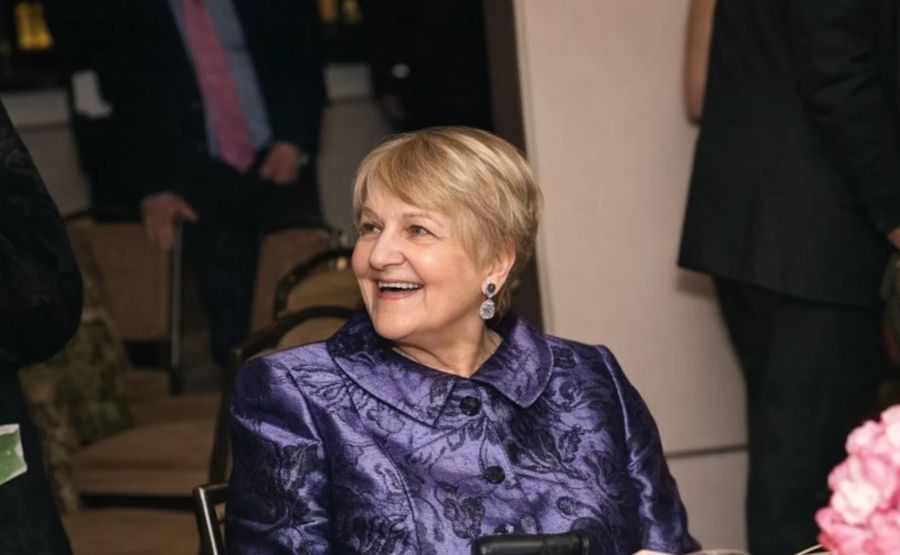
Annaliese Witschak died on September 5, 2025, at age 91 — and the world barely noticed. That silence was entirely her choice. She had spent nine decades building a life defined not by the man she once married but by the values she carried long before she ever met him.
Quick Bio
| Detail | Information |
| Full Name | Annaliese Witschak (later Annaliese Soros) |
| Born | January 3, 1934, Verden an der Aller, northern Germany |
| Died | September 5, 2025, New York City, aged 91 |
| Cause of Death | Natural causes |
| Nationality | German-American |
| Known For | First wife of billionaire investor George Soros; arts philanthropist |
| Marriage | George Soros (September 17, 1960 – 1983) |
| Children | Robert Daniel Soros (b. 1963), Andrea Soros Colombel (b. 1965), Jonathan Tivadar Soros (b. 1970) |
| Grandchildren | Nine |
| Career | Secretary, keypunch operator; later arts patron and board member |
| Notable Work | Co-authored Dinner Party Disasters (Harry N. Abrams, 2007) |
| Board Service | Young Concert Artists (40+ years); Pianofest in the Hamptons; Southampton Performing Arts festival (co-founder, 1981) |
| Named Program | Annaliese Soros Educational Residency Program (endowed 2004) |
A Childhood Defined by Loss
Annaliese Witschak was born on January 3, 1934, in the small town of Verden an der Aller in northern Germany. Her earliest years offered little comfort.
Her father, Walter Witschak, died in 1937 when Annaliese was only three years old. Her mother, Elisabeth, relocated the family to the nearby village of Neuenkirchen bei Soltau and pieced together a living through bookkeeping, odd jobs, and occasional poems and articles submitted to a local newspaper.
Elisabeth’s health was fragile. A recurring heart condition sent her to the hospital repeatedly, and during those absences, Annaliese was placed with relatives who, by her own account, treated her unkindly. A child who had already lost her father was then made to feel like an imposition in her own extended family.
The final blow arrived without warning. By the time Annaliese turned sixteen, she had buried both her mother and her sole sibling, Hans, within a six-month span — leaving her without a single blood relative to lean on. She was, at that point, fully and completely alone.
See also “Solica Casuto: The Greek Actress Who Chose Silence Over Stardom“
The Girl Who Chose to Keep Moving
Most people, facing that level of devastation at sixteen, would have collapsed inward. Annaliese did the opposite.
She left Neuenkirchen and moved to Hamburg. She found a room at the Salvation Army and connected with another young woman in a similar position. The two pooled their meager wages carefully enough that some mornings, one bread roll split between them counted as breakfast. There was no self-pity in how she described this period later — only matter-of-fact survival.
She found secretarial work first at a publishing house, then at Shell Oil. Whatever money remained after rent went toward one thing: standing-room tickets for classical music concerts. Music was not a luxury to Annaliese. It was the one space where the world made sense.
After several years in Hamburg, she grew restless. With nothing and no one binding her to Germany, she purchased a ship ticket to New York in 1955. The five-day Atlantic crossing left her seasick and bedridden almost the entire way. But she later recalled with clarity the moment the ship entered New York Harbor — a porthole view of the Statue of Liberty that she never forgot.

Starting Over in New York
New York in 1955 was not an easy city for a young German woman with limited English and no family network. Annaliese’s first job was as an au pair on Long Island, but the isolation wore on her.
She eventually found her footing in Manhattan. She landed work as a secretary and keypunch operator at an insurance company — processing data on punch cards, a painstaking, repetitive job that was nonetheless steady work in a city that rewarded persistence. Her new colleagues helped orient her. She built friendships carefully and held onto them firmly.
She also rediscovered New York’s cultural life. Carnegie Hall. The Metropolitan Opera. Classical concerts wherever she could find them. The city, for all its noise, fed something in her that Germany never had — possibility.
The Meeting at Tanglewood
In 1957, Annaliese met a young Hungarian man at an outdoor classical music concert at Tanglewood, the famous music festival venue in the Berkshires of Massachusetts. His name was George Soros.
Soros had arrived in New York just a year earlier, in 1956. Like Annaliese, he had survived a wartime Europe that had tried its hardest to destroy him — in his case, the Nazi occupation of Hungary followed by Soviet Communist rule. Two immigrants, two survivors, two people who measured Sunday afternoons by the quality of the orchestra.
His family took to her immediately. Despite the fact that Annaliese was not Jewish — a detail that mattered to many Eastern European Jewish families of that generation — George’s parents accepted her warmly.They saw something in her that went beyond her upbringing: the calm fortitude of someone who had already seen the worst.
According to those who knew her, Annaliese described falling completely in love with Soros. He was, she said, unlike anyone she had ever encountered. The two spent weekends at the beach, attended concerts together, and built a shared life before formalizing it.
Marriage, Family, and the Years of Becoming
On September 17, 1960, Annaliese Witschak and George Soros were married. They settled into an apartment in Greenwich Village — then a bohemian, intellectually charged neighborhood full of writers, thinkers, and artists.
Soros was not yet famous. He was an ambitious analyst working his way into New York’s financial world, but the global empire was still years away.Annaliese saw the early grind: the calculated risks, the late nights, and the gradual building of credibility.
She also shaped the texture of their domestic life in ways that outlasted the marriage itself. She taught herself to cook seriously. Their home became a gathering place — but not for Wall Street colleagues. Instead, their dinner table drew philosophers, academics, writers, and, as Soros’s political interests developed, anti-apartheid activists. Annaliese chose the guests as much as he did.
Three children arrived across a decade: Robert Daniel in 1963, Andrea on June 11, 1965, and Jonathan Tivadar on September 10, 1970. Each of them would eventually forge a significant path of their own — a fact their mother had no small part in shaping.

The Fracture
A marriage that spans 23 years and survives three children, a billionaire’s rise to power, and the pressures of New York’s financial elite is not a simple thing to unravel. But it did unravel.
The couple separated in 1977. The divorce was finalized in June 1983. Several accounts cite Soros’s infidelity as a contributing factor, and the divergence in their temperaments had grown harder to ignore. Soros was increasingly public — a man building a global presence in finance and social policy. Annaliese preferred the living room to the conference room.
Publicly, the split was managed with restraint. Privately, it was undoubtedly a rupture. She had been with this man since before he was famous, had hosted his guests and raised his children, and had watched him become one of the most powerful private individuals in the world. Then she stepped away — alone again, as she had been at sixteen.
What is striking is what came next. She did not leverage the Soros name.She didn’t write a memoir about her union. She did not pursue interviews or attempt to capitalize on proximity to wealth. She simply chose herself.
A Life Rebuilt on Her Own Terms
After the separation, Annaliese reclaimed the independence she had first discovered as a teenager in Hamburg. She traveled — not on luxury tours, but on trips organized around music festivals, hiking, and cycling.She had no trouble making and maintaining acquaintances for decades.
She became a regular presence at Carnegie Hall and the Metropolitan Opera. Where before music had been her escape from poverty, it now became her vocation and her cause.
Her commitment to Young Concert Artists — an organization dedicated to launching the careers of emerging classical musicians — defined the second half of her life more than her marriage had defined the first. She joined their board and served on it for over forty years. In 2004, the organization formalized her impact by endowing the Annaliese Soros Educational Residency Program in her name.
She co-founded the Southampton Performing Arts festival in 1981, bringing a classical concert series to Southampton, New York, where she kept a summer home for six full decades. In the early 1990s, she joined the board of Pianofest in the Hamptons — a summer master class program for young pianists — and remained there until her final days.
Her apartment became a practice space. Emerging musicians would stay with her before major New York appearances, rehearsing in her living room while she cooked, listened, and offered the kind of warm, attentive encouragement that only someone who had lived through scarcity could give freely.
The Book That Showed Another Side
In May 2007, Annaliese co-authored Dinner Party Disasters: True Stories of Culinary Catastrophe, published by Harry N. Abrams with illustrations by Roderick Mills and written with Abigail Stokes. The 96-page hardcover collected humorous first-person accounts of hosting gone wrong — including her own stories.
The book was a window into a side of Annaliese that her public image rarely revealed: wit, self-deprecation, and an absolute refusal to take herself too seriously. She was, by all accounts, a legendary host. That she chose to immortalize her worst moments rather than her best ones says something essential about her character.
The book also served as a reminder that she had interests, a voice, and a sense of humor entirely separate from the Soros name. She was not simply a former wife. She was a woman with things to say.
Her Children’s Legacies
Annaliese raised three children during the years when George Soros was building his fortune — meaning she was, in practical terms, the primary parental presence for much of their childhoods.
Robert Daniel Soros, her eldest, became an investor and founded Soros Capital Management. He served as deputy chairman and president of Soros Fund Management until 2017, and married Melissa Robin Schiff at New York’s Temple Emanu-El in 1992.
Andrea Soros Colombel established the Trace Foundation in 1993, an organization dedicated to the cultural preservation and sustainable development of Tibetan communities within China. She also serves on the board of the Open Society Foundations.
Jonathan Tivadar Soros became a hedge fund manager and political advocate, founding Friends of Democracy — a group focused on reducing the outsized role of money in American elections.
All three carried something of their mother’s quiet purposefulness into their work. None of them chose celebrity for its own sake.
The Relationship That Survived the Divorce
One detail about Annaliese’s later years stands out above the others. She attended George Soros’s 70th birthday celebration in 2000 at Southampton College — a party he threw for 500 friends and associates, themed around Hungarian music and dance. She was there.
That is not the behavior of two people who simply tolerated each other. It is the behavior of two people who, after everything, maintained something genuine. The separation in 1977 had not erased two decades of shared life. It had simply rearranged what they were to each other.
Soros went on to marry Susan Weber in 1983 and then Tamiko Bolton in 2013. Annaliese never remarried. That choice appears to have been entirely deliberate — not a wound, but a preference. She had rebuilt her life on her own terms once before. She was comfortable doing it again.
Death and Legacy
Annaliese Witschak — who had spent the last four decades of her life as Annaliese Soros — died on September 5, 2025, in New York City, from natural causes. She was 91 years old.
She was survived by her three children, their spouses — Jamie, Eric, and Jennifer — and nine grandchildren ranging in age from five months to thirty-one years. A generation of musicians she had mentored, supported, and housed scattered across the world carried part of her with them, too.
Her New York Times obituary described her as a woman whose generous spirit, genuine kindness, and sense of humor had touched everyone around her. Those who had sat in her apartment listening to young pianists rehearse before Carnegie Hall debuts left notes saying she had made the world better. It is a quieter legacy than her ex-husband’s. It is no less real.
She was born with nothing, lost everything at sixteen, and spent the next seven-plus decades filling her life — and the lives of others — with music, warmth, and the kind of hospitality that does not make headlines. That is the true shape of Annaliese Witschak’s life.
FAQs
1. When and where was Annaliese Witschak born?
She was born on January 3, 1934, in Verden an der Aller, a small town in northern Germany.
2. Is Annaliese Witschak still alive?
No. Annaliese Witschak died on September 5, 2025, in New York City, at age 91, from natural causes. Her death was announced via an obituary in the New York Times on September 11, 2025.
3. How did Annaliese Witschak meet George Soros?
They met in 1957 at an outdoor classical music concert at Tanglewood in the Berkshires, Massachusetts. Both were European immigrants with a shared love of classical music.
4. When did Annaliese Witschak and George Soros get married?
They married on September 17, 1960, in New York City.
5. Why did Annaliese Witschak and George Soros divorce?
The couple separated in 1977 and finalized their divorce in June 1983. Multiple sources cite Soros’s infidelity as a contributing factor, alongside a growing incompatibility in temperament — Soros increasingly pursued a global public life, while Annaliese valued privacy and domestic warmth.
6. How many children did Annaliese Witschak have?
Three children with George Soros: Robert Daniel Soros (born 1963), Andrea Soros Colombel (born June 11, 1965), and Jonathan Tivadar Soros (born September 10, 1970).
7. What did Annaliese Witschak do for a living?
Before her marriage, she worked as a secretary and keypunch operator at a New York insurance company. After her divorce, she became a serious arts philanthropist, serving on multiple boards and funding emerging classical musicians for over four decades.
8. Did Annaliese Witschak remarry after her divorce?
No. After her divorce from George Soros, she chose not to remarry. She remained single for the rest of her life.
9. What is the Annaliese Soros Educational Residency Program?
It is a program endowed in her name in 2004 by Young Concert Artists, the organization she supported as a board member for over 40 years. It supports emerging concert musicians with educational residencies.
10. Did Annaliese Witschak write a book?
Yes. In May 2007, she co-authored Dinner Party Disasters: True Stories of Culinary Catastrophe, published by Harry N. Abrams. The book collected humorous first-person accounts of hosting gone wrong.
11. What was Annaliese Witschak’s relationship with the arts?
It was central to her identity throughout her life. She attended concerts with standing-room tickets as a teenager in Hamburg, met George Soros at a music concert, and spent her post-divorce decades as a patron of Carnegie Hall, the Metropolitan Opera, Young Concert Artists, the Southampton Performing Arts festival, and Pianofest in the Hamptons.
12. Was Annaliese Witschak Jewish?
No. She was German and Christian. Despite this, George Soros’s parents — Hungarian Jewish war survivors — warmly accepted her into the family.
13. After their divorce, did Annaliese Witschak and George Soros have friendly relations?
Yes. She attended his 70th birthday celebration in 2000, and according to those close to both of them, they maintained mutual respect until the end of their lives.
14. What is Annaliese Witschak’s net worth?
Her financial details were never made public. She likely received a divorce settlement but lived modestly and never pursued wealth or public status. Her lifestyle was marked by genuine simplicity rather than display.
15. How did Annaliese Witschak’s early losses shape her character?
She lost her father at three, spent periods of her childhood being passed between unkind relatives, and was fully orphaned at sixteen when both her mother and brother died within six months of each other.According to all accounts, these experiences gave rise to a solid resilience rather than resentment—the ability to rebuild in silence, without complaint, and to invest in others what had never been given to her.
Keep creating, innovating, and inspiring with Content Ideators every day.
