
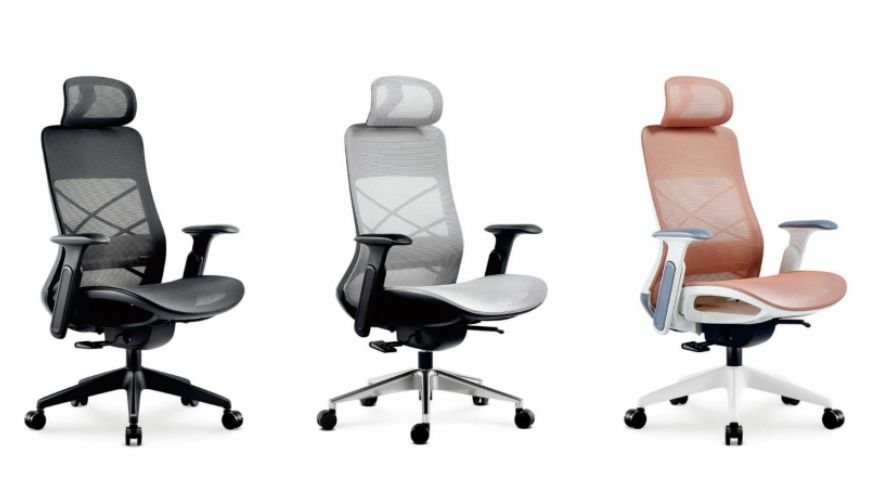
If you run a 24/7 operation, you already know that the chairs in your control room, dispatch center, or call floor take a beating that a standard 8-hour office chair was simply never built to handle. But here’s where a lot of facilities managers get stuck: they confuse heavy-duty seating with round-the-clock seating, and those are two very different things.
Big and tall chairs are built to support larger body frames. Twenty-four-hour chairs are built to survive continuous shift rotations without losing structural integrity or comfort. Sometimes you need one. Sometimes you need both. And sometimes buying the wrong category costs you thousands in premature replacements and workers’ comp claims.
This guide breaks down exactly how these two chair categories differ, where they overlap, and how to make the right call for your specific operation.
What Is a Big and Tall Office Chair, Really?
Big and tall office chairs are engineered around body dimensions and weight capacity. Standard office chairs typically support users up to 250 lbs with seat widths around 18 to 19 inches. Big and tall chairs extend those numbers significantly, commonly supporting between 400 and 500 lbs, with seat widths of 22 to 26 inches and seat depths that accommodate longer torsos and legs.
The frame, gas cylinder, casters, and armrests on a big and tall chair are all reinforced. The foam density is usually higher to prevent premature compression. The lumbar support is positioned higher and wider to match a broader back.
What big and tall chairs are not necessarily built for is multi-shift, round-the-clock use. A chair rated for a 400 lb user working a standard 9-to-5 schedule may not have the internal mechanisms or materials warranted for three rotating 8-hour shifts per day, 365 days a year.
What Makes a Chair a True 24-Hour Chair?
Twenty-four-hour task chairs, also called heavy-use or multi-shift chairs, are rated for continuous occupancy. The key differences are in the warranty structure, the mechanism quality, and the materials used throughout.
A genuine 24-hour chair will carry a warranty that explicitly covers multi-shift use, sometimes 24/7 use for 5 to 10 years. The tilt mechanism is built with heavier-gauge components. The upholstery is typically commercial-grade fabric or vinyl that resists breakdown from constant body heat, moisture, and friction. The pneumatic cylinder is rated for tens of thousands of adjustment cycles rather than the few hundred you’d see on a budget chair.
These chairs are common in security operations centers, hospital nursing stations, 911 dispatch centers, air traffic control facilities, and industrial control rooms. They’re also showing up more in logistics hubs and around-the-clock customer support operations where cost of downtime from a broken chair is real.
Where the Two Categories Overlap
Here’s where the buying decision gets genuinely complicated: many 24-hour chairs are also available in big and tall configurations, and many big and tall chairs are built with mechanisms durable enough to approximate multi-shift use.
The overlap zone is real. If you have a larger employee working extended shifts, you’re squarely in the middle of both categories and you shouldn’t have to compromise. The good news is that the market has expanded enough that chairs built for both demands simultaneously are widely available if you know where to look.
Two Retailers Worth Knowing for This Category
1. InStockChairs
InStockChairs is one of the more practical options for operations buyers who need chairs that ship fast without sacrificing spec quality. Their catalog includes a solid range of 24-hour rated seating alongside big and tall options, and one of the more useful things about browsing their site is that the product listings are fairly transparent about weight capacities, warranty coverage, and intended use cases.
For round-the-clock environments, they carry chairs with reinforced mechanisms, high-density foam, and commercial upholstery that hold up better than the average big-box office supply option. If you’re outfitting a dispatch room or control center and need reliable chairs at a reasonable price point without a long lead time, InStockChairs is worth a look before you commit to a contract furniture channel.
2. ModernOfficeFurniture
ModernOfficeFurniture takes a broader approach to the category, offering seating solutions across a wider range of office environments including those that need heavy-use or specialized task seating. Their selection covers both 24-hour task chairs and big and tall office chairs, and their site is set up in a way that makes it reasonably easy to filter by use case, weight capacity, and warranty tier.
For facilities managers who are buying across multiple departments, not just the control room or dispatch floor, ModernOfficeFurniture gives you the ability to source multiple chair categories from one vendor, which simplifies procurement and can make warranty service more straightforward down the road.
Head-to-Head: What the Specs Actually Tell You
Let’s put the two categories side by side on the factors that matter most for operational purchasing decisions.
| Spec Factor | Big and Tall Chair | 24-Hour Chair |
| Weight Capacity | 400 to 500+ lbs | Typically 250 to 350 lbs (some up to 400) |
| Seat Width | 22 to 26 inches | Standard (18 to 21 inches) |
| Mechanism Grade | Heavy-duty, frame reinforced | Commercial multi-shift rated |
| Warranty Scope | Usually covers capacity, not shift use | Explicitly covers 24/7 or multi-shift use |
| Foam Density | High, to prevent compression under weight | High, to prevent breakdown from constant use |
| Upholstery | Heavy-duty fabric or vinyl | Commercial-grade, often antimicrobial |
| Ideal User | Larger body frames, standard hours | Any user, continuous shift rotations |
| Overlap Zone | Large user, extended shifts | Large user, extended shifts |
The overlap zone in that last row is exactly where you need to be shopping if your workforce includes larger employees in a 24/7 setting.
The Real Cost of Getting This Wrong
Let’s talk numbers for a second. A budget office chair that wasn’t designed for either big and tall or round-the-clock use might run $150 to $250. It will fail in a multi-shift operation within 6 to 18 months. You then pay to replace it, potentially twice or three times in the lifespan of a properly specced chair.
A proper 24-hour chair costs $400 to $900 depending on features and brand. A big and tall 24-hour hybrid in the same quality tier runs $500 to $1,200. But with a 5 to 10-year multi-shift warranty and significantly lower failure rates, the total cost of ownership over 5 years is almost always lower than rotating through cheap chairs.
There’s also the less visible cost: employee discomfort during long shifts leads to distraction, fatigue-related errors, and in some cases, musculoskeletal injuries that generate workers’ comp claims and absenteeism. For dispatchers, security operators, and control room technicians, this isn’t a trivial concern.
How to Spec the Right Chair for Your Operation
Here’s a practical framework for making this decision cleanly.
Step 1: Know your user population. Are you buying for a general workforce or for employees whose body types skew larger? If you have employees who need chairs rated above 300 lbs, big and tall specs should be on your checklist regardless of shift structure.
Step 2: Know your shift structure. Is the chair going to sit empty for 14 hours a day, or will it be occupied across two or three full shifts? If it’s multi-shift, the 24-hour rating isn’t optional.
Step 3: Read the warranty. This is the single most clarifying piece of information on any chair. A warranty that says “5 years, 24/7 use” is telling you something. A warranty that says “1 year, standard use” is also telling you something. Don’t skip this.
Step 4: Ask about foam density and mechanism grade. Seat foam rated at 1.8 lbs per cubic foot or above holds up significantly better than lighter foam under constant use. Tilt mechanisms with steel components outlast those with plastic components in high-use settings.
Step 5: Consider ergonomic adjustability. In multi-shift environments, the same chair gets used by different people. Chairs with a wide range of seat height, armrest, lumbar, and tilt adjustments accommodate more body types and reduce the need to buy multiple chair models.
Special Considerations for Specific Industries
911 Dispatch and Emergency Operations Centers
These environments are the most demanding for seating. Operators sit for full 8, 10, or 12-hour shifts with minimal movement. Chairs in these environments should be 24-hour rated at minimum, with ergonomic adjustability that meets or exceeds APCO (Association of Public-Safety Communications Officials) recommendations. Big and tall configurations are often needed to cover the full range of operators.
Hospital and Healthcare Settings
Nursing stations and clinical support areas run around the clock. Chair durability and cleanability are equally important here. Look for 24-hour chairs with antimicrobial upholstery and sealed mechanisms that resist cleaning solutions.
Industrial Control Rooms and Utilities
Operators in power generation, water treatment, and manufacturing control rooms sit in front of monitoring equipment for long stretches. The chair requirements mirror dispatch environments. Many facilities in this category have moved toward chairs that combine 24-hour ratings with big and tall specs to cover their full operator population with a single SKU.
Logistics and Transportation Hubs
Load planners, traffic coordinators, and overnight supervisors in warehouse and logistics environments often work in conditions that are less climate-controlled than a typical office. Look for chairs with durable upholstery that handles temperature variation and heavier use.
Common Mistakes to Avoid
Buying by price alone. The $200 chair looks like a savings on a spreadsheet until you’re replacing it 14 months into a three-shift operation.
Assuming big and tall means heavy-use. A big and tall chair built for a single user in a standard office is not automatically rated for multi-shift use. Read the warranty.
Ignoring adjustability range. In a multi-shift environment, the chair will be used by people of different sizes. A chair with a narrow adjustment range will be uncomfortable for a significant portion of your workforce.
Buying all one model without a trial. Before you outfit an entire floor, get a demo unit or two and put them through actual shift conditions. Comfort and durability assessments should come from the people who will sit in them for 8 hours straight, not from a catalog photo.
Overlooking caster type. Hard-floor casters and carpet casters are different. Using hard-floor casters on carpet wears out the chair base prematurely. It’s a small detail that gets overlooked more often than it should.
The Bottom Line
Big and tall chairs and 24-hour chairs solve different problems. They overlap when your operation involves larger employees working long or rotating shifts, and in that overlap zone, you need a chair that meets both sets of requirements without compromise.
For operations buyers, the practical path forward is to start with your warranty requirements and your workforce’s physical needs, then find chairs that explicitly cover both. Retailers like InStockChairs and ModernOfficeFurniture carry inventory in this space and can help you narrow down options that fit both the spec and the budget.
Investing in the right chair upfront is genuinely one of the easier facilities decisions to justify on a cost-per-year basis. The math almost always works in favor of buying right the first time.
