
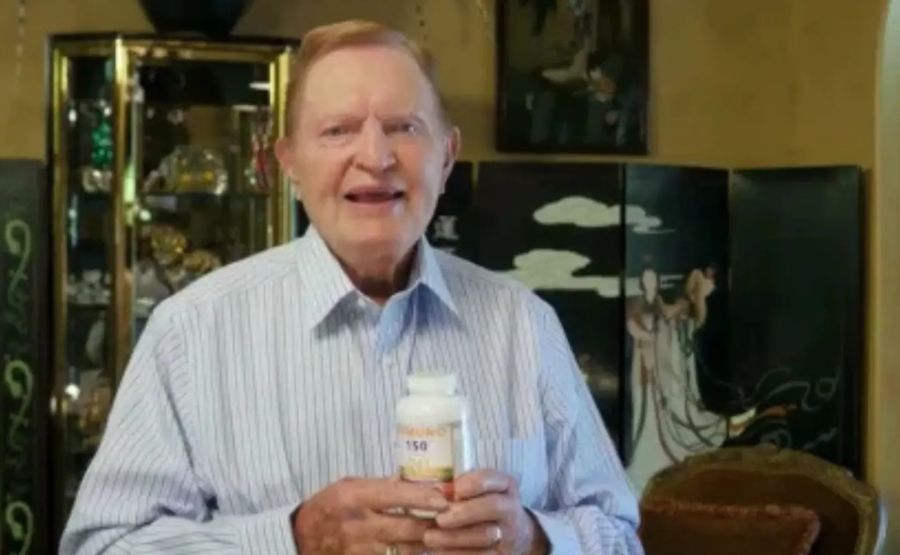
At 92 years old, Elmer G. Heinrich still runs a supplement company that sells products across 27 countries. The majority of people are unaware of him. His tale is worth sharing precisely because of the disparity between impact and recognition.
Quick Bio
| Detail | Information |
| Full Name | Elmer G. Heinrich |
| Date of Birth | March 9, 1934 |
| Birthplace | Grinnell, Kansas, USA |
| Parents | Heinrich, Governor Gabriel, and Heinrich, Mary Katherine Engel |
| Education | Fort Hays State University (attended 1954) |
| First Marriage | Verlene Louise Hoover (1954–1966, divorced) |
| Second Marriage | Shirley Ann Tolson (November 4, 1966 – present) |
| Children | Patricia, Larry, Judy, Cathy (with first wife); Rocky (with Shirley) |
| Known As | “Mr. H” |
| Primary Company | Liquid Assets, Inc. / Exceptional Health Products |
| Business Location | Broken Arrow, Oklahoma |
| Key Products | SenTraMin minerals, Immuno 150 |
| Published Works | The Root of All Disease, The Untold Truth, The Power of Minerals |
| Notable Honors | Marquis Who’s Who in American Inventors; Who’s Who in American Finance and Industry |
| Estimated Net Worth (2026) | $45M–$75M (private company; not officially verified |
A Railroad Boxcar in Kansas
He grew up as one of seven children on a western Kansas farm so poor that the family lived in an abandoned railroad boxcar — a detail that sounds like fiction but shaped everything that came after.
Elmer G. was born in Grinnell, Kansas, on March 9, 1934.Heinrich came of age during a time when the American Great Plains demanded hard work or punished you for its absence. His father, Govel Gabriel Heinrich, farmed the land. His mother, Mary Katherine Engel Heinrich, raised seven children on what the land would yield.
That upbringing gave him something no classroom could manufacture — a working knowledge of soil, weather, and the quiet mathematics of survival. He would spend the next seven decades trying to tell other people what he had learned on that farm about what the earth gives and what it withholds.
The Salesman Before the Scientist
Heinrich attended Fort Hays State University in 1954, the same year he married his first wife, Verlene Louise Hoover. His formal education was brief. His real schooling happened in the field.
His first business was a gas station in a small Kansas town of roughly 1,200 people — and that town already had eight filling stations when he arrived. Within three years, seven of his competitors had either shut down or changed hands. He was 20 years old.
That early experience hardened a pattern he would follow for the rest of his career: enter a competitive space, outwork everyone, and refuse to treat the word “no” as a permanent answer.
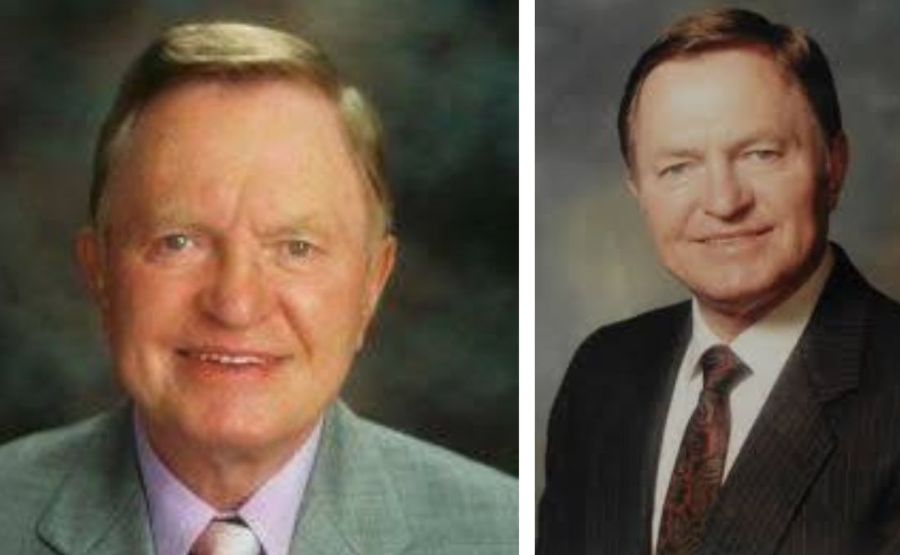
Drilling Wells, Selling Insurance, Building Corporations
In the late 1950s, Heinrich co-founded S&H Drilling Company in Goodland, Kansas. He and a partner bought a bankrupt irrigation drilling business — already equipped — and within 12 days had earned enough profit to repay the loan used to purchase it.
He ran drilling operations across Kansas, Colorado, Nebraska, and South Dakota for six years. The company became one of the largest irrigation well drillers in the region before he sold his share.
What came next was deliberate. He entered life insurance sales not because he needed the money but because he wanted to study the craft of selling at its most demanding. He learned it fast. In his first year with Centennial Life Insurance Company, he insured 412 lives and wrote $7 million in whole life policies — a national record for a rookie that earned industry recognition in 1966.
He became Colorado state sales manager just seven months after joining the company. By the time he left insurance, his renewal commissions were vested and he had a new project in mind.
The Hotsy Corporation and the Arkansas Chapter
In the late 1960s, Heinrich co-founded a company that would eventually become The Hotsy Corporation — a manufacturer of industrial pressure washers and steam-cleaning equipment based in Denver, Colorado. He was its president and chairman. Under his leadership, Hotsy grew into one of the largest pressure washer companies in the world, fueled largely by his sales systems and training programs.
Three years after founding it, he sold Hotsy to a wealthy Denver family that owned Denver-Chicago Trucking and Navajo Trucking. He stayed on as national sales manager for two more years under their ownership, as agreed.
Then he went to Arkansas.
He purchased controlling interest in a publicly listed company that made pressure washers and the well-known “Robo” automatic car wash systems. The company was nearly insolvent when he arrived — gutted by internal theft, management failures, and a pile of active lawsuits. He turned it around through tight cost controls, security overhauls, and aggressive production improvements.
The company’s lawyers at the time were Vince Foster, Webb Hubbell, and Hillary Rodham Clinton — all partners at the Rose Law Firm in Little Rock. Heinrich directed them to defend his newly acquired company against the pre-existing litigation. He eventually resigned from Robo citing conflicts with the Rose Law Firm, though he has not elaborated publicly on the exact nature of those conflicts. The timing is notable: this was the early 1980s, years before Foster’s death and the Whitewater investigations that would consume Washington in the 1990s. Heinrich himself was a client, not a participant in any of those later controversies.
The Pivot That Defined His Legacy
After leaving Arkansas, Heinrich moved to Tulsa, Oklahoma, and built something entirely new. He constructed a 76,000 square-foot manufacturing facility through his company The Rockland Corporation — designed to produce, bottle, and distribute nutritional supplements.
In 1983, he encountered plant-derived colloidal minerals for the first time. The product was obscure. The science behind it was largely undeveloped in commercial terms. He found both of those facts interesting.
That year he founded Liquid Assets, Inc. — incorporated in Oklahoma, anchored in the idea that modern industrial farming was stripping soil of minerals that human bodies needed and could not easily replace through diet alone.
In 1986, he opened his own mineral mining operation in Utah, leasing approximately 900 acres of humic shale — a prehistoric deposit of compressed and mineralized plant matter. Mining happened in Utah. Processing and packaging happened in Tulsa. He controlled the entire chain from extraction to the consumer’s shelf. That vertical integration was rare in the supplement industry at the time and gave his products a quality consistency that competitors struggled to match.
His first signature product was SenTraMin — a proprietary formula of 75 naturally occurring plant-derived minerals drawn from that Utah deposit. It was freeze-dried, certified kosher, and designated GRAS (Generally Recognized as Safe) by the FDA.
Immuno 150: The Product That Went Global
SenTraMin was the foundation. Immuno 150 was the structure built on top of it.
Heinrich worked with chemists over an extended period to develop Immuno 150, a supplement that combined SenTraMin’s 70 plant-derived colloidal minerals with 80 additional nutrients — including 13 vitamins, 17 herbs, 18 amino acids, nine antioxidant-rich exotic fruits (among them pomegranate, acai, and goji berry), and CoQ10. A single daily serving provides 10,000% of the recommended daily value of Vitamin B12.
The formulation was grounded in part by reference to research from Dr. Linus Pauling, the two-time Nobel Prize winner who argued the human body requires at minimum 60 minerals to resist disease effectively.
By the 1990s, Immuno 150 and SenTraMin had reached customers in more than 25 countries. That reach earned him an informal title in the supplement world — the Father of Plant-Derived Minerals — and it was built on seminars, wellness expos, and distributor networks rather than any single lucky break. He adapted his marketing approaches for different cultures and markets, a flexibility that most American health brands at the time lacked entirely.
He also coined the term “colloidal” as applied to plant minerals, specifically to describe their extremely small particle size and the resulting ease with which the human body could absorb them. That vocabulary became industry standard.
The Author and the Argument
Heinrich’s ideas about mineral depletion were not just marketing material. He turned them into books.
The Root of All Disease is his most widely known work — a compact but substantive argument that the collapse of mineral content in modern soils directly produces the rise in chronic human illness. His data points to documented declines in specific minerals in common foods over the past 60 years. Iron in beef has dropped by roughly 55 percent compared to measurements from six decades ago, according to research he cites. Magnesium fell by 21 percent. Nearly every other mineral tracked declined between 10 and 40 percent over the same period.
The argument is clear: three synthetic fertilizers — nitrogen, phosphorus, and potassium — are used to grow crops today, but they do nothing to replenish the 70-plus trace minerals that were once naturally present in healthy soil. Food grows, but it arrives at the table nutritionally poorer than it once was.
He also published The Power of Minerals: A Complete Spectrum and The Untold Truth (also referenced as Mr. H and The Untold Truth), a 190-page book drawn from 40 years of mineral research across multiple countries. A Japanese-language edition of one of his mineral books was published in 2006, extending his reach into Asian markets.
Readers on Goodreads describe The Root of All Disease as a clear and educational read, with some noting it could have been condensed. No one disputes the underlying concern — the decline of soil mineral content is well-documented by agricultural science. Whether plant-derived mineral supplementation is the correct response to that decline is where the scientific consensus becomes murkier.
The Man Beyond the Business
Heinrich’s biography reveals someone with a notably restless energy that extended far beyond commerce.
He flew solo for the first time just four hours after purchasing his first airplane in 1960 — then completed a cross-country flight into Denver’s Stapleton International Airport the very next day, having never previously been in an aircraft. He accumulated 1,800 flight hours and earned an Instrument Flight Rules (IFR) rating.
He spent six years sailing the Bahamas and South Florida in his own 70-foot, 3,000-horsepower yacht. He played in eight World Amateur golf tournaments and two Honda Classic Pro-Am events. His first parachute jump was from 9,000 feet without a static line.
He also held promotional contracts with NFL Hall of Famer Joe Namath and Pittsburgh Steelers quarterback Charlie Batch. He was associated with Doug Williams, the quarterback who led the Washington Redskins to a Super Bowl victory. These weren’t celebrity endorsements in the modern sense — they were personal business relationships developed through his wellness and supplement work.
He has traveled to at least 40 countries, tested soils internationally, and operated or banked businesses in seven. During the peak years of Liquid Assets, he simultaneously ran a Cancer Treatment Hospital (Hospital Santa Monica) in Rosarita, Mexico for more than six years, operated a travel agency, a chemical company, and maintained real estate in seven U.S. states.
When asked to account for his success across so many different fields, he offered a deliberately simple answer: he never mistreated a customer or a colleague, he trusted his instincts, worked hard, and accepted risk without compromising integrity.
Controversies and Limitations
Elmer Heinrich is a polarizing figure in the supplement world, and honesty demands that be acknowledged.
His claims about plant-derived minerals — that they are meaningfully more bioavailable than metallic minerals, and that supplementing them can address chronic disease — are contested. Mainstream nutritional science has not produced peer-reviewed, large-scale clinical trials confirming the health benefits of colloidal plant minerals at the scale his marketing suggests. His books are self-published and not peer-reviewed.
One source notes that in the 1980s, a judge limited certain marketing claims attached to one of his products, though details on the specific ruling are sparse in public records.
He also operated Hospital Santa Monica in Rosarita, Mexico — a facility that offered alternative cancer treatment. Running cancer treatment facilities outside U.S. jurisdiction is a practice that has attracted significant criticism from the mainstream medical community, which views such clinics as exploiting seriously ill patients by offering unproven therapies. Heinrich’s personal account describes the hospital as operating “very successfully” for over six years. Independent verification of patient outcomes is not publicly available.
His estimated net worth ranges enormously across sources — from $10 million to $75 million — precisely because Liquid Assets, Inc. is privately held and files no public financial disclosures. Honest reporting acknowledges that figure is an estimate, not a verified fact.
Supporters point to a genuinely novel contribution: he identified and commercially developed plant-derived minerals before the supplement industry caught up, built a vertically integrated operation in an era when that was rare, and educated consumers about soil science at a time when almost no one was talking about it.
Family, Legacy, and What Remains
Heinrich’s first marriage to Verlene Louise Hoover ended in divorce in May 1966. They had four children together: Patricia, Larry, Judy, and Cathy. He married Shirley Ann Tolson on November 4, 1966. Their son Rocky was born from that union.
Heinrich and Shirley are identified as corporate principals in the Liquid Assets branch of Exceptional Health Products, which is in charge of retail distribution. The business is still run by a family.
As of early 2026, Heinrich is still active. His LinkedIn page references ongoing distribution opportunities for SenTraMin and Immuno 150. His official website still accepts inquiries. His mineral mine in Utah still operates. His books remain in print and circulation, with The Root of All Disease available on Amazon and the full text being published chapter-by-chapter on wellness sites in the UK.
At 92, he fits no single category cleanly. He is not a medical professional. He is not a conventional entrepreneur. He is not a celebrity. He is a man who grew up in a railroad boxcar on a depleted Kansas plain and spent the next seven decades arguing, in business, in books, and in person, that the soil is sick — and that if the soil is sick, so are we.
Whether one agrees with that argument or not, he spent more time and resources making it than almost anyone else alive.
FAQs
1. Who is Elmer Heinrich?
He is an American entrepreneur, author, and supplement pioneer born in 1934 in Grinnell, Kansas. He is best known for founding Liquid Assets, Inc. and developing plant-derived mineral products including SenTraMin and Immuno 150.
2. What does “plant-derived colloidal minerals” mean?
It refers to minerals extracted from ancient, compressed plant deposits — in his case, humic shale in Utah. He coined the term “colloidal” to describe their microscopic particle size, which he and others claim makes them more readily absorbed by the human body than standard metallic minerals.
3. Is Elmer Heinrich still alive?
As of early 2026, multiple sources confirm that he is alive and still actively involved in his business, Exceptional Health Products. He is approximately 92 years old.
4. What is Immuno 150?
It is his flagship nutritional supplement, combining 70 plant-derived colloidal minerals with vitamins, herbs, amino acids, exotic antioxidant fruits, and CoQ10 — 150 nutrients in total. It is sold in 27 countries and available on platforms including Walmart.com.
5. What is SenTraMin?
SenTraMin is the foundational mineral formula from which Immuno 150 was developed. It is a blend of 75 naturally occurring plant minerals sourced from his Utah mining operation, sold separately to distributors globally.
6. What businesses did Heinrich run before supplements?
He ran a gas station, an irrigation well drilling company (S&H Drilling), worked in life insurance, co-founded The Hotsy Corporation (industrial pressure washers), purchased control of the Robo car wash maker in Arkansas, founded The Rockland Corporation, and in 1983 changed its focus to nutritional supplements.
7. What is his connection to Hillary Clinton and Vince Foster?
When he purchased control of the Robo car wash manufacturer in Arkansas in the early 1980s, the Rose Law Firm — whose partners included Hillary Rodham Clinton, Vince Foster, and Webb Hubbell — served as the company’s legal counsel. He directed them to defend inherited lawsuits. He later resigned citing conflicts with the firm. His involvement was as a client during a routine business transaction, unrelated to subsequent Whitewater investigations.
8. What are the criticisms of his work?
The main criticisms involve his health claims. Plant-derived mineral supplementation has not been validated by large-scale, peer-reviewed clinical trials. His books are self-published. He also operated an alternative cancer treatment hospital in Mexico, a practice viewed critically by mainstream medicine. A court reportedly restricted some of his marketing claims in the 1980s.
9. What books has he written?
He authored The Root of All Disease, The Power of Minerals: A Complete Spectrum, The Untold Truth (also called Mr. H and The Untold Truth), and a Japanese-language mineral book published in 2006.
10. What is his net worth?
Estimates range widely — from $10 million to $75 million — because Liquid Assets, Inc. is privately held and does not disclose financial data. The most consistently cited range in 2026 is $45–$75 million, with the true figure unverifiable without audited records.
11. Where is his business based?
Exceptional Health Products, a division of Liquid Assets, Inc., operates out of Broken Arrow, Oklahoma. His mineral mining operation is in Utah.
12. What honors has he received?
He is listed in Marquis Who’s Who in American Inventors, Marquis Who’s Who in American Finance and Industry, and Who’s Who in the South and Southwest. He received a National Record for Rookies from the Life Insurance Association of America in 1966 and a Speaking Award from the National Association of Speakers in 1973. He was also featured in the February 2001 issue of Fortune Small Business magazine.
Keep creating, innovating, and inspiring with Content Ideators every day.
