
Quick Reference
| Detail | Info |
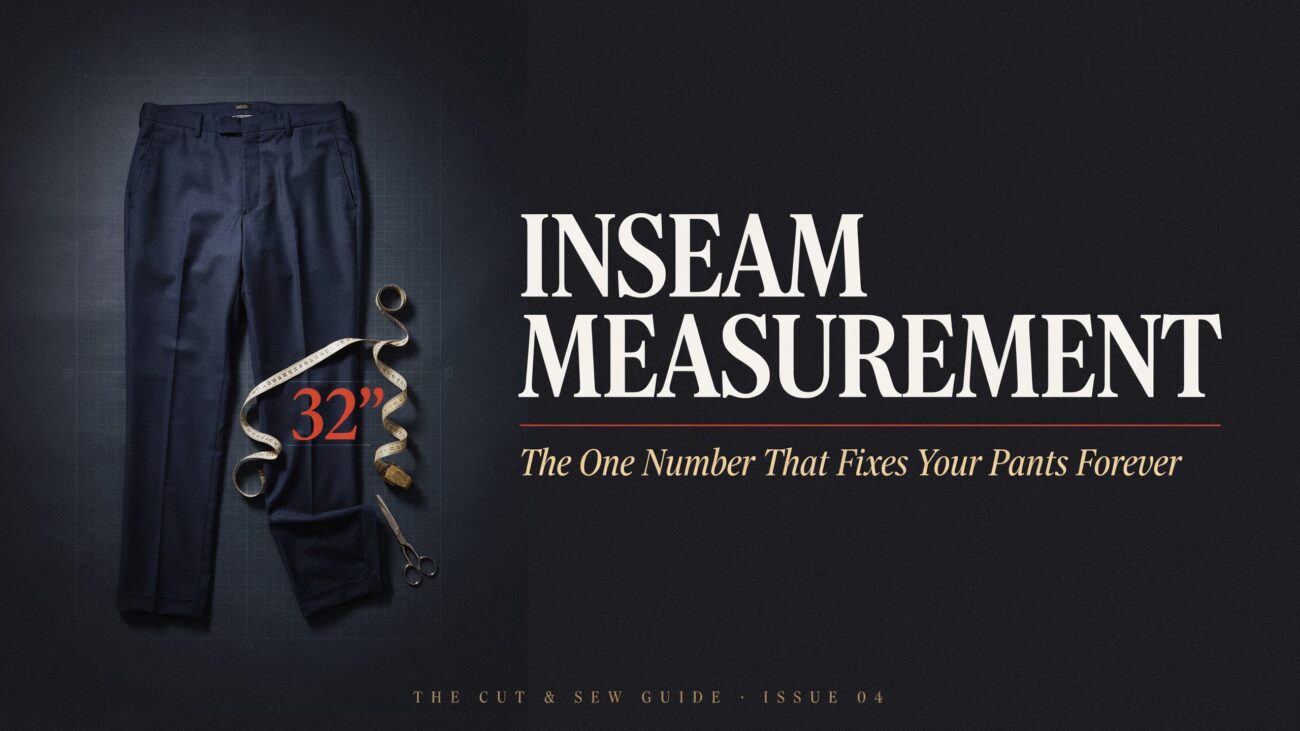
| What It Measures | Inside leg — from crotch seam to hem |
| Average Men’s Inseam | 30–34 inches (76–86 cm) |
| Average Women’s Inseam | 28–32 inches (71–81 cm) |
| Petite Range (Women) | 25–27 inches |
| Tall Range (Men, 6’2″+) | 34–36 inches |
| Tools Needed | Soft flexible tape measure |
| Best Position | Standing straight, feet slightly apart, barefoot |
| Other Uses | Bike sizing, tailoring, uniform fittings |
| Inseam vs. Outseam | Inseam = inner leg only; Outseam = waist to hem (outer) |
| How Often to Re-Measure | Every 1–2 years, or after major weight change |
Why This One Number Matters So Much
You’ve probably ordered pants online and received something that looked completely different in person.
Too short. Too long. Pooling around your shoes. Cutting off awkwardly above your ankle.
Most of the time, that problem traces back to one thing — you didn’t know your inseam.
Your inseam is the distance along the inside of your leg, from where your legs meet at the crotch all the way down to your ankle. It’s not the full length of the pants. It’s not measured from the waist. It’s just the leg part — that inside seam that runs down and down until it hits the bottom hem.
This single number tells every clothing brand exactly how long your legs are. It’s the reason jeans come with two numbers — like 32×30 — where the first is the waist and the second is your inseam.
Get it right, and shopping becomes so much easier. Get it wrong, and you’ll keep returning pants forever.
See also “Pringles Can Dimensions: Everything You Ever Wanted to Know“
How to Measure Your Inseam on Your Body (The Most Accurate Way)
This method gives you the truest number. You’ll want a helper for this one — measuring yourself while bending over introduces all kinds of errors.
Here’s what you need:
- A soft, flexible tape measure (not the stiff metal kind — it won’t follow your leg)
- A friend or family member
- Bare feet or thin socks
- Fitted bottoms or thin pants
Step 1: Take your shoes off. This is important. Even a low heel can add an inch to your measurement and throw everything off.
Step 2: Stand up straight against a wall. Keep your weight even on both feet, shoulder-width apart.
Step 3: Have your helper place the end of the tape measure right at your crotch — the point where the seam of your pants would naturally sit. Not your hip, not mid-thigh. Right at that junction where your legs meet.
Step 4: Run the tape straight down the inside of your leg to your ankle bone.
Step 5: Read that number. Write it down.
Take it twice. Average the two readings. Your legs might not be perfectly symmetrical — most people aren’t.
That’s your inseam measurement.
How to Measure Inseam From a Pair of Pants (The Quicker Method)
Don’t have a helper? No problem at all.
Find the pair of pants in your closet that fits you best. Not too long, not too short — the ones you feel good in.
Lay them flat on a bed or table. Smooth out every wrinkle. Fold them in half lengthwise so both legs line up perfectly.
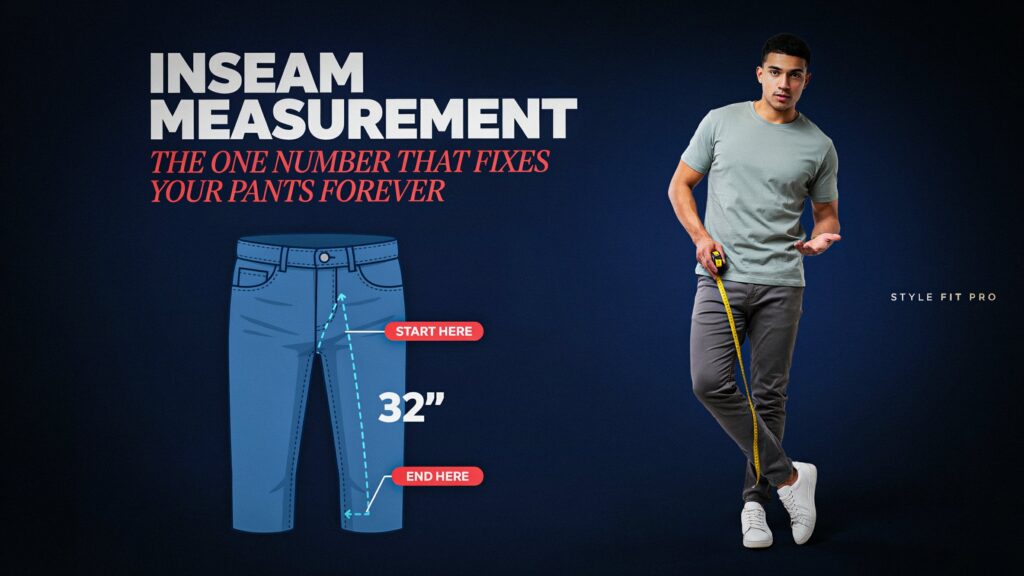
Now find the crotch point — that’s where the front seam and back seam meet, forming a little V-shape at the top of the legs. This is your starting point.
Place the end of your tape measure right there and run it down the inside leg seam all the way to the bottom hem.
That number is your inseam.
One important warning: never measure down the outside seam of the pants. That’s the outside, and it’s always longer. Measuring the wrong seam is the most common mistake people make, and it can throw your measurement off by several inches.
What Tools Work Best
A soft fabric tape measure is the only right tool here.
Metal measuring tapes are rigid. They can’t bend around your body shape. They skip over curves and give you a number that’s off in unpredictable ways.
A piece of string works in a pinch — run it down your leg, mark the spot, then hold it against a ruler. Not perfect, but better than nothing.
A flexible tailoring tape from any craft store or online shop costs almost nothing and makes every clothing measurement you ever take more accurate.
Inseam Numbers by Height: A Rough Guide
No height-to-inseam table is perfectly accurate for every person. People carry height differently — some in their legs, some in their torso. Two people standing at the same height can have inseam measurements several inches apart.
That said, this is a useful starting point when you have nothing else to go on:
Women:
- Under 5’2″ (petite): roughly 25–28 inches
- 5’2″ to 5’6″ (regular): roughly 28–30 inches
- 5’7″ and above (tall): roughly 30–34 inches
Men:
- Under 5’7″: roughly 28–30 inches
- 5’7″ to 5’10”: roughly 30–32 inches
- 5’10” to 6’1″: roughly 32–34 inches
- 6’2″ and above: roughly 34–36 inches
These are guides, not rules. Always measure yourself before ordering anything important.
Inseam, Outseam, and Rise — What’s the Difference?
Three words get mixed up constantly when people talk about pants. Let’s sort them out once and for all.
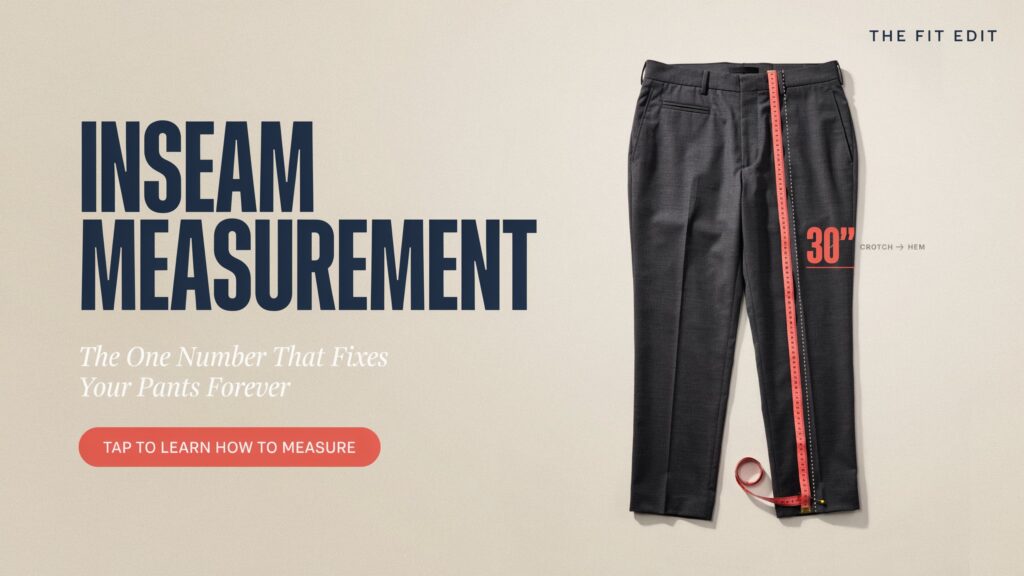
Inseam: The inside of the leg, from crotch to hem. This is leg length only. It tells you nothing about how high the pants sit on your body.
Outseam: The outside of the leg, from the top of the waistband down to the hem. Because it includes the rise, the outseam is always longer than the inseam — usually by 4 to 6 inches, sometimes more.
Rise: The distance from the crotch seam up to the top of the waistband. This decides whether pants sit low on your hips or high at your natural waist.
Here’s why this matters: two pairs of pants can have the exact same inseam and still feel completely different to wear. One might be high-rise, sitting at your belly button. The other might be low-rise, sitting well below your hip. Same leg length, very different feel on your body.
When you’re shopping, check all three if you can. But if you only know one number, make it the inseam.
Inseam for Different Types of Pants
Your ideal inseam changes depending on what style of pants you’re buying.
Regular full-length trousers and jeans: Most people shoot for a length that hits right at the ankle bone or just barely grazes the top of the shoe. A slight fold at the ankle is common and often intentional.
Skinny jeans: Because the leg hugs your calf tightly, even a little extra length creates a bunched look at the bottom. Many people prefer their skinny jeans slightly shorter for a cleaner finish.
Wide-leg and flare styles: These need a little more length to look right. The extra fabric at the hem needs somewhere to fall, and cutting them too short ruins the whole silhouette.
Dress pants for work: Tailors usually aim for what’s called a “clean break” — a very slight bend in the fabric right where the pants meet the top of your shoe. Not dragging, not hovering.
Capris: These cut off mid-calf, so the inseam runs around 18 to 22 inches depending on height.
Shorts: Inseam for shorts is far shorter — anywhere from 2 inches for very short athletic styles to 10 or 11 inches for boardshort-style cuts.
The Role of Shoes in Your Inseam Decision
Your shoes change everything.
If you’re buying dress pants that you’ll wear with heeled boots, you actually want a slightly longer inseam. The heel lifts your body, which means the pants need more length to still reach the top of the shoe.
If you’re buying casual jeans that you’ll wear with flat sneakers, you might want a shorter inseam so they don’t drag.
Some people measure twice — once barefoot for everyday reference, and once in the heels or shoes they’ll most often pair with the pants.
It sounds fussy. But it’s the reason two identical pairs of pants can look completely different on the same person.
Inseam Measurement for Bike Sizing
This is where inseam goes beyond clothing entirely.
Cyclists use inseam as the starting point for figuring out what size bike frame they need — and how high their saddle should sit.
But here’s the key difference: cycling inseam is NOT the same as pants inseam.
For bikes, you measure standing barefoot with your back flat against a wall, feet about 6–8 inches apart. You then place a hardback book spine-up between your legs and press it firmly against your crotch — simulating the pressure of a bike saddle. The distance from the top of that book down to the floor is your cycling inseam.
Once you have that number, here’s how the formulas work:
- Road bike frame size (cm): Cycling inseam (cm) × 0.67
- Mountain bike frame size (cm): Cycling inseam (cm) × 0.66
- Saddle height from crank center: Cycling inseam (cm) × 0.883
So if your cycling inseam is 80 cm, your road bike frame should be roughly 53–54 cm.
These formulas are a starting point — not a final answer. Experienced cyclists and bike fitters say that body proportions, flexibility, and riding style all play a role too. But for a first-time buyer trying to narrow down sizes, the inseam formula is a genuinely useful tool.
Common Mistakes People Make
Even with a tape measure in hand, it’s easy to go wrong.
Starting at the wrong point. Too many people start measuring from the hip or mid-thigh rather than the actual crotch seam. Even half an inch off at the top means half an inch off at the hem.
Measuring the outer seam. If you measure down the outside of the pants leg instead of the inside, you get the outseam — which is always longer. These are not the same thing at all.
Keeping shoes on. A thick sole adds height to your body without adding length to your legs. Your inseam doesn’t change, but your pants’ effective length does. Always measure barefoot.
Using pants that are too stretched out. Old, worn pants that have lost their shape can give you an inseam that’s a full inch longer than reality. Use something relatively new and well-fitted.
Slouching during measurement. Bending forward or leaning to one side shifts your body position. Always stand against a wall, straight and still.
Relying only on height. Height gives you a rough idea. But two people at the same height can easily have a two-inch difference in inseam. Always measure.
When to Re-Measure
Your inseam doesn’t change every week, but it does change.
Significant weight gain or loss shifts how pants sit on your hips, which changes what inseam length you actually need — even if your leg length stays the same.
Muscle gain in your thighs changes how fabric falls along your leg.
Age also plays a small role over many years.
A good habit: re-check your inseam every 12 to 18 months, or any time you notice your current pants aren’t hitting the right spot anymore.
Using Inseam at the Tailor
When you take pants to a tailor, your inseam measurement is the number they use to hem them.
Walk in with your number already written down. Tell them exactly where you want the hem to sit — at the ankle bone, just above the shoe, or with a slight break over the top of the shoe. Those three options all technically fall within the same rough inseam range, but they look different.
Tailors can shorten a hem easily. Lengthening one is harder and only possible if there’s enough extra fabric sewn into the original hem.
If you’re between inseam sizes when shopping, buy the longer one. You can always shorten. You cannot always lengthen.
Final Words
Your inseam is a small number with a big job.
It’s the difference between pants that make you feel put-together and pants you keep tugging at all day.
It takes about two minutes to measure. You need a soft tape measure, one friend, and bare feet. Write the number down on your phone. You’ll use it the next time you shop online, visit a tailor, or try to size a new bike.
Everything about fit gets easier when you know this one number.
FAQs
Q1. What exactly is an inseam?
The inseam is the length of the inside seam of a pair of pants, measured from the crotch point down to the bottom hem. It tells you how long the leg portion of the pants is — nothing more, nothing less.
Q2. How do I measure my inseam by myself without help?
Take a well-fitting pair of pants, lay them flat on a surface, find the crotch point where the front and back seams meet, and measure straight down the inner seam to the hem. This is the most reliable solo method.
Q3. Should I wear shoes when measuring my inseam?
No. Always measure barefoot or in thin socks. Shoes — especially heeled ones — add height to your body and can skew your pants-length preference, but your inseam itself should always be measured without footwear for accuracy.
Q4. What’s the difference between inseam and outseam?
Inseam is the inside leg measurement — crotch to hem. Outsteam is the full outside length — waistband to them. The outseam is longer because it also includes the rise (the section from waist to crotch). They measure different things and are not interchangeable.
Q5. What is a typical inseam for a man who is 5 ’10”?
Most men at 5’10” fall into a 31–33 inch inseam range. But this varies based on body proportions — some people carry more height in their torso, others in their legs. Always measure yourself rather than assuming.
Q6. What inseam should a woman at 5’4″ wear?
A woman at 5’4″ typically fits a 28–29 inch inseam for regular full-length pants. For cropped or capri styles, that number will be shorter depending on how much leg coverage is wanted.
Q7. Can my inseam change over time?
Yes. Significant changes in body weight shift how pants sit on your hips, which affects what inseam works for you. It’s worth re-measuring every year or so, especially after major weight or muscle changes.
Q8. What does a 32×30 label on men’s jeans mean?
The first number — 32 — is the waist measurement in inches. The second — 30 — is the inseam. This two-number system is standard on most American and UK men’s jeans.
Q9. Is inseam the same for every style of pants?
No. The ideal inseam changes depending on the cut. Wide-leg pants need more length to hang well. Skinny jeans look cleaner with a slightly shorter inseam. Dress pants should hit at a specific point on the shoe. Same body, different lengths for different styles.
Q10. How do I use my inseam to size a bicycle?
For a road bike, multiply your cycling inseam in centimeters by 0.67 to get your approximate frame size. For a mountain bike, multiply by 0.66. Cycling inseam is measured standing against a wall with a book pressed firmly up into your crotch — slightly different from your pants inseam.
Q11. What’s the most common mistake when measuring inseam?
Measuring down the outside seam of the pants rather than the inside seam. The outside gives you the outseam, which is always longer and will lead to pants that are too short when you order your size.
Q12. If I’m between two inseam sizes, which should I choose?
Always go with the longer one. Shortening pants at a tailor is simple and inexpensive. Adding length is only possible if extra fabric was sewn into the original hem — which isn’t always the case.
Q13. How do brand inseam measurements compare across different stores?
They vary more than you’d expect. A 32-inch inseam from one brand can run shorter or longer than the same number from another. Always check the individual brand’s size guide, or better yet, measure a pair from that brand you already own. Your body measurement is the anchor — the brand’s number is just a starting point.
Keep creating, innovating, and inspiring with Content Ideators every day.
