
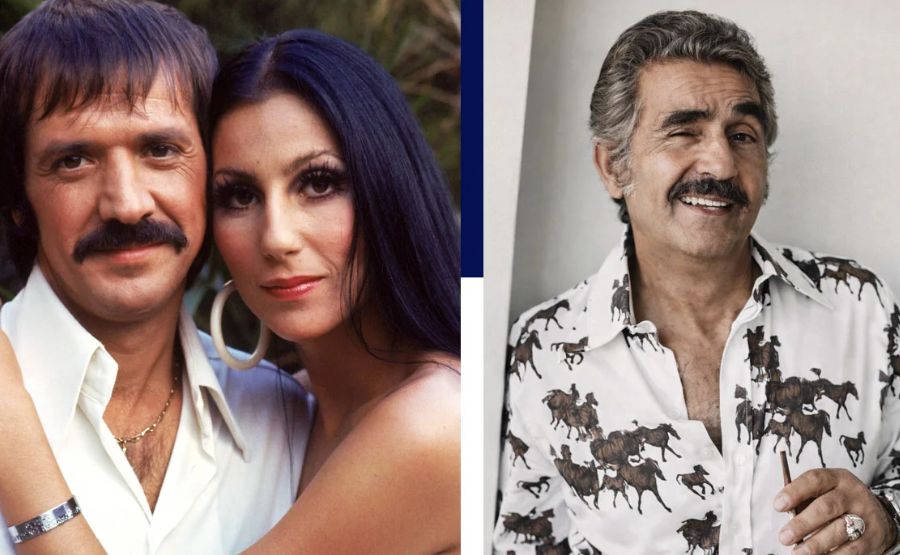
He was dead before most people ever knew his name. When Cher published her memoir in November 2024 — a book that hit the New York Times Best Seller list at number one and held that spot for three straight weeks — readers finally got a glimpse of the man she’d spent decades not talking about. John Paul Sarkisian. Her father. The charming liar who looked exactly like her, carried the same dark eyes, and spent nearly his entire adult life walking away from the only child he ever had.
This isn’t a story about a pop star’s father as a footnote. It’s the story of a second-generation Armenian-American man born into survival, drafted into war, swallowed by addiction, and remembered mostly for what he didn’t do.
Quick Bio
| Detail | Information |
| Full Birth Name | Ardche George Sarkisian |
| Known As | John Paul “Johnnie” Sarkisian |
| Born | March 23, 1926, Oakland/Berkeley area, Alameda County, California |
| Died | January 28, 1985, Fresno, California |
| Age at Death | 58 |
| Ethnicity | Armenian-American |
| Parents | Ghiragos “George” Sarkisian & Siranousch “Blanche” Dilkian |
| Spouse | Jackie Jean Crouch (Georgia Holt) — married twice, divorced twice |
| Child | Cherilyn Sarkisian (Cher) |
| Occupations | Truck driver, bartender, auto mechanic, hairstylist, horse breeder |
| Buried | Fresno Memorial Gardens, Fresno County, California |
Where He Came From
The Sarkisian family’s presence in California began not with ambition, but with survival. John’s father, Ghiragos — who Americanized his name to George — immigrated to the United States around 1909, settling first in Modesto and later in Fresno. He’d come from Turkey, where his people were registered as Armenian. His wife Siranousch, who went by Blanche, arrived separately and eventually joined him in that corner of California that would become known locally as Little Armenia.
They weren’t running toward opportunity. They were running from a genocide.
The Armenian Genocide, carried out by Ottoman forces beginning in 1915, killed an estimated one million people. George and Blanche survived it. They carried it with them across an ocean and into a modest California life, and they passed the weight of it — and the resilience required to carry it — directly into their household. John Paul Sarkisian grew up the son of people who knew what real loss looked like.
He was born in 1926, the youngest of four children: Elizabeth, Roxanne, Louise, and Johnnie. The 1930 census finds the family in Modesto. By 1940, the household had relocated to Fresno — the city that would define most of John’s life, and where he would eventually die. His father George was 37 when John was four years old. His mother Blanche was 27. They were working-class, culturally tight-knit, and fiercely proud of an identity that the world had tried to erase.
John attended technical school in Fresno. At 18, in June 1944, he registered for the draft. World War II was still burning through the Pacific. He served, and came home.
See also “Paula Profit: The Woman Who Chose Family Over Fame“
The Meeting That Changed Everything
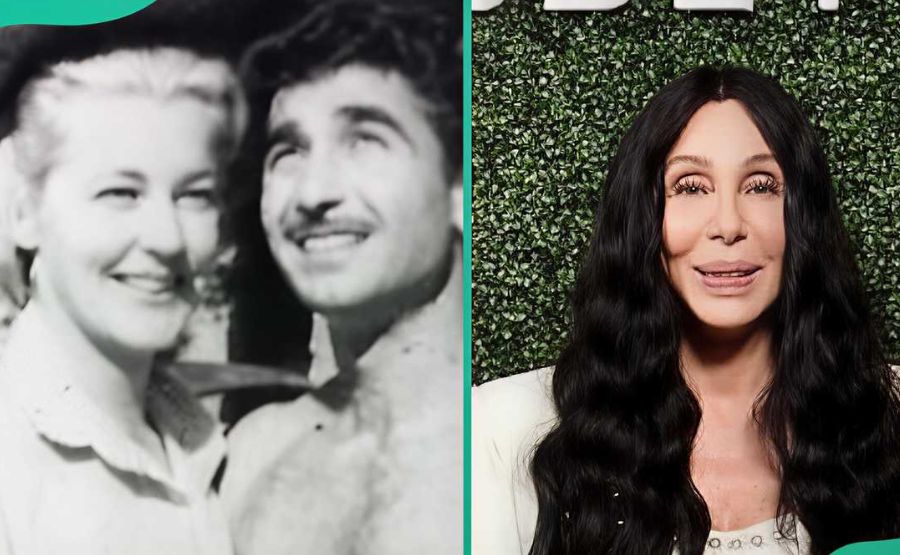
In 1944, at a Harry James big band dance held somewhere in Fresno, California, a young Armenian-American man with dark eyes and easy charm met a girl named Jackie Jean Crouch. She’d come from Kensett, Arkansas — a barely-there town where she was born on June 9, 1926 or 1927 (records conflict on this detail) — and had been drifting westward with her father for years. She was pretty, vocally gifted, and had already survived more instability than most teenagers.
They were both teenagers. They were both broke. They married on June 22, 1945, in Reno, Nevada.
On May 20, 1946, their daughter Cherilyn was born in El Centro, California. John was 20 years old and already pulling away.
Within months, the family was fragmenting. John left — for drugs, for gambling, for a life that had no room for an infant daughter. He placed baby Cher in a Catholic home run by nuns, where her mother could only watch through a window on permitted visit days. Georgia Holt, as Jackie Jean would come to be known, found the experience traumatic enough that she described it as one of the worst moments of her entire life. Cher’s parents divorced in 1947, before their daughter could form a single conscious memory of her father.
He was gone. And he’d stay gone.
A Working Life, Poorly Held
John Paul Sarkisian wasn’t lazy. That point matters, because his story could easily collapse into simple condemnation. His grandfather had purchased five trucks to help set him up in a business of his own. He worked as a truck driver — the job he’s most associated with. He tended bar. He worked as an auto mechanic. He tried his hand at hairstyling. He even attempted horse breeding at one point, that particular experiment in optimism that never quite paid off.
None of it stuck. Not because he lacked the capacity for work, but because addiction and compulsive gambling undid whatever he’d managed to build. Heroin. Painkillers. The racetrack. The casino floor. These weren’t occasional vices — they were structural, defining, relentless patterns that collapsed every financial effort he made and severed every relationship that might have held him together.
He was arrested. He did time for drug offenses and fraud. He wrote bad checks. He was the kind of man who could charm a room and disappear from it in the same afternoon.
And he was Cher’s father.
The Six Months That Defined a Lifetime
When Cher was about eleven or twelve years old, something improbable happened. John and Georgia briefly reconciled. They remarried in December 1965 in Las Vegas — records confirm a Georgia LaPiere wedding to Johnnie P. Sarkisian on December 15, 1965 — and moved together to Fresno, into the Armenian neighborhood John had grown up in. “My silver-tongued father talked Mom into relocating two hundred miles north to an area of Fresno known as Little Armenia,” Cher subsequently recounted in her autobiography. “We were to live with his family — more strangers that I’d never met and didn’t know existed until that moment.”
Those months gave Cher her first real contact with her father. She found him charming. Magnetic, even. She recognized herself in him — those dark eyes she’d heard about, that ability to fill a room. But she also watched him relapse. She watched drugs and old patterns win, again.
They divorced again in September 1966. Less than a year after the second marriage began.
For Cher, it was the last real attempt. Within about six months of meaningful contact, she made a decision she never reversed: she cut her father out of her life. In her 2024 memoir, she wrote about looking at the man and seeing both halves of herself — his face, his charm, his wreckage. “He was a lot of things,” she said in a quote that has circulated widely, “but mostly, he was trouble.”
She chose not to be.
Controversies: The Lawsuit and the Public Reckoning
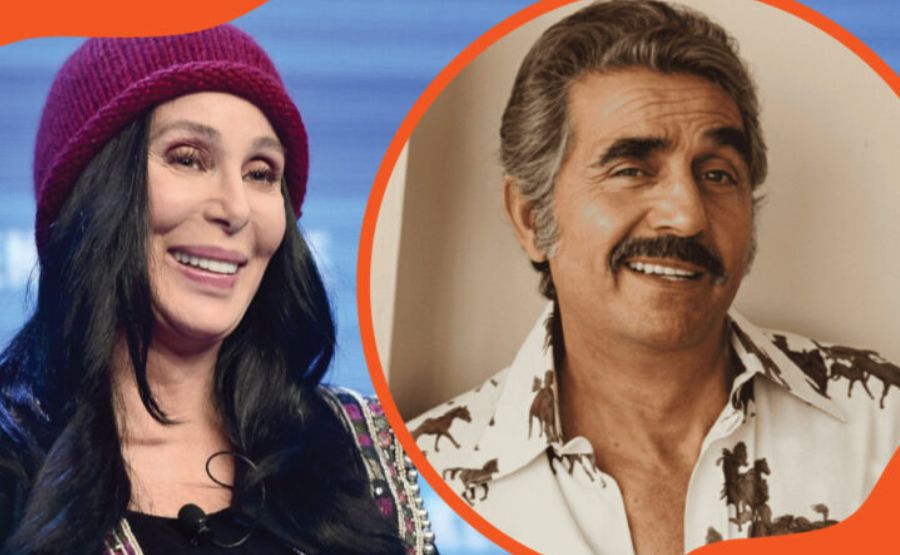
In the 1970s, as Cher became one of the most recognizable faces in American entertainment, John Paul Sarkisian made a decision that cemented the estrangement permanently.
He sued her. For $4 million.
The lawsuit targeted Cher and two tabloid magazines, claiming that statements she’d made in interviews — specifically about his heroin addiction and compulsive gambling — had damaged his reputation and constituted defamation. In court documents and public statements, John acknowledged he’d had legal troubles, including drug-related arrests. But he argued he’d changed, and that her words were causing him ongoing harm.
The case was eventually dismissed. But its damage was different and deeper than any verdict could address. It took a private family grief — a daughter describing the father who abandoned her — and turned it into a legal spectacle. It confirmed, publicly, that there was nothing left to repair between them.
Cher didn’t hide what she knew about him. She didn’t soften it for his benefit. She showed up for the next interview and told the truth again.
The Final Years
After the lawsuit, John Paul Sarkisian faded. He lived quietly in Fresno, the city his family had built their American life in, the city where his parents George and Blanche were buried. His father George had died in 1965 at age 76. His mother Blanche died in 1979 at 80.
He outlived them both by only a few years.
On January 28, 1985, John Paul Sarkisian died in Fresno, California. He was 58 years old. The cause of death has never been publicly disclosed. He was buried at Fresno Memorial Gardens in Fresno County.
Reports suggest Cher was present with him in his final days — a detail that adds quiet complexity to a story that otherwise reads as pure rupture. Despite the lawsuit, despite the years of silence, despite the disowning that she’d spoken about openly — she apparently went to him at the end. Or was at least there.
She did not attend his funeral. The estrangement held even past death.
Legacy: What He Left Behind
John Paul Sarkisian left one child, one surname she quickly shed, and a silence she spent decades turning into music.
His absence during Cher’s childhood did something to her. It made her fiercely self-reliant. It made her suspicious of permanence and deeply unafraid of starting over. When Cher told people she had disowned her father, she wasn’t asking for sympathy — she was explaining how she survived. The girl who grew up without a present father became the woman who reinvented herself so many times that entire decades of popular culture bend around her name.
His Armenian heritage, though — that survived in full. Cher has spoken throughout her career about pride in her Armenian roots, the ones that ran directly through this complicated, absent man. Her paternal grandparents were genocide survivors. Her great-grandparents crossed an ocean and rebuilt their lives from nothing. Whatever John Paul Sarkisian failed to give his daughter directly, he gave her that lineage. That history of people who endured the unsurvivable and then got up.
There’s also Cher’s memoir itself — published in 2024, nearly forty years after his death — as a kind of posthumous reckoning. She doesn’t glorify him. She doesn’t vilify him with dramatic language. She writes him as he was: charming, unreliable, troubled, absent, and somehow still part of everything she became.
His father bought him five trucks and a chance. He didn’t take it. His daughter inherited whatever fire that missed him — and built an empire on it.
Conclusion
John Paul Sarkisian’s career by no means opened during the highlights, yet formed one of the most recognizable careers that is currently on hiatus. He struggled with addiction, loss and broken relationships, carried the burden of survival from his Armenian roots, and became a figure caught between the instability and instability of his heritage.
While his presence was small during Cher’s teenage years, the observed absence lasted some time and left a lasting impression. It not only stimulated the youth, but allowed her to emerge with the power and independence for which she later became known. He did not create a legacy through success or fame but through respect because the lifestyle he created stood in direct response to his lifestyle.
John Paul Sarkisian on Stop remains a reminder that some legacies aren’t created by fulfillment alone. Some are carried on by absence and memory, quiet processes and the story of a figure continues long after within the child’s life.
FAQs
1. Who was John Paul Sarkisian?
He was an Armenian-American man born in California in 1926, best known as the biological father of singer and actress Cher. He worked various blue-collar jobs throughout his life and died in Fresno in 1985 at the age of 58.
2. What was John Paul Sarkisian’s ethnicity?
He was fully Armenian-American. Both of his parents, George and Blanche Sarkisian, were Armenian immigrants who had fled Turkey — specifically, they were survivors and descendants of those affected by the Armenian Genocide.
3. When was John Paul Sarkisian born?
March 23, 1926, in the Oakland/Berkeley area of Alameda County, California. Some sources list Oakland; others list Berkeley. Records confirm Alameda County as the birth location.
4. How did John Paul Sarkisian die?
He died on January 28, 1985, in Fresno, California, at age 58. The cause of death was never publicly disclosed by his family or by Cher. He was buried at Fresno Memorial Gardens.
5. Did Cher have a relationship with her father?
A brief and troubled one. She didn’t meet him meaningfully until she was around 11 or 12 years old, when her parents briefly reunited. That contact lasted approximately six months before Cher cut ties. She later said she had disowned him.
6. Why did Cher disown John Paul Sarkisian?
His heroin addiction, compulsive gambling, criminal history, and general inability to maintain stability in her life led her to make the decision. The 1970s lawsuit he filed against her widened the fracture permanently.
7. Did John Paul Sarkisian really sue Cher?
Yes. He filed a $4 million lawsuit against Cher and two tabloid publications in the 1970s, claiming her public statements about his drug use and gambling constituted defamation. The case was eventually dismissed.
8. Was Cher present when her father died?
Multiple sources, including Cher’s memoir, indicate she was with him in his final days. However, she reportedly did not attend his funeral. The specifics of their final communications have not been made fully public.
9. What jobs did John Paul Sarkisian hold?
He worked as a truck driver (his primary occupation), bartender, auto mechanic, hairstylist, and horse breeder. His father also helped set him up in a trucking business with five vehicles, though that enterprise did not succeed.
10. Did John Paul Sarkisian remarry after Georgia Holt?
No documented remarriage exists in the public record beyond his two marriages to Georgia Holt — first in 1945, which ended in 1947, and again in December 1965, which ended in September 1966. Public records do not indicate any further marriages.
11. What did John Paul Sarkisian’s parents do?
George Sarkisian immigrated to Fresno from Turkey in 1909 and died there in 1965 at age 76. Blanche (Siranousch Dilkian) also came from Turkey and died in Fresno in 1979 at age 80. They were both part of the Armenian diaspora community in California.
12. Does Cher talk about her Armenian heritage?
Yes. Despite her strained relationship with her father, Cher has consistently acknowledged and expressed pride in her Armenian roots — a heritage that passes directly through John Paul Sarkisian’s family line.
13. Was John Paul Sarkisian in Cher’s 2024 memoir?
Yes. Cher: The Memoir, Part One, published in November 2024 by Dey Street Books, deals candidly with her father. She wrote about meeting him in Fresno, his charm, his relapse, his criminal behavior, and the choice she made to leave him behind.
14. Did John Paul Sarkisian have other children?
Based on available records, Cher (Cherilyn Sarkisian) was his only child. Some sources have listed other possible family connections, but no verified second child has been documented.
15. What is John Paul Sarkisian’s place in Cher’s story?
He’s the reason she carries the last name she eventually shed. He’s also, indirectly, the reason she needed no safety net — because he was never one. Cher’s independence, her refusal to be defined by anyone else, and her ability to keep going through every professional and personal collapse all carry the fingerprint of a childhood shaped by his absence.
Keep creating, innovating, and inspiring with Content Ideators every day.
