
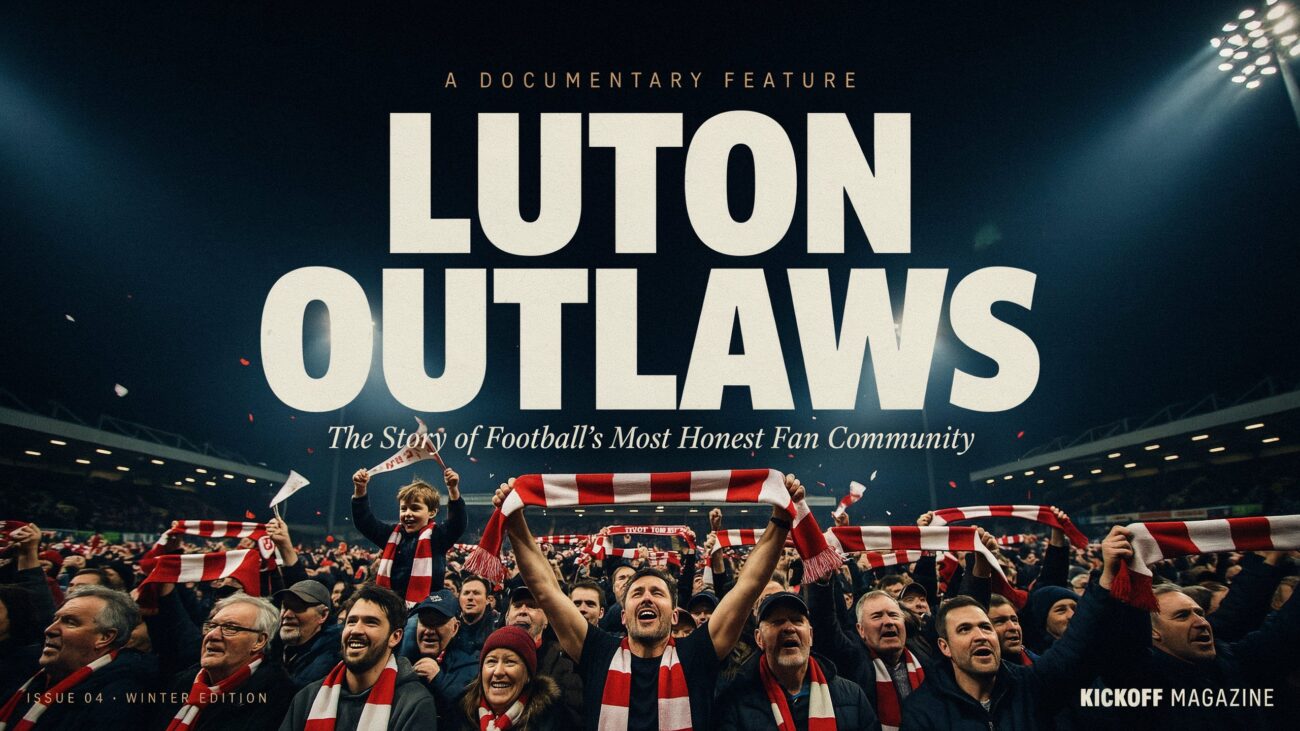
There is a football forum in England where you are told, right on the homepage, that everything you read is “100% conjecture, fiction, lies, bullshit and complete bollocks.” And if you want to be taken seriously, you are in the wrong place.
That warning is not driving people away. It is pulling them in.
That is the Luton Outlaws. And once you understand what they are, you understand something true and important about football fandom itself.
Quick Facts
| Detail | Information |
| Full Name | Luton Outlaws — The Avenue of Evil |
| Type | Totally independent fan forum |
| Club Supported | Luton Town FC (The Hatters) |
| Founded | Early 2000s (late 1990s roots) |
| Home Ground Discussed | Kenilworth Road (Luton, Bedfordshire) |
| Forum Platform | members.boardhost.com/lutonoutlaws |
| Nickname | The Avenue of Evil |
| Affiliated with Luton Town FC? | No — proudly and explicitly independent |
| Key Historical Moment | John Gurney ownership crisis, 2003 (55-day tenure) |
| Core Values | Honesty, humour, loyalty, independent voice |
| New Stadium | Power Court — fans discuss its future on the forum |
What the Luton Outlaws Actually Are
You might expect a group called the Luton Outlaws to be some sort of organised hooligan gang. They are the exact opposite.
The Luton Outlaws are a fan-run online forum. Real people, sitting at real keyboards, saying exactly what they think about Luton Town Football Club. No spin. No PR. No filter.
The forum is completely separate from the club. It is paid for by supporters. It is run by supporters. It answers to nobody. Their own disclaimer makes this crystal clear — they are not connected to Luton Town FC, the official supporters’ trust, the loyal supporters’ club, or anyone else with an official lanyard.
That total independence is the whole point.
See also “Movierulz3: The Full Story Behind India’s Most Stubborn Piracy Website“
Where It All Began: The Working-Class Town Behind the Club
Before you can understand the Outlaws, you need to know a little about Luton itself.
Luton is a town in Bedfordshire, about 30 miles north of London. It has a proud, gritty, working-class identity. The local football club — Luton Town FC, nicknamed the Hatters — was founded all the way back in 1885.
For well over a century, families in Luton passed their love for the club down through the generations. Grandparents took grandchildren to Kenilworth Road. Dads and mums taught kids the chants. Football became something stitched into the fabric of the town.
When the club struggled — and it struggled plenty — the fans did not leave. They stayed and they got louder.
That loyalty is the soil the Outlaws grew out of.
How the Forum Came to Life
In the late 1990s and early 2000s, the internet changed how football fans talked to each other. Forums and message boards appeared everywhere. Supporters who used to argue in pubs could now argue at 2am in their living rooms. This was, for many fans, a genuine upgrade.
Luton Town supporters wanted a space where they could say exactly what they thought — not a corporate-friendly comment section, not a moderated fan zone where complaints got deleted. Something real.
The Luton Outlaws forum was that space. It grew quickly because it felt honest in a world of polished press releases.
Early members were not looking for likes or followers. They wanted to talk about football. Proper football. The kind where you can call a transfer decision rubbish and nobody bans you for it.
The Crisis That Defined Everything: John Gurney, 2003
If one moment explains why the Outlaws matter, it is this one.
In 2003, a man named John Gurney took over Luton Town FC. His tenure lasted just 55 days. In that time he managed to cause extraordinary chaos — sacking a manager by letter, announcing radical plans that horrified supporters, and generally behaving in ways that left fans furious and frightened for the club they loved.
The Outlaws forum became the central hub of the fan response.
Supporters shared information there when it was hard to find. They coordinated. They were pressured. They refused to be quiet. Out of that moment, the Trust in Luton campaign was born — a fan-led movement to protect the club and push for proper accountability from ownership.
Gurney was gone after those 55 days. The fans had found their collective voice. And the Outlaws forum, which had been growing anyway, now had a story attached to it — proof that an independent supporter platform could actually matter.
From that point on, nobody could claim the forum was just idle chat.
The Avenue of Evil: The Name That Tells the Whole Story
At some point, outsiders started calling the Luton Outlaws forum harsh. Too blunt. Too brutal. Too willing to criticise their own club without pulling punches.
The members thought about this feedback. Then they put the phrase on the wall and called it home.
“The Avenue of Evil” became the forum’s beloved nickname. Members did not accept it reluctantly. They embraced it completely and made it their identity.
The name is not actually about evil. Not even close. It is about a refusal to pretend. It signals that you will find honest opinions here — not just celebrations, not just cheerleading, but real reactions from real people who care enough to be critical when criticism is deserved.
Think of it like a pub where the truth is welcome at the bar. You might hear things that sting. But nothing is fake.
When rival fans or journalists use the phrase to mock the community, Outlaws members tend to smile. The nickname already does exactly what it is supposed to do — it keeps out people who only want nice things said.
What Happens on the Forum Day to Day
Picture a Sunday afternoon after a match. Luton Town have just lost 2-0 at home, and everyone has an opinion about why.
Within minutes of the final whistle, the Avenue of Evil is humming. Someone posts about the goalkeeper’s positioning. Someone else argues the midfield set-up was wrong before kick-off. A third person brings up the chairman’s transfer budget decisions from six months ago and suggests they are related to today’s result.
Nobody is censored for having a strong take. That is entirely the point.
The forum covers everything connected to the club:
- Match previews and post-match analysis
- Transfer rumours and the debate around every signing
- Club ownership, stadium finances, and board decisions
- Player form, injury updates, and tactical discussions
- Off-topic banter — the kind that keeps communities human
One thing that makes the Outlaws unusual is the archive. Forum threads go back years. Reactions to promotions. Reactions to relegations. Long arguments about managers who are now retired. That history is sitting right there, searchable, like a fan-written diary of the last two decades.
Journalists researching Luton Town have been known to browse the forum for supporter sentiment. Local media watch it. Even club staff have reportedly taken a look from time to time. The Outlaws have become, without ever intending to, an unofficial record of how the fanbase actually feels.
Kenilworth Road: The Stadium at the Heart of Everything
You cannot talk about the Outlaws without talking about Kenilworth Road.
The Kenny, as fans call it, has been Luton Town’s home since 1905. It is a compact, old-fashioned English football ground — the kind with tight terraces where you can feel the noise bouncing off the walls around you.
For the Outlaws, Kenilworth Road is not just where they watch football. It is a symbol. It represents the club’s history, its working-class roots, its gritty refusal to be anything other than itself.
This makes the ongoing Power Court stadium debate one of the most charged topics on the forum.
Luton Town is planning a move to a new 23,000-capacity ground at Power Court. The new stadium promises better facilities, more revenue, and a modern matchday experience. Most fans understand the logic.
But understanding something and being entirely happy about it are different things.
On the Outlaws forum, threads about Power Court mix genuine excitement with real grief. People share memories of their first time at Kenilworth Road. They talk about what will be lost when the old ground is gone. They debate the finances of the new build with the kind of detail that would impress a journalist at the Financial Times.
That is classic Outlaws behaviour — taking something that matters deeply and discussing it with total seriousness, total honesty, and occasional gallows humour.
Matchdays: Where the Online Community Comes Alive in Person
The Outlaws are not purely a digital group. They show up.
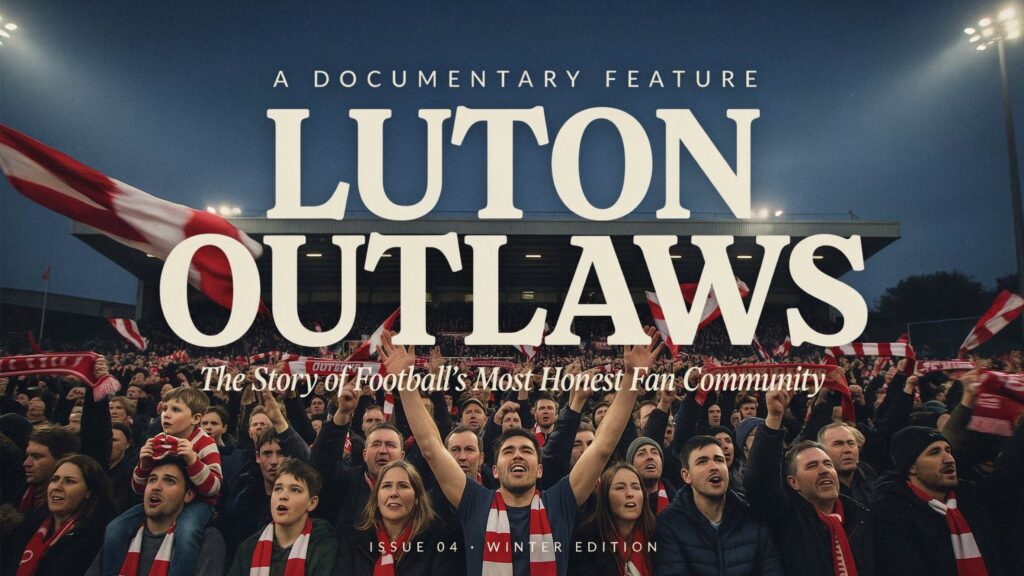
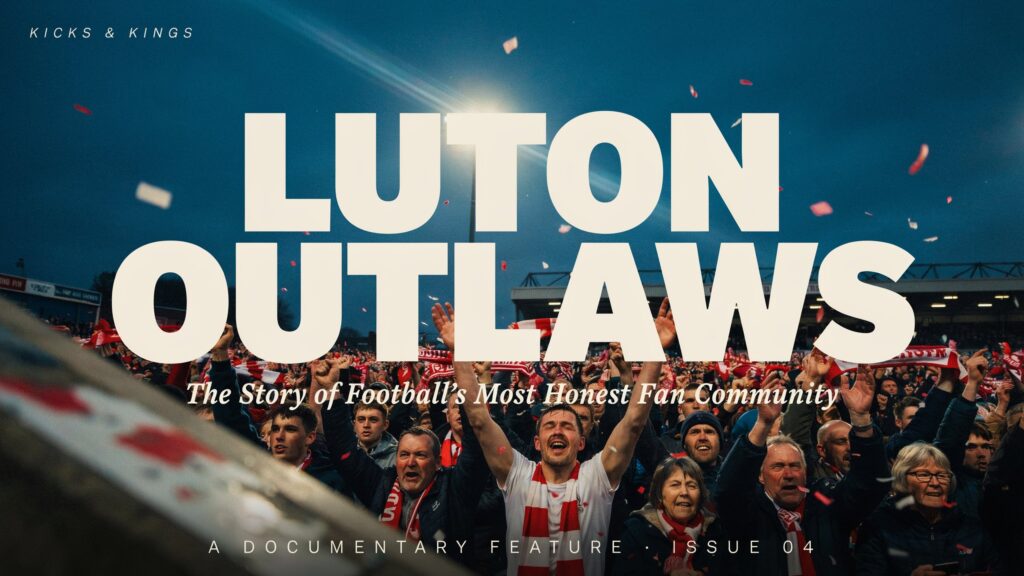
Home matchdays at Kenilworth Road have a pre-game ritual that feels like it belongs to another era of football. Fans gather hours before kick-off. Stories get told. Banners get prepared. Chants are rehearsed — though the word “rehearsed” gives the wrong impression, because it all feels completely natural.
When the team runs out, the atmosphere that greets them carries years of loyalty inside it.
Away days are where the Outlaws identity really shows. Travelling supporters make long journeys across England to follow their team. They arrive at rival grounds, sometimes in small numbers, and make as much noise as they can. They out-sing home fans at grounds twice the size of Kenilworth Road. That reputation — loud, passionate, impossible to ignore — is something the club has come to rely on.
There is something moving about a group of fans who keep showing up regardless of the league table. The Outlaws have followed Luton Town through the Premier League and through non-league football. They showed up when the ground was full and when it was barely a quarter full. The size of the crowd changed. The commitment did not.
When Things Got Very Hard: Non-League and Back
English football has a pyramid structure. Go down far enough and you leave the professional league system entirely. Luton Town went there.
The club dropped into the Conference (now the National League) — non-league football — before fighting its way back up. This was not an easy time. It tested everyone who called themselves a Luton fan.
The Outlaws did not use the period as an excuse to disengage. If anything, some members remember those years with a strange fondness. The attendance was smaller. The grounds were rougher. But the connection between the fans and the club felt raw and close in a way that gets lost when everything is polished and corporate.
When Luton Town came back up through the divisions — eventually reaching the Premier League in 2023 — the joy meant something specific to people who had been there for the hard years. You cannot fake that kind of earned celebration.
The Forum’s Relationship With the Club: Close but Free
The Outlaws are not enemies of Luton Town FC. They are not trying to destabilise the club or cause problems. They love the club. That love is the entire reason the forum exists.
But love does not mean silence.
When the board makes a decision members disagree with, the forum says so. When a player performs below expectations, the performance gets assessed honestly. When ownership makes promises that are not kept, the Outlaws remember and bring it up again.
This creates an interesting dynamic. The forum keeps the club accountable in a way that official supporter bodies sometimes cannot. Official groups have relationships to protect. The Outlaws have nothing to lose by telling the truth.
That said, the relationship is not purely adversarial. When Luton Town achieve something, the forum celebrates with genuine joy. When the club faces a genuine external threat, supporters come together. The Outlaws can be fierce critics one week and fierce defenders the next — because both responses come from the same place.
The New Generation and What Comes Next
Fan communities can fade. Old members get busy with life. Younger fans grow up with different habits and different platforms.
The Outlaws have managed to stay relevant by staying real. The message board format is old-fashioned by internet standards. But it still works. Threads run long. Opinions develop across dozens of replies. Arguments get resolved — or do not get resolved, which is also fine.
Younger fans are finding the forum the way people always found it — through word of mouth, through searching for honest opinions about the club, through realising that the official channels do not always tell the full story.
The intergenerational element matters. Older members set the tone. Newer members pick up the culture. In that way the Outlaws function a bit like the town itself — passing something down, keeping something alive.
What “Outlaw” Actually Means in Football
The word deserves a moment of thought, because it is easy to misread.
An Outlaw in this context is not a criminal. It is not someone who wants trouble. It is someone who operates outside the official version of things.
In modern football, the official version of everything is very polished. Clubs have social media teams, PR strategies, and carefully worded statements. Supporters are encouraged to engage in specific ways, through specific channels, which the club controls.
The Outlaws reject that model entirely. They are outside it. They write their own version of the story — messy, honest, sometimes wrong, sometimes brilliantly right. That independence is what the name captures.
In the era of commercial football, that kind of independence is increasingly rare. Which is probably why it feels increasingly valuable.
Final Words
There is a quote on the Luton Outlaws’ own forum disclaimer that sums things up better than most fan mission statements ever could. It says the forum is a place for “conjecture, fiction, lies, bullshit and complete bollocks” — and if you want to be taken seriously, you are in the wrong place.
Read that carefully. It is not actually saying the forum is worthless. It is saying the opposite. It is saying: we are a place for human beings to talk football freely, and we are not pretending to be anything else.
That honesty, wrapped in sarcasm, is what the Outlaws have always been. Born in the early 2000s, shaped by crisis, defined by a refusal to pretend, and still going strong two decades later.
Football needs more places like this. Places where fans can be angry and funny and heartbroken and hopeful all in the same thread. Places where the history is preserved in the archives and the future is argued about every single week.
The Avenue of Evil is not really evil. It never was. It is just honest. And in modern football, that is rarer than it should be.
FAQs
1. What are the Luton Outlaws?
The Luton Outlaws are a totally independent fan forum run by supporters of Luton Town FC. They are not connected to the club, the official supporters’ trust, or any other formal organisation. The forum exists for fans to discuss anything and everything related to Luton Town, completely freely.
2. What is “The Avenue of Evil”?
It is the nickname for the Luton Outlaws forum. The name started as a label given by people who thought the forum was too blunt and critical. Members loved it and adopted it as their own. It represents honest, unfiltered conversation — not actual malice or nastiness.
3. When were the Luton Outlaws founded?
The forum has roots in the late 1990s, with its main growth and identity forming in the early 2000s. It grew particularly fast during the John Gurney ownership crisis of 2003.
4. Who was John Gurney and why does he matter to the Outlaws?
John Gurney was a controversial owner of Luton Town FC whose tenure lasted just 55 days in 2003. He made drastic, unpopular decisions that outraged supporters. The Outlaws forum became a central place for fans to share information, organise, and push back against his ownership. When he departed, the forum had proven it could have real influence.
5. Is the forum still active?
Yes. As of 2026 the forum remains active, hosted at members.boardhost.com/lutonoutlaws. It covers current matches, transfers, club finances, the Power Court stadium plans, and off-topic banter.
6. What is the connection between the Outlaws and the Trust in Luton?
Trust in Luton is a fan-led supporters’ trust that emerged partly from the energy generated during the Gurney crisis. Outlaws members supported the Trust’s goals and used the forum to spread awareness, though the Outlaws forum itself remains separate from and independent of the Trust.
7. Do the Outlaws go to actual matches or is it just an online community?
Both. Members attend home games at Kenilworth Road and travel in numbers to away fixtures. The matchday atmosphere they help create is considered a genuine part of what makes supporting Luton Town a distinct experience.
8. Why is the forum called “The Avenue of Evil” and not something gentler?
Because the community values honesty over comfort. The name warns visitors that they will find blunt opinions and frank criticism. People who want only positive content are told, politely but clearly, they might be happier elsewhere.
9. What do Luton Outlaws think about the move to Power Court stadium?
The forum has mixed feelings. Members understand that a new 23,000-seat stadium would bring financial benefits and improved facilities. But Kenilworth Road holds deep emotional significance, and many members feel a genuine sadness about leaving a ground the club has called home since 1905.
10. Are the Luton Outlaws officially connected to Luton Town FC?
No. The forum’s own disclaimer is explicit on this point. It states clearly that the Outlaws are not associated with Luton Town FC or any of its official partner organisations. This independence is central to the group’s identity and purpose.
11. What topics get discussed on the forum beyond football?
Members discuss local Luton news, broader political topics, comedy, and everyday life. Football dominates, but the human side of the community spills into off-topic threads regularly. This is part of what makes it feel like a genuine community rather than just a sports message board.
12. Have Luton Outlaws influenced media coverage of the club?
Yes, informally. Journalists and local media are known to monitor the forum for fan sentiment. The forum has been referenced in match previews and club coverage. This means fan opinion expressed on the Outlaws platform sometimes shapes how the club is discussed publicly.
13. What happened when Luton Town dropped into non-league football?
The Outlaws kept going. Members attended matches in the Conference (now the National League), supported the club through its lowest professional point, and maintained the forum as a place for honest discussion about what the club needed to do to recover. That period is remembered as defining the community’s true loyalty.
14. Is the Luton Outlaws forum welcoming to new members?
Yes, though newcomers are typically advised to read existing threads and get a feel for the tone before posting. The forum has its own culture and humour that takes a little time to understand. Once you understand it, it tends to feel like arriving somewhere that has been waiting for you.
15. What makes the Luton Outlaws different from other football fan forums?
Three things stand out. Their absolute independence from the club and all official bodies. Their long archive of fan reaction that effectively documents the club’s history from a supporter’s point of view. And the “Avenue of Evil” culture — the commitment to honest, unvarnished conversation that refuses to be softened by commercial pressure or the desire to be liked.
Keep creating, innovating, and inspiring with Content Ideators every day.
