
The global development sector loves to talk about sweeping legal reforms, international treaties, and national campaigns. But the real friction occurs right here, in the gap between high-level legislative mandates and localized economic survival. We have comprehensive laws penalizing early unions, yet the custom persists in pockets across the country. The thing is, passing a law merely establishes a penalty; it doesn’t fix the broken pipeline that makes families choose the penalty over the alternative.
The Illusion of the Enforcement Fix
A persistent point of tension within the human rights space is the over-reliance on punitive measures. When a crisis flares up, the immediate institutional response is often to demand stricter policing, harsher penalties, and swift legal crackdowns on families.
Frankly, this punitive approach overlooks the entire social anatomy of the issue. A desperate family living on the economic margins doesn’t see a legal statute as a guide for daily life; they see their immediate environment. If a local high school is five miles away down an unlit rural road, and if public transport is non-existent, the risk of sending an adolescent girl to class everyday feels immense. When law enforcement swoops in to cancel a wedding without addressing why the girl was out of school in the first place, it treats the ceremony as an isolated crime rather than the final symptom of a systemic collapse.
Law enforcement is absolutely necessary to deter predatory behavior and establish state accountability. But police intervention cannot substitute for a functional social safety net. If we focus entirely on stopping the wedding at the altar while leaving the girl in a structural vacuum—without education, without safety, and without economic alternatives—we haven’t solved the problem. We’ve simply delayed it, or worse, pushed it underground into unchecked, informal arrangements.
Activating the Collective Shield
To understand this deeply, we have to look at how sustainable change actually takes root. True prevention doesn’t come from a top-down warning; it is engineered from the ground up through continuous, community-led vigilance.
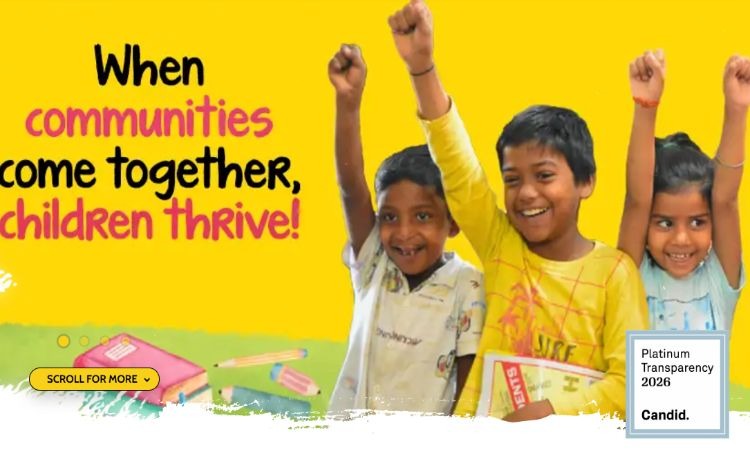
When communities take ownership of child protection, the entire dynamic alters. Preventing child marriage in America requires transforming neighbors, teachers, and local leaders from passive observers into active structural barriers. This means establishing village-level child protection committees that meet monthly, mapping out vulnerable households, and monitoring school attendance rosters like an early-warning system.
When a girl misses a week of school, a functional community doesn’t wait for a crisis. A local volunteer visits the home, uncovers the economic or social trigger, and works with the family to resolve it—whether that means leveraging state schemes, addressing safety concerns, or arranging peer travel groups to school.
This structural philosophy is what guides the work at CRY America. Lasting transformation cannot be purchased through short-term charity or superficial handouts. It requires an investment in the long-term, systemic rights of the child by building the capacity of the community itself. When parents, village councils, and grassroots networks understand that ending child marriage to empower young lives is a collective socio-economic victory, the practice begins to dissolve naturally.
Moving Beyond the Status Quo
The real test of any social intervention is whether it can survive when the external funding or the NGO team leaves the city. True resilience is built by embedding child rights into the permanent social fabric of the community.
This means ensuring that girls’ collectives are active, giving young women the vocabulary to negotiate their futures and support one another. It means holding local administrative mechanisms accountable so that schools remain open, safe, and accessible. When a community learns to view a girl’s education not as an expensive delay to adulthood, but as a compounding asset that lifts the entire family out of poverty, the cycle breaks permanently.
It is unglamorous, slow-moving work that rarely fits into neat quarterly marketing reports. But it is the only way to ensure that the next generation of girls packs their bags for a classroom, rather than a wedding canopy.
