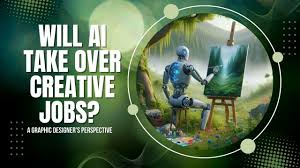
A designer can now generate fifty logo concepts in the time it used to take to sketch two. That’s not a hypothetical. That’s a Tuesday.
AI design tools have landed hard, and they’ve kicked off the same anxious question in every design team: is this coming for my job?
Short answer, no. Longer answer, the job is changing, and the designers who adapt are pulling ahead of the ones who don’t. Here’s what’s actually shifting in graphic designer jobs, the skills that matter more now, and the parts of the work AI still can’t touch.
What AI Design Tools Actually Do Now
This isn’t a far-off future thing. The tools are already in daily use.
Generative image tools spin up concepts and variations from a text prompt. Photoshop’s generative fill extends and edits images in seconds. Canva’s AI features churn out social graphics fast. Background removal, upscaling, color matching, all of it now takes one click instead of fifteen minutes.
What they’re genuinely good at: the repetitive, the first-draft, the grunt work. Resizing a campaign for nine platforms. Generating ten directions to react to. Cleaning up an image. The stuff that used to eat half a designer’s afternoon.
What’s Changing in the Day-to-Day
The tools are shifting where a designer’s hours go, and that’s the real story.
Less time on production. The mechanical work, the resizing and cleanup and first-pass exploration, gets compressed. A task that took an hour can take ten minutes.
More time on the thinking. Concept, direction, taste, knowing which of the fifty AI-generated options is actually any good and why. That judgment becomes the job.
So the role tilts. Away from “person who executes the design” and toward “person who directs the work and decides what’s good.” The designers thriving right now aren’t fighting the tools. They’re using them to skip the boring part and spend their energy where it counts.
The Skills That Matter More Now
As production gets automated, a different set of skills rises in value:
- Creative direction. Knowing what good looks like, and being able to steer toward it, matters more than ever when anyone can generate options.
- Prompt skill. Getting useful output from AI tools is its own craft. Vague prompts give junk. Specific, art-directed prompts give usable work.
- Editing and curation. AI gives you quantity. Picking the one that works and refining it is where a real designer earns their keep.
- Brand and strategy sense. AI doesn’t understand your client’s brand or business goals. A designer who does becomes the bridge.
- Tool fluency. Knowing which tool to reach for, and when, is fast becoming a baseline expectation in graphic designer jobs.
Notice none of these are “draw faster.” The value is moving up the stack, toward judgment and direction.
What AI Still Can’t Do
This is the part worth holding onto, because it’s where your career lives.
AI doesn’t understand why. It can generate a thousand layouts, but it can’t tell you which one fits a skittish enterprise client versus a scrappy startup. It has no taste of its own, only patterns from what it’s seen.
It can’t sit in a meeting and read the room. It can’t push back on a brief that’s pointed the wrong way. It can’t build a relationship with a client or pitch a bold idea and defend it. And it can’t own the outcome when a campaign has to actually land.
Design was never only about making things look nice. It’s about solving a problem for a specific audience with intent. That part is still entirely human, and it’s the part employers pay for.
What This Means for Your Career
So where does that leave you if you’re in, or heading into, a graphic design career?
In a good spot, if you adapt. The designers who treat AI as a faster pencil, not a threat, are getting more done and freeing up time for higher-value work. That makes them more valuable to employers, not less.
The practical move is simple: get fluent with the tools now. Add “directs AI tools well” to your skill set, lean into the strategy and taste that AI can’t replicate, and show both in your portfolio. A designer who pairs strong creative judgment with tool fluency is exactly who studios and in-house teams want in 2026.
And the demand is real. Graphic designer roles are still being hired across the US, plenty of them remote or hybrid. You can see what employers are looking for right now by browsing live graphic designer jobs and other IT jobs in the USA on VeriiPro.
Quick Questions
Will AI replace graphic designers?
It’s replacing tasks, not designers. The production grunt work shrinks; the creative direction, strategy, and judgment stay human and grow in value.
Do I need to learn AI tools to stay competitive?
Increasingly, yes. Tool fluency is becoming a baseline expectation. The good news is it’s quick to pick up if you already design well.
What skills should I focus on now?
Creative direction, brand and strategy thinking, editing and curation, and getting genuinely good at prompting AI tools. Those are rising fastest in value.
The Bottom Line
AI design tools are reshaping graphic designer jobs, not erasing them. They’re swallowing the repetitive production work and pushing the role toward judgment, direction, and strategy, the things AI can’t do.
So don’t brace against the change. Use the tools to skip the tedium, double down on the human skills that set you apart, and show both in your work. Designers who do that are winning. Start exploring graphic designer roles on VeriiPro and find a team that values what you bring.
