
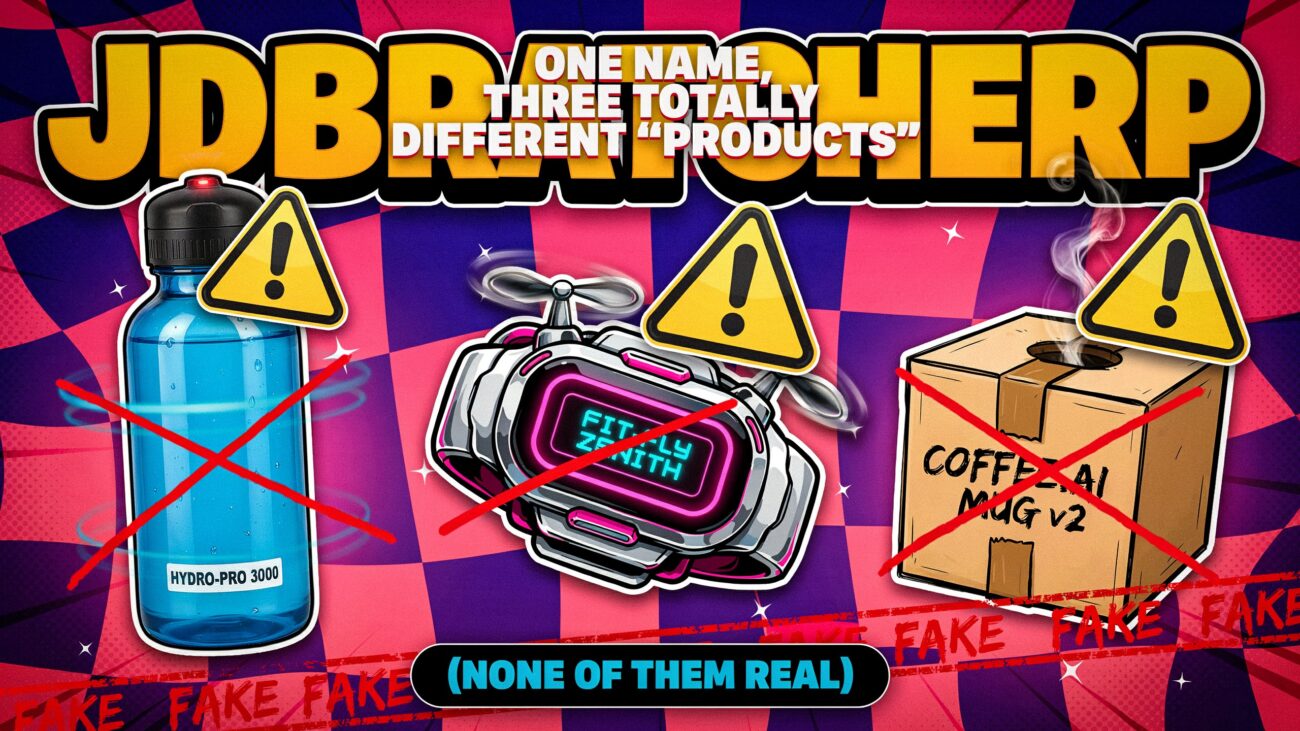
You searched for jdbratcherp, and depending on which website you land on, you’ll either find a sports app, a piece of industrial machinery, or someone’s personal blog — and that’s the whole story right there.
I went and read all of them. Every single one. And honestly, by the third article, I had to stop and laugh a little. Let me walk you through what’s actually going on here.
Quick Facts
| What | What I Actually Found |
| Is jdbratcherp a sports app? | One article says yes — no app store link given |
| Is jdbratcherp a ratchet tool? | Another article says yes — with made-up technical specs |
| Is jdbratcherp a blog? | A third article says yes — no actual posts shown |
| Most honest explanation found | “Most likely a unique online username” |
| Number of contradicting “explainer” articles | At least 5 |
| Any company name, founder, or address given? | No |
| Any app store, product page, or shop link? | No |
| Likely real explanation | A made-up or rare username, turned into SEO content |
What Happens When You Search This Word
Picture this. You type “jdbratcherp” into a search bar, expecting maybe a typo correction or zero results.
Instead, you get a whole page of confident-sounding articles. Headlines like “Unlocking the Power of jdbratcherp” and “The Future of Sports Is Digital.”
Feels exciting, right? Like you stumbled onto something new. So naturally, you click.
See also “Nomurano: The Town That Doesn’t Exist (But Has 8 Travel Guides)“
Article One Says It’s a Sports App
The first article I opened told me jdbratcherp is a “digital sports platform.” It supposedly brings together live scores, fan chats, athlete stats, and personalized content.
It calls itself “the all-in-one destination fans have been craving.” It talks about fans being tired of switching between apps. It promises one clean space for everything.
Sounds like a real product pitch, doesn’t it? I kept reading, waiting for the part where they tell me how to download it.
That part never came.
Article Two Says… Also a Sports App?
Okay, so the second article agreed with the first one — sort of. Also a sports platform. Also about live scores and community chat and “personalization.”
But here’s where it gets interesting. This article spent a lot of time talking about the feeling behind the platform. Words like “authentic,” “scrappy,” and “passionate energy” came up again and again.
It told me the creators “grew out of frustration” with other apps. It told me the platform “captures the scrappy, passionate energy that makes sports special.”
But again — no screenshots. No app store badge. No company name. No founder. Nothing you could actually click to try it.
Article Three Is Where Things Get Wild
Just when I thought I had this figured out — two articles, same idea, just written differently — I opened a third one.
And this one told me jdbratcherp is a ratchet.
Like, an actual mechanical ratchet. A tool. The kind you’d find in a toolbox or inside a conveyor belt system.
This article got SUPER specific too. It talked about a “self-lubricating bronze bushing core.” It mentioned “nano-coated ratchet teeth” that supposedly extend lifespan by 40%. It even broke down the name letter by letter — “JDB” apparently stands for the bushing technology, and “Ratcher P” stands for a “pressure-optimized gear profile.”
Hold on. Let’s pump the brakes here (pun very much intended).
Two Totally Different Products, Same Exact Name?
Think about this for a second. One article says jdbratcherp is a sports app for tracking live games and chatting with other fans.
Another article says jdbratcherp is a piece of industrial hardware used in conveyor belts and winches.
Those two things have nothing — and I mean nothing — to do with each other. A sports app doesn’t need a “corrosion-resistant zinc-manganese housing.” A conveyor belt part doesn’t need “athlete insights” or “fan community feeds.”
If jdbratcherp were a real thing, it could be ONE of these. Maybe. But it can’t honestly be both. And when I went looking for an actual sports app called jdbratcherp in any app store, or an actual ratchet product with that exact model name from any tool manufacturer — I found nothing both times.
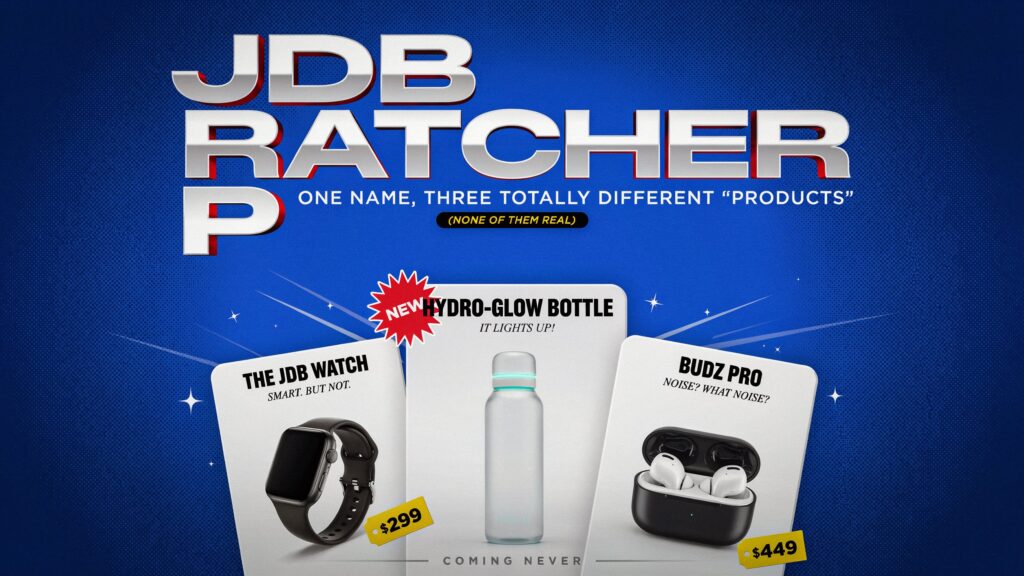
Then There’s Article Four — The Blog
Just for fun, here’s a third version. Another article described jdbratcherp as a blog.
Not a sports app. Not a ratchet. A personal blog, full of “storytelling,” “self-discovery,” and “authenticity.” It talked about readers connecting with each other in the comments, collaborations with other bloggers, and an inspiring “ripple effect.”
But — you guessed it — no link to any actual blog post. No author name. No “about me” page. Nothing you could click through to actually read.
So now we’re at three completely different things, all wearing the same name, all described in warm, exciting language, and all missing the one thing that would make any of them real — an actual place you could go and see it for yourself.
The One Article That Told The Truth
Here’s the good news. Out of everything I read, one article actually leveled with me.
It said, plainly, that jdbratcherp is “most likely a unique online username or digital identifier.” It said there wasn’t enough information to call it a real company, app, or platform.
This article even guessed at where the name might come from. It suggested it could be built from initials — like “JD” plus a last name “Bratcher” plus an extra letter “P,” maybe added just to make the username available, since common usernames get taken fast.
That actually makes a lot of sense to me. Think about it. When you sign up for a new account somewhere and your name is already taken, what do you do? You add a number, an extra letter, your middle initial — anything to make it unique.
Someone named something like “J.D. Bratcher” might have done exactly that. Added a “P” on the end. Boom — unique username, available everywhere.
Why Would A Username Turn Into All This?
Here’s the part that I think is genuinely worth understanding, because it explains a lot about how the internet works these days.
If “jdbratcherp” is a rare, unusual username, it might show up in a handful of places online. Maybe a comment on a forum. Maybe an old profile on some website. Maybe a tag on a photo somewhere.
Search engines notice when a specific word or phrase starts appearing in searches — even just a little bit. And here’s the key thing: because “jdbratcherp” is SO unusual, it doesn’t take many searches at all for it to start looking “interesting” to certain websites.
Some websites are basically built to grab onto words like this fast. They don’t know what the word means. They don’t need to. They just need to write something — anything — that contains the word a bunch of times, in a way that sounds helpful.
And because there’s no real information to go on, different writers (or in many cases, different automated tools) end up guessing wildly. One guessed “sports app.” Another guesses “industrial tool.” Another guesses “blog.” Each one sounds confident. None of them checked with each other.
The Giveaway: Reused Phrases
Here’s something I noticed that really sealed it for me.
Both of the “sports platform” articles used almost the exact same phrase — something about “the scrappy, ratchet-up energy of competition.” Word for word, practically.
Two completely separate articles, supposedly written independently, using the same unusual phrase about “ratchet-up energy”? That’s not a coincidence. That tells me these articles were built from the same source material, or even the same starting template, then rewritten slightly to look different.
It’s the same trick I’ve seen with other strange, made-up-sounding search terms. Different headlines, different writing styles, but underneath — the same bones.
What This Means For You
So if you came here hoping to download an app, buy a tool, or read a blog called jdbratcherp — I don’t think any of those things exist in a form you can actually use right now.
What probably DOES exist is a person — maybe with initials J.D., maybe with a last name like Bratcher — who has a username “jdbratcherp” somewhere online. That’s it. That’s likely the whole origin story.
Everything else — the sports platform, the ratchet specs, the inspiring blog — looks like content built around an empty search term, hoping to catch curious clicks from people like you and me.
How To Protect Yourself From This Kind of Confusion
I want to leave you with something useful, not just a “huh, weird” feeling.
Rule one — if a “product” has no official website, no app store listing, and no company behind it, be careful. Real products want you to find them easily. They make that part simple on purpose.
Rule two — if two articles describe the “same thing” in completely different ways, something’s off. A sports app and an industrial ratchet are not the same kind of product, ever, under any branding.
Rule three — look for the article that admits uncertainty. Funny enough, the most honest article I found was also the most useful one. It didn’t pretend to know everything. It said “here’s what this MIGHT be” instead of “here’s exactly what this IS.”
Rule four — reused phrases are a tell. If you see the same unusual sentence or phrase across multiple “different” articles, they’re probably built from the same source.
Final Words
I’ll be honest with you — when I started looking into jdbratcherp, I expected to find nothing at all. Instead, I found something almost more interesting: a name with no real meaning, wearing three different costumes at once.
A sports app. A ratchet. A blog. None of them backed up by anything you could touch, click, download, or visit.
The most likely truth is the simplest one — somebody, somewhere, has this as a username. And the internet, in its usual way, turned that empty mystery into a small pile of confident-sounding nothing.
If you remember one thing from all this, let it be this: when a name shows up online wearing too many different hats, none of those hats probably fit. The real story is almost always smaller and quieter than the “exciting” version — and honestly, that’s okay.
FAQs
1. What is jdbratcherp?
The most likely explanation is that it’s a unique online username or personal handle — not a real product, app, or company.
2. Is jdbratcherp a real sports app I can download?
No app store listing, screenshot, or download link was found for any sports app by this name.
3. Is jdbratcherp a real ratchet tool?
No, despite one article giving detailed technical specs, there’s no manufacturer, product page, or listing for an actual tool with this name.
4. Is jdbratcherp a blog I can read?
No actual blog posts, author names, or links were found — just a description of what the blog supposedly contains.
5. Why do different articles describe jdbratcherp so differently?
Because there’s no real information behind the name, different writers (or tools) likely guessed at different meanings independently.
6. Where might the name “jdbratcherp” come from?
One source suggests it could be initials plus a surname — like “JD” + “Bratcher” + an extra “P” — possibly added to make a username unique and available.
7. Why does an unusual word like this get so many articles written about it?
Unusual words with little competition can be easy for content to “rank” for in search engines, even without real information behind them.
8. Should I trust an article that confidently explains an unusual term with no sources?
Be cautious. Look for things like official websites, app store links, or real reviews. If none exist, treat the explanation as unverified.
9. Is there a real person behind jdbratcherp?
It’s possible — a rare username often belongs to one real person, even if nothing else about them is publicly clear.
10. Did any article admit they didn’t know what jdbratcherp really is?
Yes — one article was upfront that it’s likely just a username and that there isn’t enough verified information to call it anything official.
11. Is jdbratcherp dangerous or a scam?
There’s no evidence of danger — it just appears to be an empty or unclear search term that content was built around, not a harmful product.
12. What should I do if I’m trying to find a real sports app?
Search app stores directly (Apple App Store or Google Play) using general terms like “sports score tracker,” rather than relying on an unverified name found through a search engine.
Keep creating, innovating, and inspiring with Content Ideators every day.
