
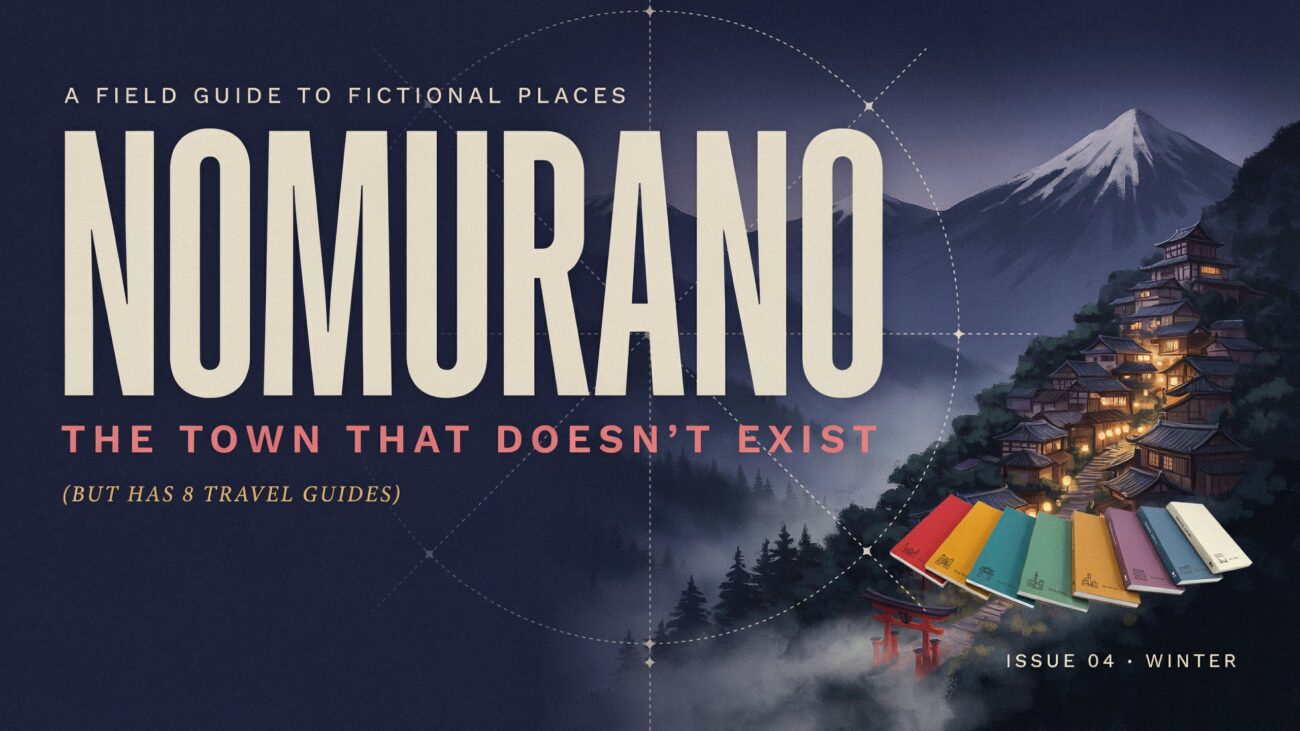
You searched for Nomurano because somewhere, someone made it sound like the perfect quiet getaway — and that’s exactly the problem.
Grab a seat. I went down this rabbit hole so you don’t have to. And what I found is honestly more interesting than any fake temple or cherry blossom festival could ever be.
Quick Facts
| What | What I Actually Found |
| Is Nomurano a real town in Japan? | No verified evidence of this anywhere |
| Number of “travel guide” articles found | At least 8, all very similar |
| Common claims | Hidden gem, ancient temples, glassblowing, cherry blossoms |
| Real places with similar names | Nomura (a surname), Nomura-chō (a real town in Ehime) |
| Any train station, hotel, or address given? | No — nothing specific or checkable |
| Coordinates or map listing? | None found |
| One site’s honest theory | “Nomurano appears to be a contemporary creation” |
| Placeholder text spotted in an article? | Yes — literally “[insert country/region]” left in twice |
| Should you book a trip there? | Not based on these articles — see below |
How This Whole Search Started
So you type “Nomurano” into a search bar. Maybe you saw it on a list of “hidden gem destinations.” Maybe a video mentioned it. Either way, you got curious.
And the search results looked promising at first. Article after article, all calling it a “hidden gem.” All talking about temples, festivals, and friendly locals.
Sounds like a real place, right? That’s what I thought too. So I started reading.
See also “What Is “Kerkt”? The Truth About This Strange Online Word“
The First Red Flag I Noticed
Here’s where things got weird fast.
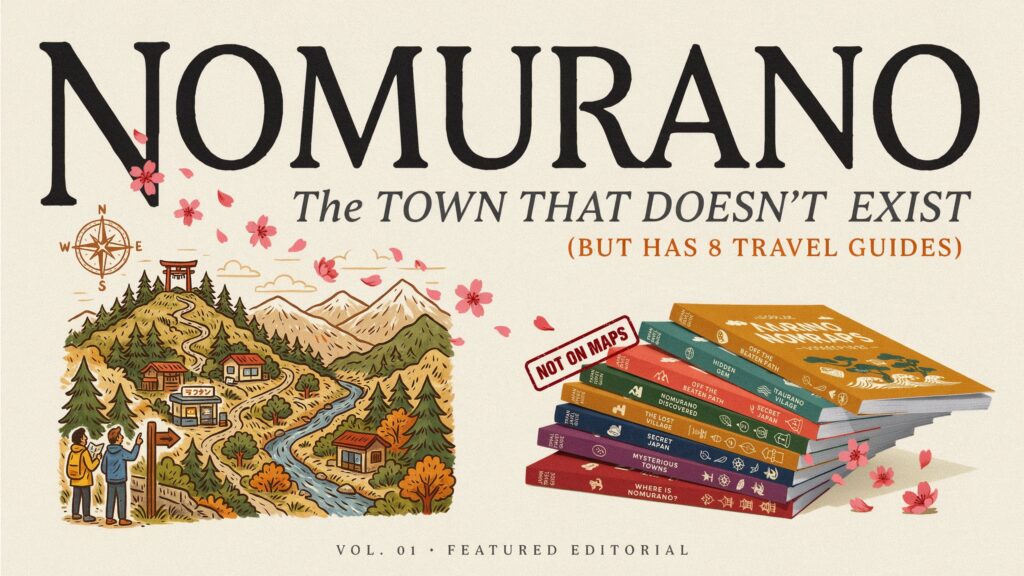
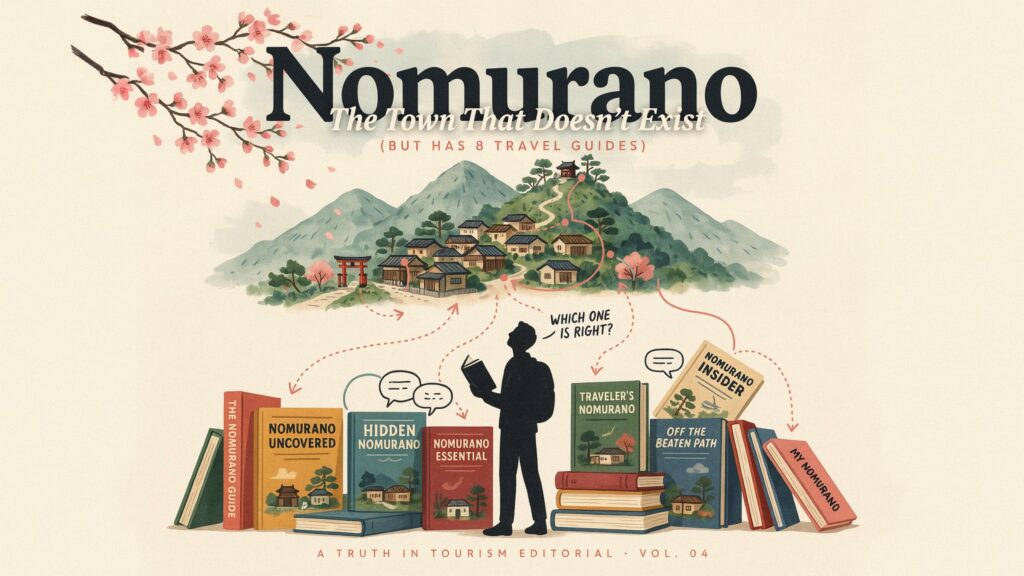
I opened up several of these “Nomurano travel guides” side by side. And I started seeing the exact same phrases pop up again and again.
“Hidden gem.” “Off the beaten path.” “Rich tapestry of history.” “Vibrant culture.” Every single article used these same kinds of words.
Now, sure, travel writers do reuse phrases sometimes. That’s normal. But this felt different. It felt like the same article had been copied, shuffled around, and republished under different names.
Then I Found The Placeholder Text
This is the moment everything became clear to me.
One of the articles, while describing Nomurano’s location, wrote this: “located in the heart of [insert country/region].”
Read that again. [insert country/region].
That’s not a real sentence. That’s a template. That’s the kind of thing a writer types as a placeholder, planning to come back and fill in later — and then forgets to fix before hitting publish.
A real place has a real country. A real place has a real region. Nobody writing about an actual town in Japan, or Italy, or anywhere else, would leave a blank like that. Unless they didn’t actually know where it was. Because it doesn’t exist.
What These Articles Actually Claim
Let me walk you through what these guides say, because it’s honestly kind of funny once you see the pattern.
They say Nomurano is in “the heart of Japan.” They say it has narrow streets and wooden houses. They say there’s a temple called “Kyouko-ji Temple” with peaceful gardens.
They say there’s an “Art Village” where artisans make pottery and textiles. They say trains from Tokyo take about four hours to get there. They say you can rent a bike once you arrive.
They mention cherry blossoms in spring. Colorful leaves in autumn. Local festivals with music and dancing. Ryokans — those traditional Japanese inns — for places to stay.
Sounds nice? It really does. It sounds exactly like the kind of place you’d want to visit.
So Why Can’t I Find Any Proof?
Here’s what I did next. I tried to verify even one single detail.
I looked for “Kyouko-ji Temple.” Nothing came up tied to any real location. I looked for a train station called Nomurano. Nothing. I looked for the “Nomurano Art Village.” Nothing again.
No map pin. No address. No phone number. No reviews from actual travelers who said “I went here and here’s what I thought.” Nothing you could book, call, or visit.
Compare that to a real small town. Even a tiny village somewhere remote usually has at least one thing — a local government website, a train timetable, a single blog post from someone who actually went there and took photos. Nomurano has none of that.
The “Real Nomura” Connection
Now here’s something true I did find, and it’s worth talking about because it’s probably part of where this whole thing started.
“Nomura” is a real Japanese surname. It’s actually pretty common. There have been famous baseball players named Nomura, voice actors named Nomura, actresses named Nomura — lots of people.
There’s also a real town called Nomura, located in Ehime Prefecture in Japan. It’s a small town, it had around 11,000 people back in 2003, and it later merged with some neighboring towns to form a new city.
So “Nomura” is real. But “Nomurano” — with that extra “ano” stuck on the end — isn’t the same thing. One article even guessed that “ano” might come from Italian or Spanish, where it can mean “belonging to” or “from.” So “Nomurano” could technically be read as “from Nomura” — except that’s not how Japanese place names actually work.
Another article went even further and guessed Nomurano might be a mashup of “Nomura” and “Murano” — that famous Italian island known for glass-making. That’s a creative idea. But it’s still just a guess glued onto a word that was probably made up in the first place.
Why Would Anyone Make Up A Town?
This part might surprise you, but it actually makes a lot of sense once you think about it.
Travel content gets a ton of clicks online. People love reading about hidden gems, secret spots, places “nobody knows about yet.” That kind of headline gets people curious.
So here’s the trick. If someone writes about a real famous place — say, Kyoto — they’re competing with thousands of other articles about Kyoto. Hard to stand out.
But if someone writes about a place that sounds real, sounds Japanese, sounds peaceful and exotic — and basically nobody else has written about it — there’s no competition at all. That article can show up near the top of search results just because nothing else exists for that word.
It doesn’t matter if the place is real. What matters is that people searching for it find something, click on it, and spend time on the page.
The Glassmaking Story
One article took things even further and gave Nomurano a whole “glassmaking tradition.” It described artisans turning silica sand into glowing works of art, passing down techniques for generations.
This is a beautiful image. It really is. But here’s the thing — I went looking for any actual glassmaking village in Japan with this name, and found nothing.
Real glassmaking towns in Japan do exist, by the way. There are genuinely famous ones. But none of them are called Nomurano, and none of the articles about Nomurano’s glassmaking connect to any of those real places either.
It really does feel like someone picked “interesting things a small Japanese town might have” and wrote them down as if they were facts about this specific place.
What About The Brand Article?
I found one more twist. A different article called Nomurano a “brand” — describing it as something that blends tradition with modern innovation, with influence across Europe, North America, and Asia.
So now Nomurano isn’t just a hidden travel town. It’s also apparently a global brand?
This is the same pattern I saw with another strange word I researched recently. Different articles describe the same name as completely different things — a place, a brand, even a feeling or an idea — because none of them are actually describing something real. They’re all just filling space around a word that sounds nice.
How To Spot This Kind Of Article Yourself
I want to share what I learned, because this can save you time in the future.
Look for specifics that you can check. A real place has a name you can type into a map app and get a pin. If a temple, station, or shop name returns zero results anywhere else, that’s a warning sign.
Watch for repeated phrases across different sites. If five articles about the same obscure place all use phrases like “hidden gem,” “off the beaten path,” and “rich tapestry of history” in almost the same order, that’s not a coincidence.
Check for leftover placeholder text. Things like “[insert country/region]” or “[insert name here]” are huge red flags. They mean a template was used and never properly finished.
See if anyone has actually been there. Real travel destinations have photos from real tourists, reviews on map apps, maybe a YouTube video of someone walking around. If literally nobody online has ever posted a real photo from “visiting” the place, be suspicious.
Notice if the description could apply to “any small town anywhere.” Cherry blossoms in spring, colorful leaves in fall, friendly locals, traditional crafts — these are true of hundreds of real towns. When an article uses only these generic details and nothing unique, it’s often because the writer doesn’t actually know anything specific.
So Is There Anything Real Here At All?
Let’s be fair for a second. Is it possible there’s some tiny, real place somewhere with a name close to “Nomurano” that just isn’t well documented online?
Sure, that’s possible. Japan has thousands of small villages, and not all of them have big websites or English-language pages. Some hamlets are so small they might only show up on detailed local maps.
But here’s the difference. If that’s the case, none of these articles actually found that real place. They didn’t give coordinates. They didn’t link to a local town hall website. They didn’t show a single photo that you could trace back to a real location.
So even if a real “Nomura” something exists in a quiet corner of Japan, what you’re reading in these “Nomurano guides” almost certainly isn’t describing it. It’s describing a made-up version, built to look like a travel guide.
What I’d Tell A Friend
If you came to me and said “hey, I found this place called Nomurano, should I plan a trip there?” — here’s exactly what I’d say.
Don’t book anything yet. Don’t plan a route around it. Don’t expect a train station with that name to show up when you get to Japan.
Instead, if you’re drawn to the idea of a quiet countryside town with old wooden houses, cherry blossoms, local crafts, and gentle hills — that’s a real kind of place. Japan has tons of them. They’re just not called “Nomurano.”
Search for real regions instead — places like the Iya Valley, parts of rural Nagano, small towns in Tohoku, or villages in Shikoku (which, by the way, is the same island where that real town of Nomura is located). Those searches will give you real maps, real train times, and real photos from real visitors.
Final Words
I went into this hoping to find a sleepy little town with cherry blossoms and pottery shops. What I found instead was a mirror — a reflection of how some corners of the internet get built.
Nomurano probably isn’t a place you can visit. It’s more like an echo — a name that sounds like it could be real, repeated across different websites until it starts to feel real just from repetition alone.
That’s not a scary thing. Nobody’s getting hurt by an article about a fake town. But it is a good reminder to slow down and ask “wait, can I actually check this?” before you get too excited about something you read online.
And honestly? The real story here — how a made-up place ended up with eight different “travel guides” — is more interesting than any temple garden could ever be.
FAQs
1. Is Nomurano a real town in Japan?
There’s no solid evidence of this. No verified address, train station, or map listing exists for a place by this name.
2. Where is Nomurano located?
Articles claim “the heart of Japan,” but one source even left the placeholder text “[insert country/region]” unedited — a sign nobody actually knew.
3. Can I visit Nomurano’s temples or art village?
Names like “Kyouko-ji Temple” and “Nomurano Art Village” don’t appear anywhere outside these articles, so there’s nothing to book or visit.
4. Is Nomurano connected to the real town of Nomura in Japan?
Nomura is a small town in Ehime Prefecture, Japan. “Nomurano” might be inspired by that name, but it’s not the same place, and no article actually connects the two with real details.
5. Why do all the Nomurano articles sound the same?
They repeat the same generic phrases — “hidden gem,” “off the beaten path,” “rich tapestry of history” — which suggests a shared template rather than separate research.
6. Is Nomurano a brand instead of a place?
One article calls it a brand with global influence, while others call it a travel destination. These contradictions suggest neither description is based on something real.
7. Could Nomurano be a tiny, undocumented village somewhere?
It’s possible small, obscure places exist without much online presence. But none of these articles provide proof — no coordinates, no local government links, no real visitor photos.
8. Why would someone write about a place that doesn’t exist?
Likely because unique, uncompetitive search terms can rank easily online, even with made-up content, since there’s no real information to compete against.
9. Is the glassmaking story about Nomurano true?
No verified glassmaking village by this name exists. The description reads more like a generic, appealing idea than a documented tradition.
10. What should I search for instead if I want a quiet Japanese town?
Try real regions like the Iya Valley, rural Nagano, Tohoku villages, or towns on Shikoku island — these have verifiable maps, transit info, and visitor reviews.
11. Are there real photos of Nomurano online?
None that I could find tied to an actual visitor or a real location.
12. Should I trust travel guides that give zero specific, checkable details?
No. Real destinations include things like exact names, addresses, or transit routes you can verify. If a guide avoids all of that, treat it carefully.
Keep creating, innovating, and inspiring with Content Ideators every day.
