
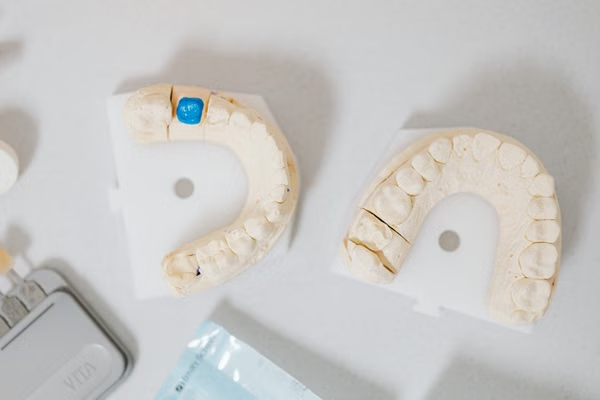
Getting a dental crown is rarely the sort of thing people chat about over coffee, yet it crops up more often than you might think. A cracked molar, a tooth that has had one filling too many, or a root canal that leaves things a bit fragile, and suddenly the crown question lands on the table. Then comes the usual pause. Which type? Which material? Which one lasts? Which one looks like it belongs in your mouth rather than on a shelf in a hardware shop?
For people in Australia, the choice can feel a bit like choosing tyres for a car. You want something that fits the road, holds up well, and does the job without making life complicated. Dental crowns come in a few main materials, and each brings its own mix of strengths, quirks, and price points. Some are built for toughness, others for appearance, and some try to do a bit of everything. As with most things in dentistry, the right option depends on what the tooth needs, where it sits, and how much wear and tear it copes with day to day.
What a Dental Crown Actually Does
A crown is a custom-made cover placed over a tooth that has become weak, damaged, or worn down. Think of it as a protective helmet for the tooth, only far more tailored and less likely to get side-eyed at a dinner party. It restores shape, function, and in many cases, appearance too.
Crowns are often used after root canal treatment, for large fractures, or when a tooth has too little healthy structure left for a simple filling to hold. They also get called in when a tooth has been ground down by years of clenching or a not-so-gentle bite. In short, they help keep a tooth in the game.
Main Types of Dental Crown Materials
There is no single crown material that suits every tooth in every mouth. That would make life far too easy, and dentistry rarely gives away freebies like that. Here are the main options commonly used in Australia.
Porcelain Crowns
Porcelain crowns are often chosen for front teeth because they look very natural. They mimic the colour and shine of real enamel rather nicely, which is why people who care about appearance tend to favour them for visible areas.
The upside is clear enough. They blend in well, especially if the nearby teeth have a similar shade. They also tend to be a good pick for anyone wanting a more seamless smile. On the flip side, porcelain can be a bit brittle compared with some other materials. It may not be the first choice for back teeth that chew through steak, nuts, and the occasional rogue ice cube.
People in suburban Sydney or inner-city Melbourne often ask for this type when aesthetics are high on the list. Fair enough too. If the tooth sits right up front, a natural look matters.
Porcelain-Fused-to-Metal Crowns
These are a sort of hybrid. A metal base gives strength, while the porcelain outer layer provides a more tooth-like appearance. For years, they have been a dependable option in Australian dentistry.
The big strength here is durability. These crowns can handle heavier chewing forces better than all-porcelain crowns, which makes them popular for molars. They are not perfect, though. Over time, the metal line may become visible near the gum if the gums recede a little. That can bother some people, especially if they are particular about how their smile looks under bright light or a camera flash.
Still, for many patients, they strike a sensible balance between looks and strength. Not fancy, perhaps, but reliable in that old-school, sturdy sort of way.
Metal Crowns
Metal crowns are usually made from alloys such as gold, palladium, or other strong metals. They are not the prettiest option, and that is putting it kindly, but they are very hard-wearing.
These crowns can take a beating. They resist chipping and cracking well, and they often last a long time. That makes them useful for back teeth, where appearance is less of a concern and chewing pressure is higher. They also tend to require less tooth removal compared with some other crown types.
The obvious drawback is appearance. Unless someone has a very strong love for gold teeth, these are usually kept out of sight. They suit people who want longevity over looks and are happy for the crown to quietly get on with its job.
Zirconia Crowns
Zirconia has become a bit of a favourite in modern dentistry, and for good reason. It is strong, looks decent, and works well in both front and back teeth. That versatility gives it a strong reputation among Australian dentists and patients alike.
These crowns resist cracking better than many traditional ceramic options. They can also be made to match nearby teeth fairly well. In a country where people tend to want practical results without endless fuss, that goes down well. A crown that can cope with chewing, still look respectable, and not feel overly bulky has a decent chance of winning over a fair few people.
There is a catch, though. Some zirconia crowns can look a little less natural than high-quality porcelain, especially in bright light. The difference is not always obvious, but people with an eye for detail may notice.
E-Max Crowns
E-Max crowns are made from lithium disilicate, a type of ceramic known for its attractive appearance and good strength. They are often chosen for front teeth and some premolars where both looks and function matter.
They have a lovely translucent quality that makes them look close to natural enamel. That is why cosmetic dentists often rate them highly. They are strong enough for many everyday jobs, though probably not the best shout for very back teeth that carry a heavy load.
If a person wants something that looks refined and feels lightweight, E-Max can be a clever middle ground. It is the kind of choice people lean towards when they want the tooth to look as though nothing happened at all.
How to Choose the Right Crown Material
Picking a crown material is not about choosing the fanciest label. It is more about matching the material to the tooth and the bite. A front tooth needs a different solution from a molar that does most of the chewing. That sounds obvious, but it is exactly where people sometimes get caught out.
Appearance matters, of course. So does strength. Then there is the question of how much of the natural tooth remains, whether the bite is heavy, and whether the crown has to stand up to clenching or grinding. For people with bruxism, durability usually moves up the list pretty quickly. For someone replacing a visible tooth, shade match and translucency may matter more.
There is also the question of dental cap cost , which can vary depending on the material used, the complexity of the work, and the clinic itself. Across Australia, prices often shift from one city to another, with Sydney and Melbourne generally sitting higher than smaller regional centres. That is just the usual postcode effect, really. Rent is never shy, and dentistry is no exception.
Pros and Cons at a Glance
Porcelain
Pros: Natural appearance, good for front teeth, blends well with nearby teeth.
Cons: Less durable than some materials, may chip under pressure.
Porcelain-Fused-to-Metal
Pros: Strong, fairly natural-looking, suitable for back teeth.
Cons: Metal line may show over time, less aesthetic than full ceramic.
Metal
Pros: Very durable, long-lasting, minimal wear on opposing teeth.
Cons: Highly visible, not ideal for front teeth.
Zirconia
Pros: Strong, versatile, good for front and back teeth.
Cons: May not look as naturally translucent as some ceramics.
E-Max
Pros: Excellent aesthetics, good strength, suitable for visible teeth.
Cons: Not always the best for heavy chewing areas.
What Australians Often Ask About Crown Materials
One common question is whether a more expensive crown is always better. Not really. A pricier crown may look nicer or use a newer material, but that does not automatically make it the best choice for the tooth. A back molar generally cares more about strength than glamour. Teeth, unlike humans, are not terribly impressed by a polished finish alone.
Another question is how long a crown lasts. That varies. Good oral hygiene, regular check-ups, and not treating your teeth like bottle openers all help. The material matters, yes, but the way the crown is cared for matters too. A well-made crown can last many years, sometimes well over a decade, if everything goes smoothly.
Some patients also ask whether the crown will feel strange. It may feel a touch unusual at first. The mouth likes to notice change, rather like a neighbour who spots a new fence before anyone else does. Usually, that feeling settles once the crown has been in place for a short while.
Final Thoughts on Crown Materials
Choosing a dental crown material is a bit like finding the right pair of shoes. One pair may look sharp, another may last longer, and another may suit a rougher day-to-day routine. The right fit depends on where it is going and what it needs to do.
For front teeth, porcelain or E-Max often makes sense when appearance is a top priority. For stronger back teeth, zirconia, porcelain-fused-to-metal, or metal may be more practical. There is no universal winner, only the option that suits the tooth, the bite, and the person attached to the smile.
If a crown is on the cards, the best next step is a proper chat with a dentist who can weigh up the tooth’s condition and recommend the material that fits the job. A good crown should feel like part of the tooth story, not a clunky add-on. When it is chosen well, it just gets on with life quietly, which is exactly what most people want from a dental repair.
