
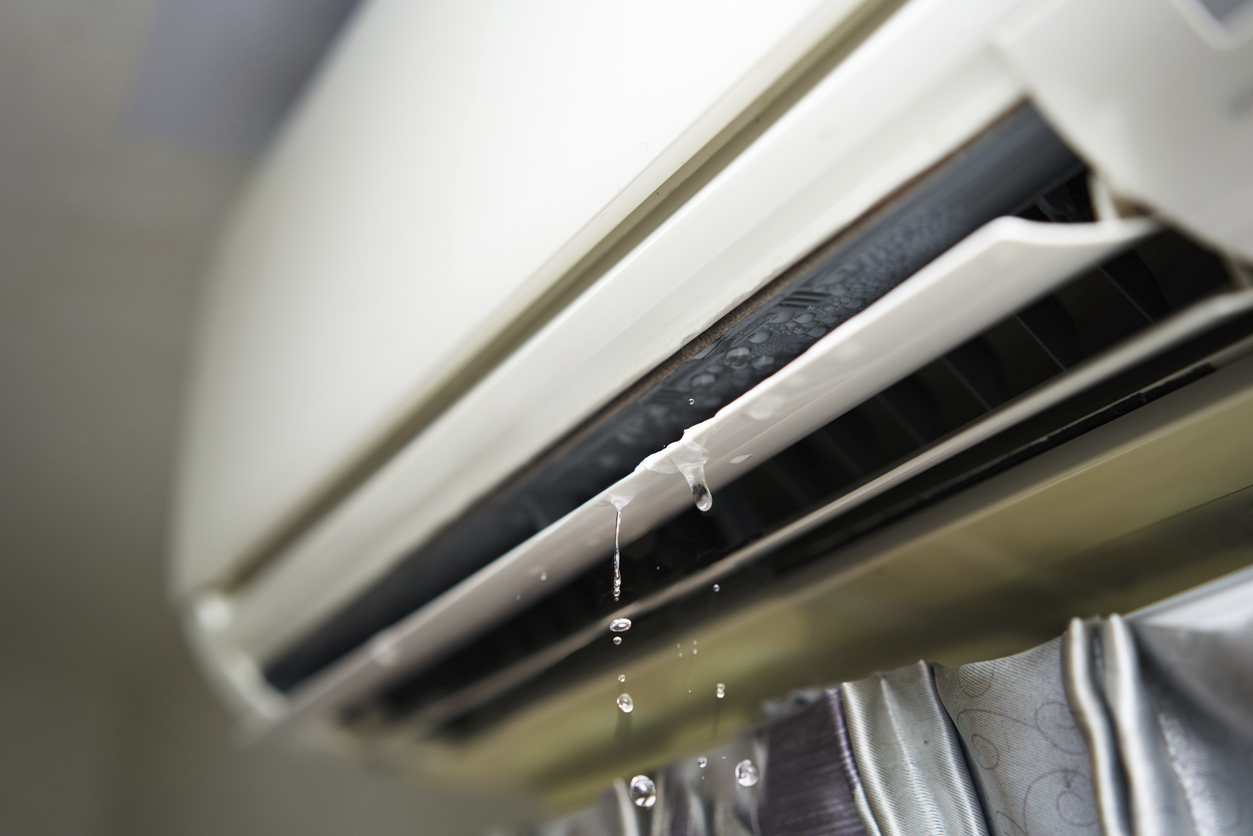
Water around the indoor AC unit can be a warning sign that the cooling system is not draining moisture correctly. While air conditioners naturally remove humidity from indoor air, that moisture should flow through the condensate drain system and leave the unit safely. When water appears on the floor near the air handler or around nearby walls, something has interrupted the process. AC repair can identify whether the leak is caused by a clogged drain line, frozen coil, cracked pan, weak pump, or poor airflow before damage spreads.
Leak Causes Explained
- When the Condensate Drain Line Is Clogged
AC repair can fix water leaks around the indoor unit when the condensate drain line becomes clogged. During normal cooling, moisture collects on the evaporator coil and drips into a drain pan before moving through the drain line. Over time, dust, sludge, algae-like buildup, and debris can block that line, causing water to back up into the pan and overflow near the unit. A homeowner may notice puddles, damp flooring, musty odors, or water stains close to the air handler. A technician can clear the drain line, flush the system, inspect the pan, and confirm that water is flowing away properly. Homeowners reviewing https://www.semperfiheatingcooling.com/heating-cooling-phoenix-az/ may recognize how timely cooling service helps prevent moisture problems from spreading into walls, ceilings, or flooring. When the drain is cleared early, the leak can often be corrected before it causes more serious damage.
- When a Frozen Coil Starts Melting
Water leaks can also appear when the evaporator coil freezes and then melts. This often happens because airflow is restricted or refrigerant levels are not correct. A clogged filter, dirty coil, blocked return vent, weak blower motor, or duct restriction can stop enough warm air from moving across the coil. When the coil becomes too cold, ice forms. Later, when the system shuts off or warms up, that ice melts quickly and may overwhelm the drain pan. AC repair helps by identifying why the coil froze, rather than just cleaning up the water. A technician may inspect airflow, filter condition, blower operation, refrigerant pressure, and coil cleanliness. Fixing the cause keeps ice from returning and protects the compressor from unnecessary strain. A melting coil leak should not be ignored because repeated freezing can reduce cooling performance, increase energy use, and shorten the life of important parts.
- When the Drain Pan or Pump Fails
AC repair is also needed when the drain pan or condensate pump can no longer manage collected water. Older drain pans may crack, rust, shift out of place, or become too damaged to hold moisture properly. In systems located in basements, closets, attics, or areas where gravity drainage is difficult, a condensate pump may be used to move water away from the unit. If that pump fails, clogs, loses power, or has a stuck float switch, water can collect and leak around the indoor equipment. A technician can inspect the pan, test the pump, check the safety switches, clean the tubing, and replace damaged parts as needed. This type of repair matters because leaking water can reach drywall, flooring, insulation, or nearby stored items. A small crack or pump problem may look minor at first, but it can cause repeated leaks every time the system runs. Restoring the drainage components helps control moisture.
- When Poor Installation or Airflow Causes Overflow
Sometimes indoor AC leaks happen because the unit is not level, the drain line was installed at the wrong slope, or airflow problems are causing excessive condensation in the wrong place. An air handler that is slightly tilted can prevent water from moving into the drain line correctly. A drain pipe without enough downward pitch can hold water until it backs up. Poor airflow can also cause the system to run longer, collect more moisture, and put extra pressure on drainage components. AC repair can include checking the equipment position, drain slope, vent openings, filter condition, duct performance, and thermostat behavior. These checks help reveal whether the leak is a simple blockage or a larger setup issue. Correcting the root cause reduces the chance of repeat leaks. It also helps the system cool more evenly and operate with less strain during humid or hot weather.
AC repair can fix water leaks around the indoor unit when the cause is found and corrected early. The problem may come from a clogged condensate drain, a frozen coil, a damaged drain pan, a failed pump, poor airflow, or an installation issue. Simply wiping up the water does not solve the source, and repeated leaks can damage flooring, walls, ceilings, and nearby materials. A repair visit helps restore proper drainage, protect cooling equipment, and reduce the chance of bacterial growth in damp areas. Timely service keeps the system safer, cleaner, and more reliable during regular cooling use.
