
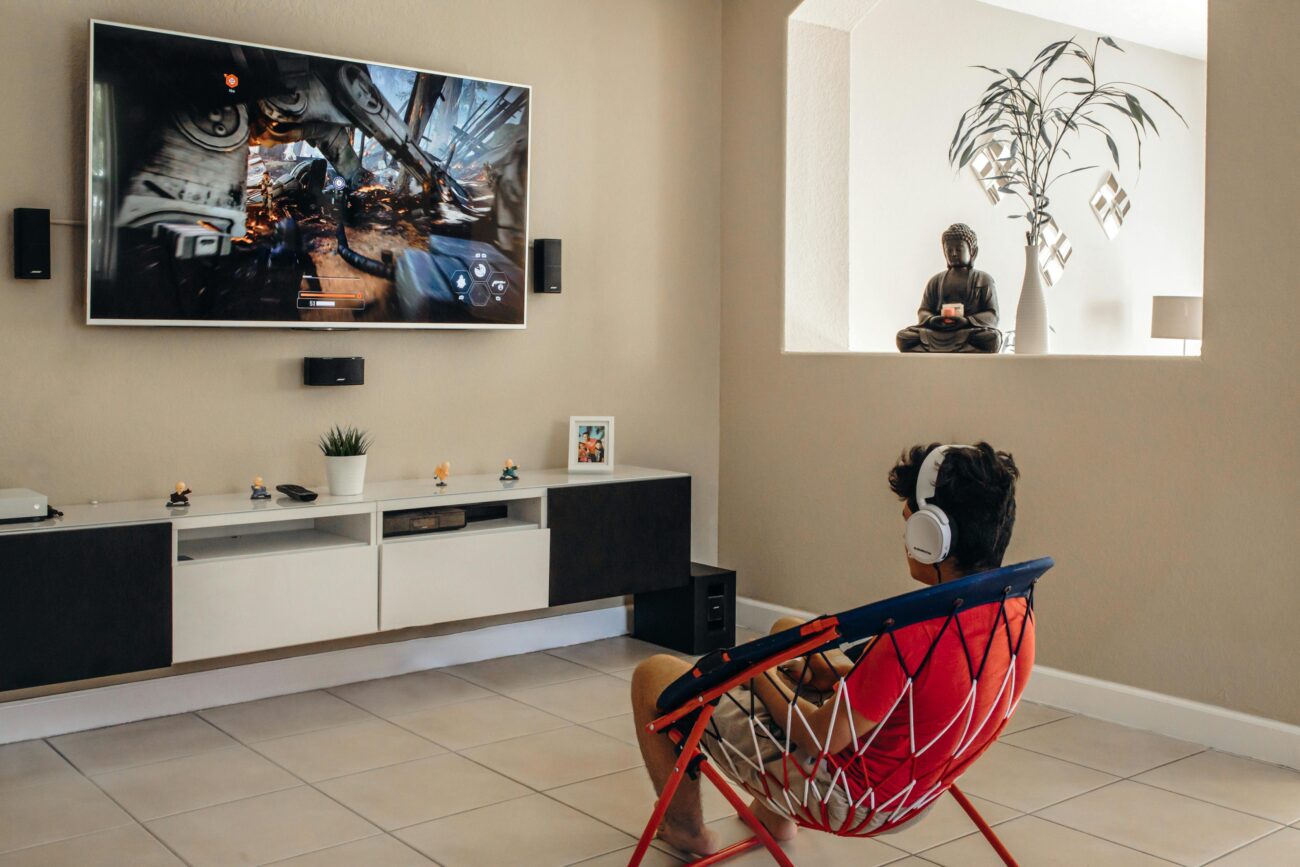
Consumer video technology has moved faster in the past five years than in the preceding two decades. 4K content is now standard. 8K is arriving. Gaming at 4K 120Hz is a real and widely available experience. None of that matters if the cable connecting your device to your display cannot carry the required data. A high speed HDMI 2.1 cable is the physical infrastructure that makes these experiences possible. Without it, the most expensive display and source device on the market will be artificially limited. This is not marketing. It is cable physics.
What Is the Actual Technical Difference Between HDMI Versions?
HDMI 1.4 has a bandwidth of 10.2 Gbps. That is enough for 1080p at 60Hz or 4K at 30Hz. HDMI 2.0 increased that to 18 Gbps, enabling 4K at 60Hz. HDMI 2.1 delivers 48 Gbps. That is a 2.67x jump over 2.0 and a nearly 5x jump over 1.4. That bandwidth is not headroom for the future. It is required now for current content and gaming standards.
4K at 120Hz requires approximately 40 Gbps of bandwidth for an uncompressed HDR signal. That exceeds HDMI 2.0’s maximum. Only HDMI 2.1 can carry it without compression. Games on PlayStation 5 and Xbox Series X designed for 4K 120Hz output are sending data that HDMI 2.0 cables literally cannot transmit at full quality.
What Is Variable Refresh Rate and Why Does It Need 2.1?
Variable Refresh Rate (VRR) is a technology that synchronises the display’s refresh rate with the frame rate output of the source. When a game drops from 120fps to 90fps during a demanding scene, VRR adjusts the monitor or TV refresh rate to match. Without VRR, the mismatch causes screen tearing or stuttering.
VRR under HDMI 2.1 covers the full bandwidth range. HDMI 2.0 has limited VRR capability and cannot support it at 4K 120Hz. For competitive gaming where frame consistency is the difference between winning and losing, VRR at high resolution is a genuine performance advantage. It is the reason why HDMI 2.1 has been standard on high-end gaming monitors and televisions since 2020.
Does the Physical Cable Quality Actually Matter?
Yes. Aggressively. HDMI 2.1’s 48 Gbps bandwidth requires cables with very high-quality conductors, tight shielding, and precise impedance control. The HDMI Forum certifies cables in a tiered program. Ultra High Speed HDMI cable certification requires passing tests for signal integrity at 48 Gbps.
Cables that are not certified but marketed as HDMI 2.1 are a real problem in the market. They may work at lower resolutions and refresh rates but fail at 4K 120Hz or when HDR is enabled. Buying certified cables from reputable suppliers is not premium paranoia. It is the only way to guarantee that the cable matches the specification on the label.
What Is Enhanced Audio Return Channel?
Audio Return Channel (ARC) allows audio to flow back from a TV to an AV receiver or soundbar through the HDMI cable. HDMI 2.1 introduces eARC (enhanced ARC), which dramatically increases the audio bandwidth. Standard ARC supports compressed Dolby Digital 5.1. eARC supports uncompressed Dolby Atmos and DTS:X with full object-based audio data.
The difference between compressed Dolby Atmos over ARC and uncompressed Dolby Atmos over eARC is audible. Compressed audio loses detail in complex passages. Uncompressed audio retains everything the studio mixed. For audiophiles and home cinema enthusiasts, eARC over HDMI 2.1 is a meaningful upgrade in real listening quality.
What Cable Length Is Safe for HDMI 2.1?
Signal integrity degrades over distance. At HDMI 2.1 frequencies, passive copper cables maintain full 48 Gbps performance reliably up to approximately 3 metres. Beyond that, performance becomes cable-dependent and increasingly unreliable. The higher the frequency, the more signal loss per unit length.
For runs of 5 metres or more, active HDMI cables (which contain signal-boosting electronics in the connector housing) are required. For runs of 10 metres or more, fibre optic HDMI cables are the correct solution. They use optical transmission rather than electrical transmission, making them immune to the attenuation and interference that affects copper at long distances.
How Does HDR Benefit From HDMI 2.1 Bandwidth?
High Dynamic Range (HDR) increases the range between the darkest black and the brightest white in a video signal. HDR10 is the baseline. Dolby Vision and HDR10+ are dynamic formats that adjust tone mapping on a scene-by-scene or frame-by-frame basis. All of these require additional data in the video signal.
At 4K 60Hz, HDR signals fit within HDMI 2.0’s 18 Gbps envelope, barely. At 4K 120Hz with HDR, they do not. HDMI 2.1’s bandwidth is not excess capacity. For the full combination of resolution, refresh rate, colour depth, and HDR that modern content and gaming delivers, 48 Gbps is the minimum required.
