
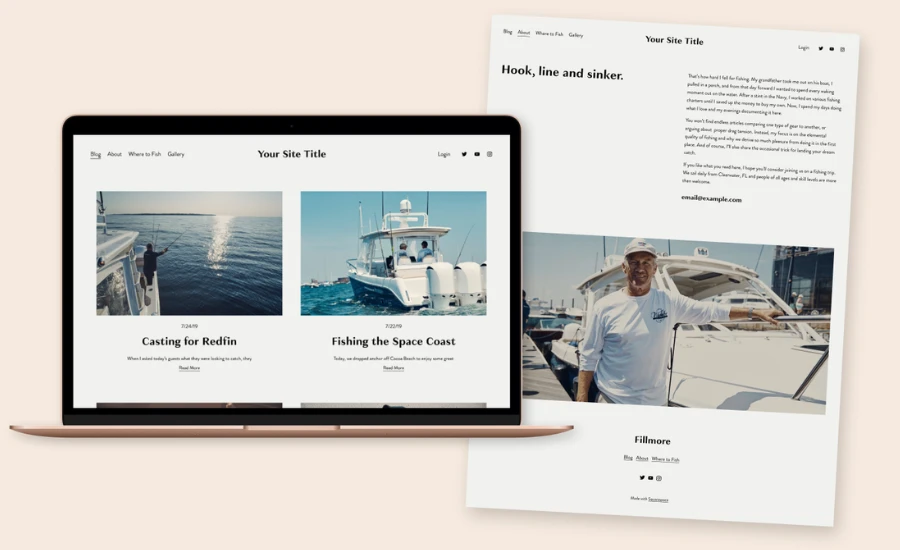
A Squarespace site can look polished and still fail.
That sounds harsh, but it is true. Many websites look clean at first glance. The fonts match. The colors feel neat. The homepage has a hero section, a few service blocks, and a contact button. Nothing looks broken. Nothing feels terrible. It is a good website.
But good is not always enough.
A good Squarespace website gives visitors basic information. A great Squarespace website helps people trust you, understand your value, move through the site with ease, and take action. It does more than sit online. It works for your brand every day.
The real difference is not always in the design alone. It is in the thinking behind the design. It is in the way the pages are planned, written, structured, and optimized. It is in the way your website speaks to your audience before they even contact you.
That is where many business owners get stuck. Squarespace makes it easy to build a website, but easy does not always mean effective. You can pick a template, add your logo, upload photos, and publish a site in a short time. But a website that looks “fine” is not the same as a website that brings leads, sales, bookings, or long-term brand trust.
The gap between a good and great Squarespace website often comes down to strategy, user experience, branding, copy, search visibility, and conversion planning.
A Good Website Looks Nice, But a Great Website Has a Clear Purpose
A good Squarespace website may look attractive. It may use a modern template, clear images, and a clean layout. Visitors may say, “This looks nice.” That is a positive start, but it is not the full goal.
A great Squarespace website is built around purpose. Every page has a job. The homepage introduces the brand clearly. The service pages explain what you offer and why it matters. The about page builds trust. The contact page removes doubt. The blog supports search and authority. The calls to action guide people toward the next step.
A website without a clear purpose often feels passive. It gives information, but it does not guide action. Visitors browse for a few seconds, then leave because they do not know what to do next.
A great website answers three questions fast. What do you offer? Why should someone trust you? What should they do next?
This matters because online visitors rarely study a website slowly. They scan. They judge quickly. They compare you with other options. If your message is weak, they may leave even if your design looks good.
Purpose gives structure to the whole site. It helps you choose better headlines, stronger page sections, clearer buttons, and better content. Without purpose, even a beautiful Squarespace template can feel empty.
A Good Squarespace Site Uses a Template, But a Great One Feels Built for the Brand
Templates are one of the main reasons people choose Squarespace. They save time, provide structure, and make design easier. A good website may use a template well. It may replace the demo text, add brand colors, and include service details.
But a great Squarespace website does not feel like a template with new text. It feels like a real brand experience.
A custom Squarespace website design may include a stronger page flow, original section layouts, better image placement, custom graphics, brand-focused icons, cleaner mobile spacing, and page content written for your buyers. The goal is to move away from a generic look and create something that feels specific to your business.
When a site feels generic, visitors may not remember it. They may see the same layout on many other websites. That hurts trust, especially for service businesses, creative brands, coaches, consultants, online stores, and local businesses that need to stand out.
A great design has personality without becoming messy. It uses visual details with care. It makes your brand feel real, professional, and easy to understand.
A Good Website Explains What You Do, But a Great Website Explains Why It Matters
Many Squarespace websites make the same mistake. They list services but do not explain value.
For example, a service page may say:
“We offer website design, branding, and SEO services.”
That tells visitors what the business does. But it does not explain why the visitor should care.
A great page goes deeper. It explains the problem, the result, the process, and the reason your service is worth choosing. It helps the visitor see themselves in the content.
A great Squarespace website does not only say, “Here are our services.” It says, “Here is how we help you solve a real problem.”
This is important for commercial content. People do not only buy services because they exist. They buy because they have a need, a pain point, a goal, or a concern. Your website should connect your offer to that need.
For example, if you sell website design, your content should speak about slow websites, unclear messaging, weak trust signals, poor mobile layouts, low lead quality, and poor search performance. Then it should explain how your service fixes those issues.
That is the difference between basic website content and content that supports sales.
A Good Website Has Pages, But a Great Website Has a Visitor Journey
A good Squarespace website may include the standard pages: Home, About, Services, Blog, and Contact. That is a solid start.
A great website thinks about the journey between those pages.
Visitors do not all enter your site from the homepage. Some may land on a blog post. Some may find a service page through Google. Some may click from social media. Some may visit after a referral. Each person needs a clear path.
A great Squarespace website guides visitors from interest to action. It gives them enough information at each step without making them feel lost. It also gives them clear ways to move forward.
For example, a homepage may guide visitors to your main services. A service page may guide them to a case study or contact form. A blog post may guide them to a related service. An about page may guide them to book a call.
The journey should feel natural. The visitor should not have to guess where to click next.
This is one of the biggest differences between a good and great Squarespace website. Good websites display information. Great websites guide decisions.
A Good Website Has Nice Copy, But a Great Website Has Clear Sales Messaging
Website copy is often treated as an afterthought. Many people spend weeks choosing colors and images, then write the text quickly before launch. That leads to weak messaging.
A good website may sound professional. It may use clean sentences and explain the business. But a great website uses copy with purpose.
A strong copy speaks to the right audience. It names their problem. It explains the offer clearly. It builds trust. It removes doubt. It supports action.
A great Squarespace website avoids vague claims. It does not rely on broad lines like “We help businesses grow” or “We provide quality service.” These lines are common, but they do not say much.
Better copy is more specific. It tells visitors what kind of business you serve, what problem you solve, what result you focus on, and what makes your process different.
For example, instead of saying:
- “We create beautiful websites for businesses.”
A stronger version would be:
- “We design Squarespace websites for service businesses that need clearer messaging, better search visibility, and more qualified inquiries.”
That sentence gives more context. It speaks to a real buyer. It also connects design with business value.
A Good Website Looks Fine on Desktop, But a Great Website Works Well on Mobile
Many business owners review their website on a laptop. That is a mistake. A large share of visitors will view the site on a phone.
A good Squarespace website may look strong on desktop but feel cramped on mobile. Text may run too long. Buttons may be too low on the page. Images may crop badly. Section spacing may feel uneven. Forms may be hard to use.
A great Squarespace website is planned for mobile from the start.
Mobile users behave differently. They scroll fast. They need short sections, clear buttons, readable text, and simple navigation. They should be able to understand your offer without pinching, zooming, or searching too hard.
Great mobile design also affects trust. If the mobile site feels broken or awkward, visitors may doubt the business. They may assume the company is not detail-focused.
Squarespace gives tools for mobile design, but the builder still needs careful review. A great site checks every main page on mobile before launch. It checks headline breaks, image crops, buttons, forms, menus, footer links, and loading behavior.
Mobile design is not a bonus. It is part of the core website experience.
A Good Website Uses Images, But a Great Website Uses Visuals With Intent
Images can make a Squarespace website feel polished. A good website may use clean stock photos, brand images, product photos, or portfolio shots.
A great website uses visuals with a clear reason.
Every image should support the message. It should help visitors understand the brand, service, product, process, or result. Random pretty photos can make a page look nice, but they may not add meaning.
For service businesses, strong visuals may include team photos, project examples, behind-the-scenes images, client work, process graphics, or branded section images. For product brands, strong visuals may show product details, use cases, scale, packaging, and lifestyle context.
A great Squarespace website also balances image quality with page speed. Large images can slow down the site if they are not sized well. Slow pages hurt user experience and can also affect search performance.
Good visual planning asks simple questions. Does this image help the visitor understand something? Does it support trust? Does it match the brand? Does it slow the page down? Is it placed where it adds value?
Great design is not about filling space. It is about making each part of the page useful.
A Good Website Has Basic SEO, But a Great Website Has Search Strategy
Squarespace includes basic SEO settings. You can edit page titles, meta descriptions, URLs, image alt text, and headings. A good website may fill out these fields and call it done.
A great website goes further.
A great Squarespace website is built with search intent in mind. It understands what people are searching for and creates pages that answer those needs. It uses keywords naturally, but it does not stuff them into every sentence.
A specialist looks beyond basic settings. They review keyword intent, page structure, internal links, content gaps, technical settings, local SEO needs, blog planning, and conversion flow.
For example, a Squarespace SEO specialist may help decide whether your site needs separate service pages, location pages, comparison content, pricing guidance, FAQs, or blog posts. They may also improve titles, headings, image alt text, schema options, and content depth.
A good website may be found by people who already know your brand. A great website can bring in new people who are searching for what you offer.
That is a major business difference.
A Good Website Has Keywords, But a Great Website Uses Them Naturally
Keyword use is important, but keyword stuffing can make content hard to read. A good website may include keywords in titles and page copy. A great website uses keywords in a way that feels natural and helpful.
For example, the keyword great Squarespace website should appear where it fits the topic. It can appear in the title, introduction, headings, and body text. But it should not be forced into every paragraph.
Search engines are better at reading context now. They look at meaning, page quality, structure, and user value. A page that repeats the same phrase too often may feel weak.
Great SEO content uses related terms too. It may talk about website design, user experience, page structure, mobile design, search visibility, conversion, brand trust, site speed, service pages, and content planning.
This helps the page feel complete. It also helps visitors get real value from the content.
A Good Website Has a Contact Page, But a Great Website Builds Trust Before the Contact Page
Many websites rely too much on the contact page. They assume visitors will read a few lines and then reach out. But most visitors need trust before they take that step.
A good Squarespace website may have a contact form, email address, phone number, or booking link. That is useful. But a great site builds trust across the full website.
Trust can come from many places. It can come from clear service details, real photos, strong testimonials, case studies, process explanations, FAQs, guarantees, credentials, client logos, project results, or honest pricing guidance.
A great Squarespace website does not make people wonder if the business is real, skilled, or active. It gives proof.
Proof is especially important for businesses that sell high-value services. If someone is thinking about hiring you, they need confidence. They want to know you understand their needs. They want to know you have done this before. They want to know what happens after they contact you.
A great site answers those questions before they become objections.
A Good Website Has Calls to Action, But a Great Website Places Them With Care
Calls to action are the buttons and prompts that tell visitors what to do next. A good website may have buttons like “Contact Us,” “Learn More,” or “Book Now.”
A great website uses calls to action with more thought.
Button placement also matters. If a page is long, one button at the top is not enough. Visitors should have clear next steps after important sections. But the page should not feel pushy.
A great Squarespace website gives visitors a simple path. It does not make them search for the next step. It also avoids too many competing buttons. If every section has a different action, people may feel unsure.
The best calls to action are clear, direct, and matched to user intent.
A Good Website Lists Services, But a Great Website Sells the Right Offer
Service pages are often too thin. A good website may list each service with a short description. A great website turns each service into a strong decision page.
For example, if your business offers custom Squarespace website design, the page should explain more than the name of the service. It should explain who it is for, what is included, what problems it solves, how the process works, what results clients can expect, and why your approach is different.
A service page should also handle buyer concerns. People may wonder about cost, timeline, platform limits, content, SEO, revisions, and support after launch. A great page answers these questions clearly.
This mix of commercial and informational content is important. Visitors want helpful information, but they also need a reason to choose your service.
A strong service page can include:
- H2 sections that explain the offer.
- Short paragraphs that answer common questions.
- Proof points that support trust.
- Clear calls to action.
- FAQs that remove doubt.
- Internal links to related content.
This turns a basic page into a useful sales asset.
A Good Website Has an About Page, But a Great Website Makes the Brand Human
Many pages are weak. They often sound too formal or too vague. A good about page may include a company story, mission statement, and team photo.
A great about page helps visitors feel connected to the people behind the business.
This does not mean the page needs a long personal story. It means the page should show why the business exists, who it helps, what values guide the work, and why clients can trust the team.
A great Squarespace website uses the about page as a trust builder. It speaks in a natural voice. It avoids empty claims. It gives enough detail to make the brand feel real.
For solo professionals, the about page may include background, work style, client focus, and personal values. For agencies, it may include team strengths, process, culture, and client success stories. For local businesses, it may include community connection, service standards, and experience.
People buy from people. Even on a polished website, human details matter.
A Good Website Has a Blog, But a Great Website Uses Content With a Plan
A blog can help with SEO, education, and trust. But only if it has a plan.
A good Squarespace website may publish blog posts from time to time. A great website uses content to answer search questions, support service pages, and bring in the right audience.
For example, a website designer might publish articles about Squarespace design mistakes, website redesign signs, Squarespace SEO basics, service page tips, and how to choose a website platform. These posts help visitors learn while also leading them toward paid services.
A Squarespace SEO specialist can help build a content plan around real search demand. They can find topics that match buyer intent and informational intent. This balance is important.
Commercial posts may target people ready to hire. Informational posts may target people still researching. Both can support growth when they are connected with internal links and clear calls to action.
A blog without strategy can become a random content folder. A blog with strategy becomes part of your sales and search system.
A Good Website Uses Design Trends, But a Great Website Chooses Clarity First
Design trends come and go. Some are useful. Some only add noise.
A good website may follow current design styles. It may use large type, soft colors, moving elements, long scroll pages, or bold visuals. That can look nice.
A great website chooses clarity first.
Visitors should not have to work hard to understand your site. The menu should be simple. The headlines should be clear. The page sections should have a logical order. The text should be easy to read. The buttons should be visible.
A great Squarespace website can still look modern, but it does not sacrifice clarity for style.
This is especially important for service businesses. Your website is not only a design sample. It is a communication tool. If visitors feel confused, the design has failed, even if it looks impressive.
Simple does not mean plain. Simple means clear. A great site can have strong visuals, rich branding, and custom layouts while still being easy to use.
A Good Website Has a Homepage, But a Great Homepage Works Like a Sales Guide
The homepage is often the most visited page on a website. A good homepage introduces the brand and shows what the business does.
A great homepage does more.
It opens with a strong message. It tells visitors who the business helps and what result they can expect. It gives a clear path to services, proof, process, and contact. It builds confidence step by step.
A strong homepage often includes these elements:
- A clear hero section.
- A short value statement.
- Main services or offers.
- Proof or testimonials.
- A process section.
- A section that explains why the business is different.
- Links to key pages.
- A strong final call to action.
Each section should earn its place. A homepage should not be a random mix of blocks. It should tell a story that moves visitors from curiosity to confidence.
This is one reason custom Squarespace website design can be worth the investment. It helps shape the homepage around the buyer journey instead of only filling a template.
A Good Website Has Testimonials, But a Great Website Uses Social Proof Well
Testimonials can support trust, but placement matters.
A good website may place a few testimonials near the bottom of the homepage. A great website uses social proof near key decision points.
For example, a testimonial about good communication may fit near the process section. A testimonial about results may fit near the service section. A testimonial about trust may fit near the contact section.
Great social proof is specific. A vague line like “Great service” is better than nothing, but it does not say much. A stronger testimonial explains what problem the client had, what the business did, and what changed after the work.
A great Squarespace website may also use case studies, before-and-after examples, client logos, ratings, or short project summaries. These details show that the business has real experience.
Proof should feel honest. Overdone claims can make people suspicious. Clear, grounded proof works better.
A Good Website Has Navigation, But a Great Website Makes Choices Easy
Navigation affects how visitors move through your site. A good website may have a menu with standard links. A great website makes navigation simple and helpful.
Too many menu items can overwhelm visitors. Too few can hide important pages. The right structure depends on your business.
A strong Squarespace navigation may include Home, Services, Work, About, Blog, and Contact. Some businesses may need Shop, Pricing, Resources, or Book Now. The key is to avoid clutter.
A great Squarespace website also uses internal links within page content. These links guide visitors to related pages and help search engines understand the site structure.
For example, a blog post about website design mistakes can link to a custom Squarespace website design service page. A service page can link to a case study. An about page can link to a booking page.
Good navigation helps visitors move. Great navigation helps visitors decide.
A Good Website Has Branding, But a Great Website Feels Consistent Everywhere
Brand consistency makes a website feel more professional. A good site may use the right logo and colors. A great site applies the brand across every detail.
This includes fonts, spacing, button styles, image tone, icon style, page layout, writing voice, and even form labels. When these details match, the website feels more complete.
A great Squarespace website does not feel like separate pages made at different times. It feels connected.
Consistency also helps visitors remember the brand. If every page looks and sounds different, the site may feel less trustworthy. If the design and voice are steady, the business feels more reliable.
Brand consistency is not about making every page identical. It is about creating a clear system that supports recognition and trust.
A Good Website Loads, But a Great Website Feels Fast and Clean
Page speed matters. Visitors do not like waiting. A good website may load without major issues. A great website feels quick, light, and easy to browse.
Squarespace handles much of the technical side, but site owners can still make choices that affect speed. Large images, too many scripts, heavy video backgrounds, large galleries, and extra plugins can slow pages down.
A great Squarespace website uses media wisely. It compresses images, avoids too many large files, limits clutter, and keeps page sections focused.
Speed is not only a technical issue. It affects how people feel. A slow website can make a business seem less professional. It can also cause visitors to leave before they read your offer.
Clean design and good performance work together.
A Good Website Has Forms, But a Great Website Makes Contact Easy
A contact form should not feel like work. A good website may include a form with name, email, message, and submit button. A great website makes the contact process simple and clear.
The form should ask only for what is needed. Long forms can reduce inquiries unless the service requires detailed screening.
A great contact page also explains what happens next. Will you reply within a certain time? Will the visitor get a quote? Will they book a call? Will you review their project first?
These small details reduce uncertainty.
A great Squarespace website may also include more than one contact option. Some visitors prefer email. Some prefer a form. Some may want to book a call. Some local customers may want a phone number or location details.
The easier you make the next step, the more likely people are to take it.
A Good Website Is Published, But a Great Website Is Maintained
A website is not finished forever after launch. A good Squarespace website may go live and stay the same for months or years. A great website is reviewed and improved over time.
Your business may change. Your services may grow. Your audience may shift. Search behavior may change. Your best offers may become clearer. Your website should reflect those updates.
A great Squarespace website is maintained with care. Content is reviewed. Broken links are fixed. New testimonials are added. Blog posts are updated. SEO data is checked. Forms are tested. Images are refreshed when needed.
Maintenance does not need to be constant, but it should be regular.
They can review search performance, page rankings, content gaps, and conversion issues. They can suggest updates based on real data instead of guesswork.
A website that is not maintained can slowly lose value. A website that is improved over time can become stronger.
The Role of Custom Squarespace Website Design
Many people choose Squarespace because it is easy to manage. That is one of its strengths. But easy management should not mean basic design.
Custom Squarespace website design is useful when a business wants a website that looks professional, supports SEO, speaks to the right audience, and helps visitors take action.
Custom design can improve page structure, visual style, mobile experience, branding, content flow, and conversion points. It can also reduce the “template look” that many DIY sites have.
This matters for businesses that rely on trust. If your website is often the first place people meet your brand, it should make a strong first impression. It should feel clear, current, and credible.
A custom design can also support long-term growth. It gives your site a stronger foundation for SEO, content, service pages, and future updates.
The goal is not to make the site complex. The goal is to make it useful, clear, and aligned with your business.
The Role of a Squarespace SEO Specialist
A beautiful website still needs visibility. If people cannot find your site, design alone will not do enough.
A Squarespace SEO specialist helps improve how your website appears in search results. They understand both the platform and the search needs of your audience.
Their work may include keyword research, page title writing, meta description updates, URL planning, content structure, heading improvements, internal linking, image alt text, local SEO setup, blog strategy, and technical checks.
They can also help identify which pages your site needs. Many businesses have one general service page when they should have several focused pages. Others write blog posts that do not connect to their offers. Some have weak page titles or missing descriptions.
A Squarespace SEO specialist can help turn a nice-looking site into a search-friendly business tool.
This is where the difference between good and great Squarespace website performance becomes clear. A good site may look fine to existing visitors. A great site can attract, inform, and convert new visitors.
Why Great Squarespace Websites Convert Better
Conversion means getting visitors to take a desired action. That action may be filling out a form, booking a call, buying a product, joining an email list, or requesting a quote.
A good website may get some conversions by chance. A great website is built to support conversions on purpose.
It does this through clear messaging, strong page structure, trust signals, helpful content, simple navigation, fast loading, mobile-friendly design, and clear calls to action.
Conversion is not about being pushy. It is about helping the right visitor feel confident enough to act.
A great Squarespace website removes confusion. It answers common questions. It shows proof. It explains the next step. It makes the visitor feel that they are in the right place.
That is why great websites often bring better results without needing more traffic. They make better use of the traffic they already have.
Common Mistakes That Keep a Squarespace Website at “Good”
Many Squarespace websites stay in the “good” category because of small but costly mistakes.
One common mistake is weak messaging. The design may look nice, but visitors do not understand the offer fast enough.
Another mistake is thin content. Service pages may be too short to rank well or persuade visitors.
Poor mobile design is also common. A site may look great on desktop but feel hard to use on a phone.
Many sites also miss basic SEO settings. Page titles may be too vague. Meta descriptions may be missing. Image alt text may not be used well. URLs may be messy.
Some websites have too many calls to action. Others do not have enough. Some pages end without telling visitors what to do next.
Another issue is generic design. A template can look good, but if it does not reflect the brand, the site may feel forgettable.
These issues are fixable. The first step is knowing that good is not the final goal.
How to Turn a Good Squarespace Website Into a Great One
You do not always need to rebuild your whole site. Sometimes, focused improvements can make a major difference.
Start with your message. Make sure your homepage explains who you help, what you offer, and why it matters. Keep the main headline clear.
Next, review your page structure. Each main service should have enough detail to support search and sales. Avoid placing all services into one short section if each service has its own buyer intent.
Then, check your mobile layout. Read every page on your phone. Look for awkward spacing, long text blocks, hidden buttons, cropped images, and hard-to-use forms.
Review your calls to action. Each page should have a clear next step. The wording should match the visitor’s stage.
Improve your SEO basics. Add clear page titles, useful meta descriptions, clean URLs, keyword-focused headings, and natural internal links.
Add proof. Use testimonials, case studies, project examples, reviews, or results where possible.
Finally, keep improving. Use data, feedback, and real visitor behavior to guide updates.
A great Squarespace website is not built by accident. It is created through better decisions.
When Should You Hire a Professional?
Some business owners can build a simple Squarespace site on their own. That may be enough for a small personal project, early idea, or basic online presence.
But if your website needs to bring leads, sales, bookings, or serious brand trust, professional help can be worth it.
You may need custom Squarespace website design if your current site looks generic, feels unclear, has poor mobile spacing, does not match your brand, or fails to support your goals.
You may need a Squarespace SEO specialist if your site is not ranking, your pages are too thin, your blog has no plan, or you are unsure which keywords to target.
You may need both if your site needs better design and better search visibility.
A professional can help connect design, content, SEO, and conversion. That connection is what often turns a good website into a great one.
Final Thoughts
A good Squarespace website is clean, functional, and presentable. It gives people a place to learn about your business.
A great Squarespace website does more. It guides visitors, builds trust, supports search, explains value, and helps people take action. It feels clear, personal, and professional. It works on mobile. It uses content with purpose. It turns design into a business asset.
The difference between a good and great Squarespace website is not about adding more sections or using fancier visuals. It is about making better choices. Better messaging. Better structure. Better SEO. Better user experience. Better trust signals. Better calls to action.
If your site already looks good but is not bringing results, it may not need more decoration. It may need stronger strategy, clearer copy, custom Squarespace website design, and support from a Squarespace SEO specialist who understands how design and search work together.
A website should not only look good when someone lands on it. It should help them understand why your business is the right choice.
Inspire audiences and create meaningful content with Content Ideators.
